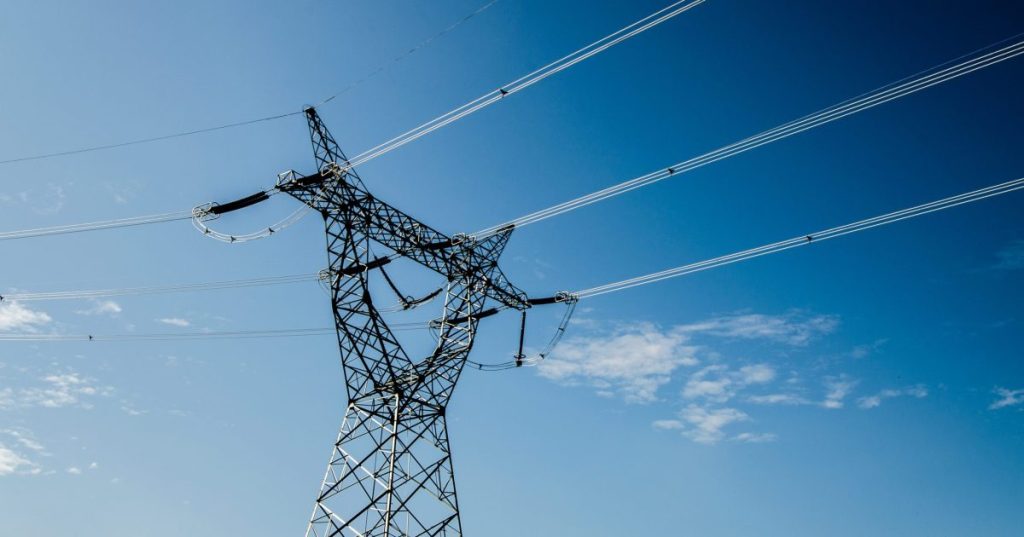
Ecuador’s state electricity corporation CELEC EP announced a contract award on November 17, 2026, for the Ecuador–Peru electrical interconnection. The Ministry of Environment and Energy subsequently released updated financial details on November 25, identifying India’s Kalpataru Projects International as the contractor. The Ecuadorian portion carries an overall budget of $324.6 million before value-added tax, including a $290.3 million contract. The interconnection is intended to support bilateral electricity trading, much as the proposed Cyprus–Crete power link would connect separate electricity markets, although their transmission technologies differ.
High-voltage infrastructure across three provinces
The CELEC engineering announcement specifies two 500 kV overhead segments spanning 206.97 km and 77.88 km. Together they measure 284.85 km. Towers are designed for double circuits; the announcement does not establish that both circuits will be energized immediately. A separate 1.96 km connection at 230 kV integrates existing transmission infrastructure.
| Infrastructure | Specification |
|---|---|
| Chorrillos–Pasaje | 206.97 km, 500 kV |
| Pasaje–border | 77.88 km, 500 kV |
| Pasaje substation | 500/230 kV, 600 MVA |
| Chorrillos expansion | One bay, 110 MVAr line reactors |
Why voltage and reactive power matter
Increasing transmission voltage reduces the current required to carry a given amount of real power, limiting resistive losses for a given conductor resistance. For balanced three-phase AC transmission, real power is the product of the square root of three, line-to-line voltage, line current and power factor. A 600 MVA transformer rating describes apparent power, not guaranteed interconnector transfer capacity. Long AC lines also generate capacitive reactive power under lightly loaded conditions. Shunt reactors absorb reactive power to help control voltage. Similar voltage-control requirements appear in California’s solar grid-support project.
Original research explains the reliability challenge
Adriana Pamela Mediavilla Pérez and Jaime Cristobal Cepeda Campaña of Escuela Politécnica Nacional published original conference research on Ecuadorian generation adequacy on November 2, 2026. Their workflow combines stochastic dispatch simulation, capacity-outage probability modeling and PowerFactory network analysis. Among eight scenarios for 2026 and 2030, the modeled 2030 dry-season evening peak has a loss-of-load probability of 3.919%. That conditional scenario result does not establish an annual outage duration or a measured future reliability outcome.
Cross-border imports may diversify available supply, provided neighboring generation and transmission capacity are available simultaneously. Storage can address different timing constraints, as illustrated by Dominican Republic battery projects and Cuba’s grid-forming battery program. The paper does not quantify reliability improvements attributable to the new interconnector.
Funding and construction milestones
The ministry reports $125 million each from the Inter-American Development Bank and European Investment Bank, plus $74.6 million from CELEC. The contractual execution period is 1,090 days. Construction, protection coordination, cross-border operating agreements and commissioning remain necessary before the contracted infrastructure can support routine exchanges. Featured photograph: transmission equipment pictured in the ministry’s November 25 announcement; not evidence of completed construction.


Leave a Reply