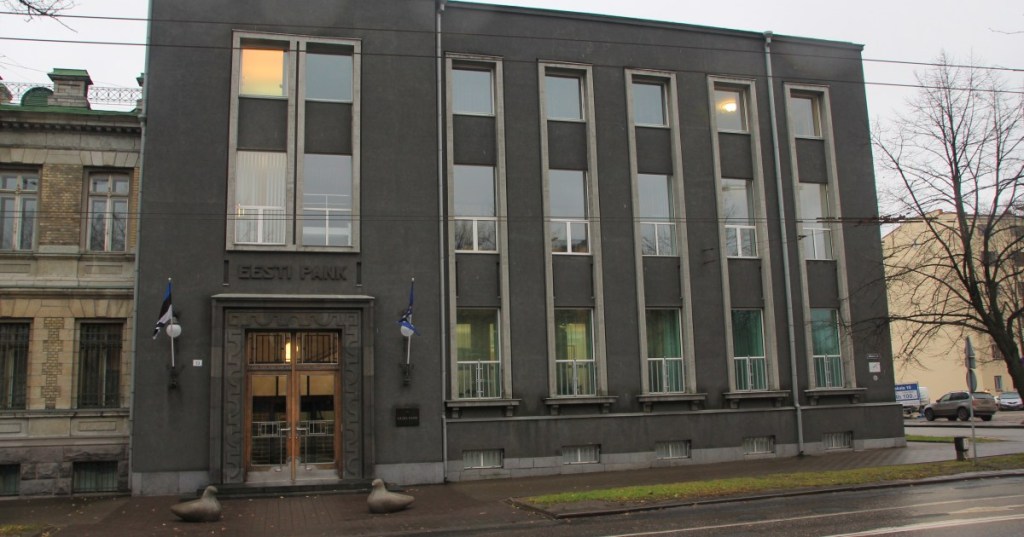
Estonia’s transition to the European Union’s Markets in Crypto-Assets Regulation (MiCA) has interrupted the country’s publication of domestic cryptocurrency service-provider statistics. On October 12, 2026, an Eesti Pank statistician explained to Vultax that the central bank requires sufficient reporting institutions and protection against identification of individual firms. The central bank had already announced on September 15 that it could not publish third-quarter figures. Missing statistics do not demonstrate an absence of Bitcoin trading.
A shrinking historical reporting population
According to the central bank’s historical data as reconstructed by Vultax, client cryptoassets excluding fiat balances declined from €1.918 billion at the end of June 2025 to €808 million at the end of June 2026. The difference is €1.110 billion, or approximately 58%. The series measures the value of customer assets held through covered Estonian providers, not the number of bitcoins owned by Estonian residents. Prices, withdrawals and changes in the reporting population can all affect aggregate values.
| Quarter ending | Client cryptoassets (€ million) |
|---|---|
| June 2025 | 1,918 |
| September 2025 | 2,477 |
| December 2025 | 1,563 |
| March 2026 | 982 |
| June 2026 | 808 |
| September 2026 | Not published |
The October explanation establishes two publication conditions for each indicator: three or more reporting firms and sufficient confidentiality to prevent identification of an individual institution. A new reporting series may cover a different group of providers, making direct comparisons with the earlier series inappropriate without methodological adjustment. The distinction resembles the accounting problem in our coverage of El Salvador’s disclosed Bitcoin reserves: a measured subset must not be confused with an entire population.
What changed under MiCA
The Estonian financial supervisor’s transition announcement establishes July 1, 2026 as the deadline after which the old virtual-currency licences no longer authorize normal commercial activity. Companies may operate under appropriate authorization in Estonia or another European Economic Area jurisdiction. The Financial Intelligence Unit reported 641 valid legacy licences in mid-2021 and 36 at the beginning of 2026. Those licence counts refer to the earlier regime and cannot be directly compared with the number of cross-border authorizations today.
The supervisor’s register lists Lightspark Payments Europe AS among locally authorized cryptoasset service providers and separately identifies cross-border providers. Banks and investment firms may also provide permitted services under the applicable regulatory framework. An Estonian resident using a foreign authorized exchange may therefore remain active even when the domestic statistical series cannot be published.
Readers should consult the current regulator notice and linked live register rather than treating a historical PDF as permanent authorization evidence.

Bitcoin custody and the limits of regulatory statistics
Bitcoin nodes verify spending independently of financial-service licensing. Custodial companies, by contrast, maintain accounting systems, customer identities and signing infrastructure. A provider’s authorization does not eliminate operational risk, and private-key control does not necessarily establish legal ownership. Our Bitcoin wallet backup analysis explores the technical distinction between recovery credentials and access to coins.
The Estonian Tax and Customs Board also explains that qualifying cryptoassets acquired through MiCA-authorized providers may receive financial-asset treatment under amendments effective January 2025. Individual tax consequences depend on transaction circumstances. As with Ecuador’s regulatory reporting changes and Eritrea’s connectivity measurements, a precisely defined reporting boundary matters. Estonia’s missing quarter is evidence of a statistical limitation, not evidence of zero Bitcoin adoption.
Featured photograph: Villem Lüüs, Eesti Pank headquarters, November 2010, cropped under CC BY-SA 3.0. The regulator’s live register is linked rather than embedded; interactive and responsive display were not independently verified.
We volunteer daily to ensure the credibility of the information on our platform is Verifiably True. If you would like to support our independent research, please scan the QR code below.



Leave a Reply