Eritrea presents a difficult environment for Bitcoin infrastructure. DataReportal’s November 2026 Digital 2027 country report estimates that 741,000 people used the internet in October, equivalent to approximately 20% of the population. A separate July 2025 financial-sector evaluation found no evidence of domestic virtual-asset transactions or service providers. Neither finding proves that no Eritrean owns bitcoin. Together, they illustrate the distinction between an internationally accessible digital protocol and the infrastructure required for widespread local use.
The financial infrastructure gap
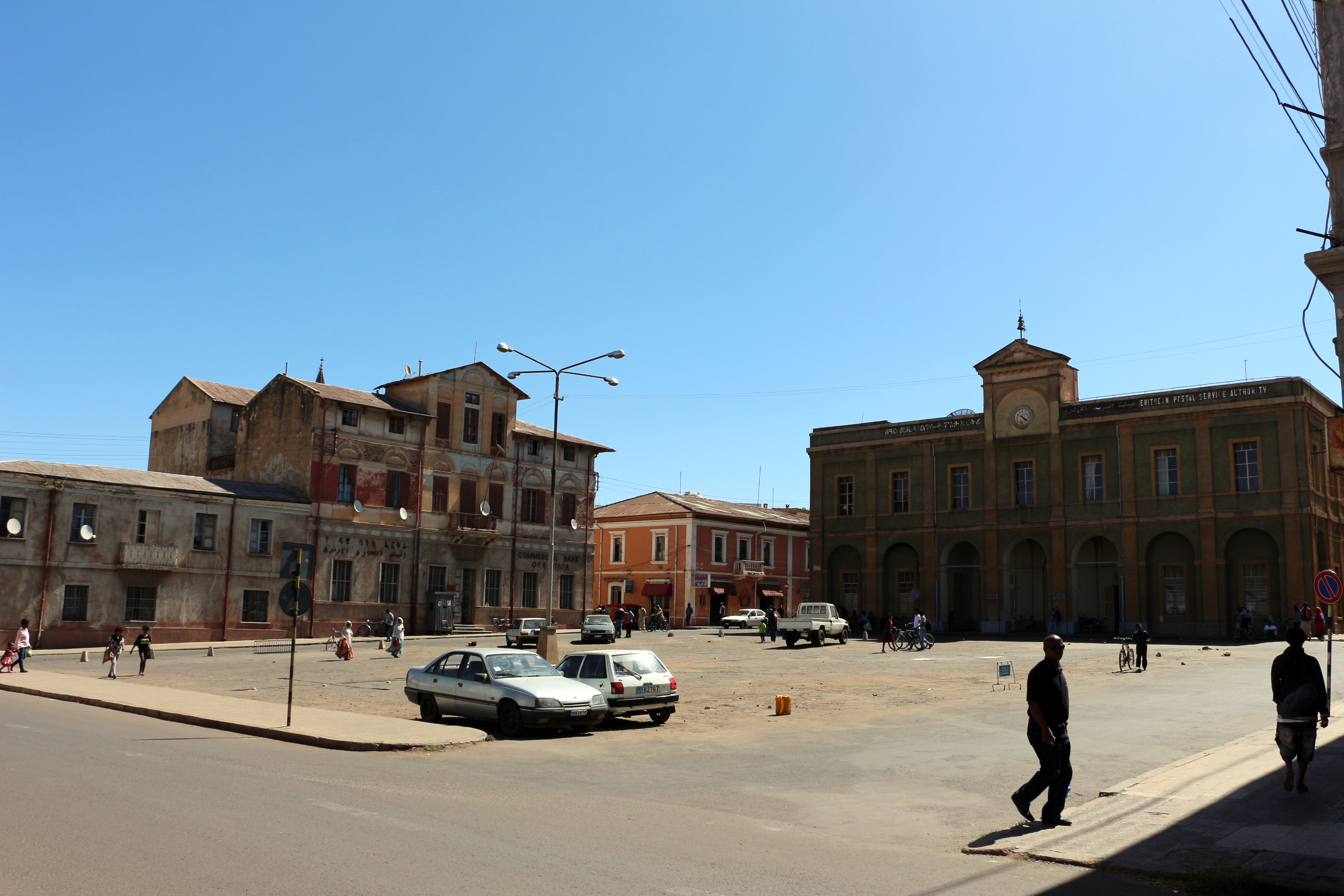
The Eastern and Southern Africa Anti-Money Laundering Group (ESAAMLG) adopted its Eritrea evaluation in July 2025. Paragraph 39 records the absence of identified virtual-asset providers and transactions, and describes a financial sector with limited external connections. The evaluators also identified deficiencies in the country’s licensing framework for virtual-asset businesses under FATF Recommendation 15. No newer Eritrean licensing instrument or provider approval was independently identified during research. The historical assessment does not determine the current legality of every private Bitcoin transaction.
Why Bitcoin needs reliable communications
Bitcoin ownership relies on cryptographic signing credentials, but validating current balances and broadcasting transactions requires access to network information. A full node independently verifies consensus rules and maintains the relevant blockchain state. Lightweight wallets generally require less local storage and may depend on external servers or other peers. A wallet temporarily disconnected from the network cannot independently establish whether a newly received transaction has been confirmed by the current blockchain.
In its February 2024 national report to the United Nations, Eritrea described a satellite-based internet system and a transition toward medium-Earth-orbit connectivity starting in 2021. Shorter satellite paths can reduce propagation delay compared with geostationary links, although terrestrial routing, congestion and gateway availability still influence performance. The government’s report describes modernization efforts rather than independently measured current uptime.
Measuring access without counting Bitcoin users
| October 2026 indicator | Estimate |
|---|---|
| Population | 3.70 million |
| Internet users | 741,000 |
| Internet penetration | 20.0% |
| Cellular connections | 933,000 |
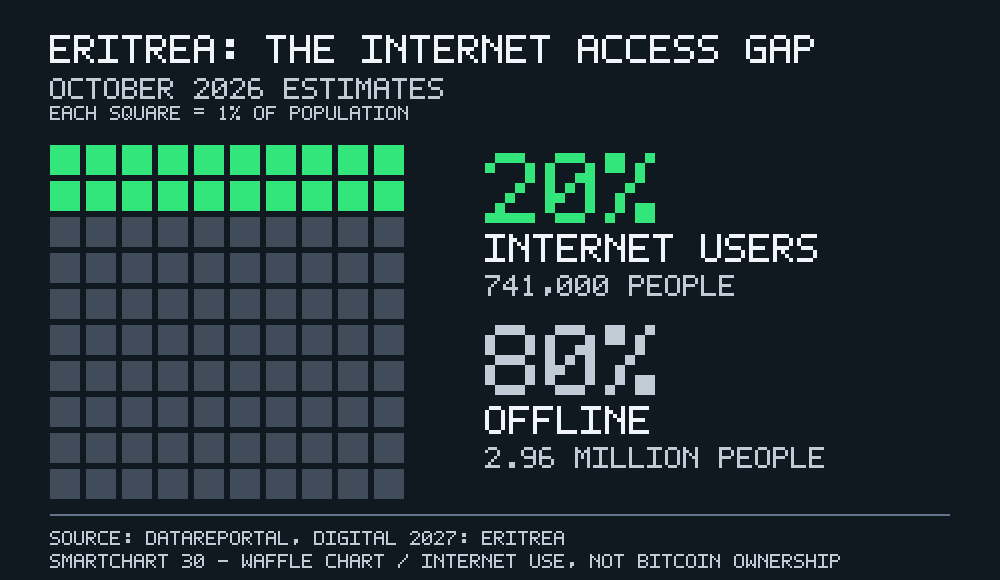
The Internet Society Pulse country dashboard provides an additional view of network connectivity, including limited autonomous-system diversity. Its internet-use estimate differs from DataReportal’s, reflecting differences in source data and measurement. Reuters also described slow and limited internet availability in its October 5, 2026 reporting. None of these sources measures Bitcoin ownership, active Lightning channels or local merchant payments.
What would establish Bitcoin adoption?
The evidence required would include documented local providers, independently measured payment volumes, reliable network availability and clear domestic legal guidance. Internet access alone cannot establish adoption. Conversely, the absence of a licensed exchange does not prove an absence of individual holdings. Recent country analyses cover Equatorial Guinea’s payment infrastructure, Egypt’s licensing position, Ecuador’s legislative review and El Salvador’s disclosed reserves. Eritrea remains a country where evidence of commercial Bitcoin activity is sparse. The recent connectivity data offers a measurable starting point, not confirmation of a new Bitcoin project.
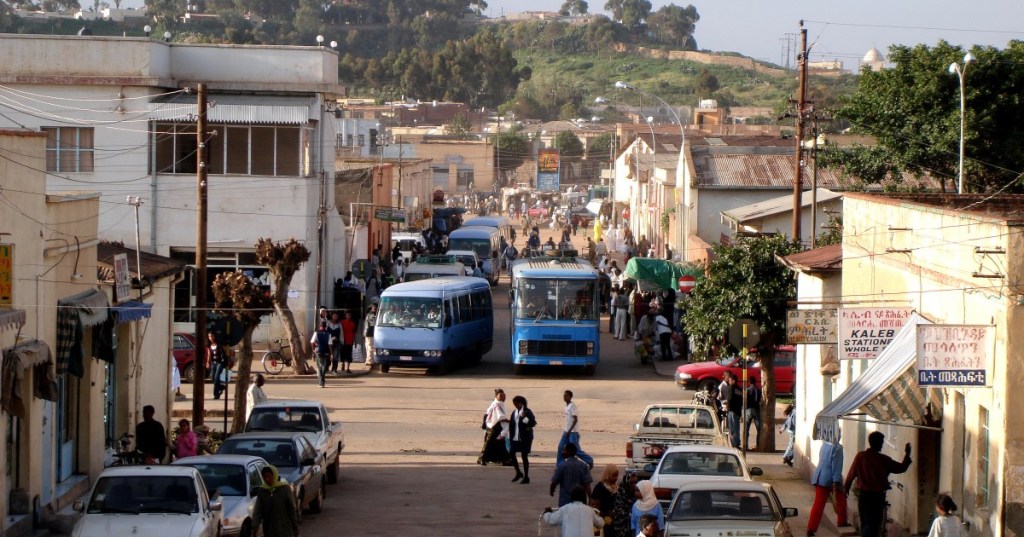
Featured photograph: .Jacopo., Ordinary Life in Asmara, September 2007, cropped under CC BY 2.0. The interactive network dashboard links to its original publisher; in-page interactive behavior and responsive presentation were not independently tested.
We volunteer daily to ensure the credibility of the information on our platform is Verifiably True. If you would like to support our independent research, please scan the QR code below.



Leave a Reply