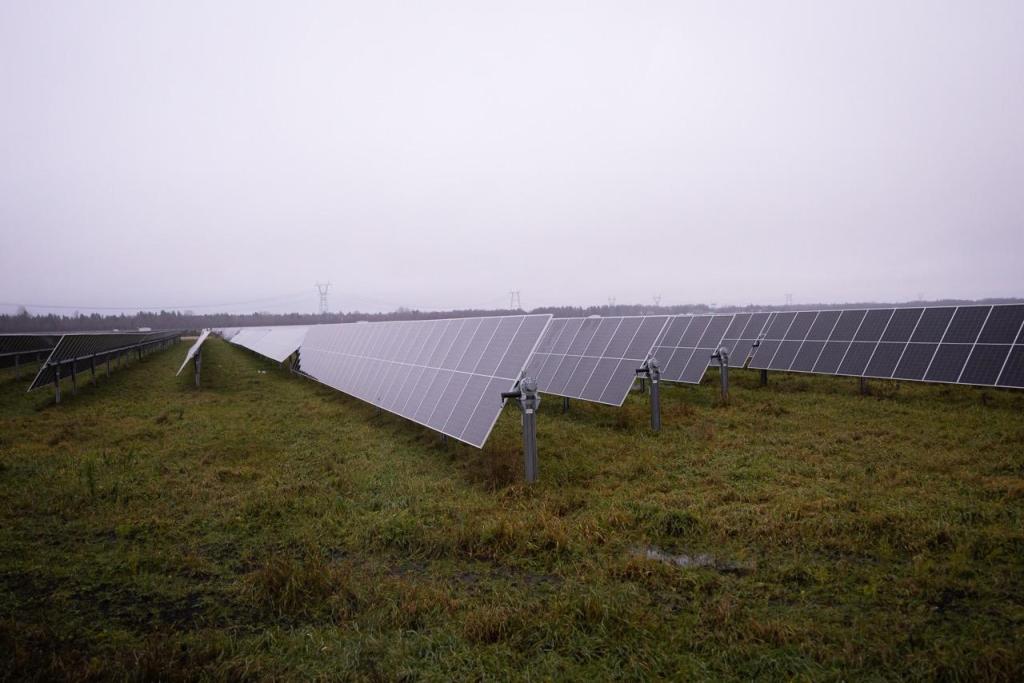
Estonian energy developer Sunly opened the 244 MW Risti solar park on November 18, 2026, completing the first component of an integrated electricity and computing development in western Estonia. The developer announcement identifies a €125 million investment backed by the European Investment Bank, SEB and Luminor. The solar facility has opened, whereas its adjacent battery and proposed data center remain at different development stages. Like El Salvador’s energy expansion program, the wider project illustrates the importance of coordinating energy generation with storage and demand.
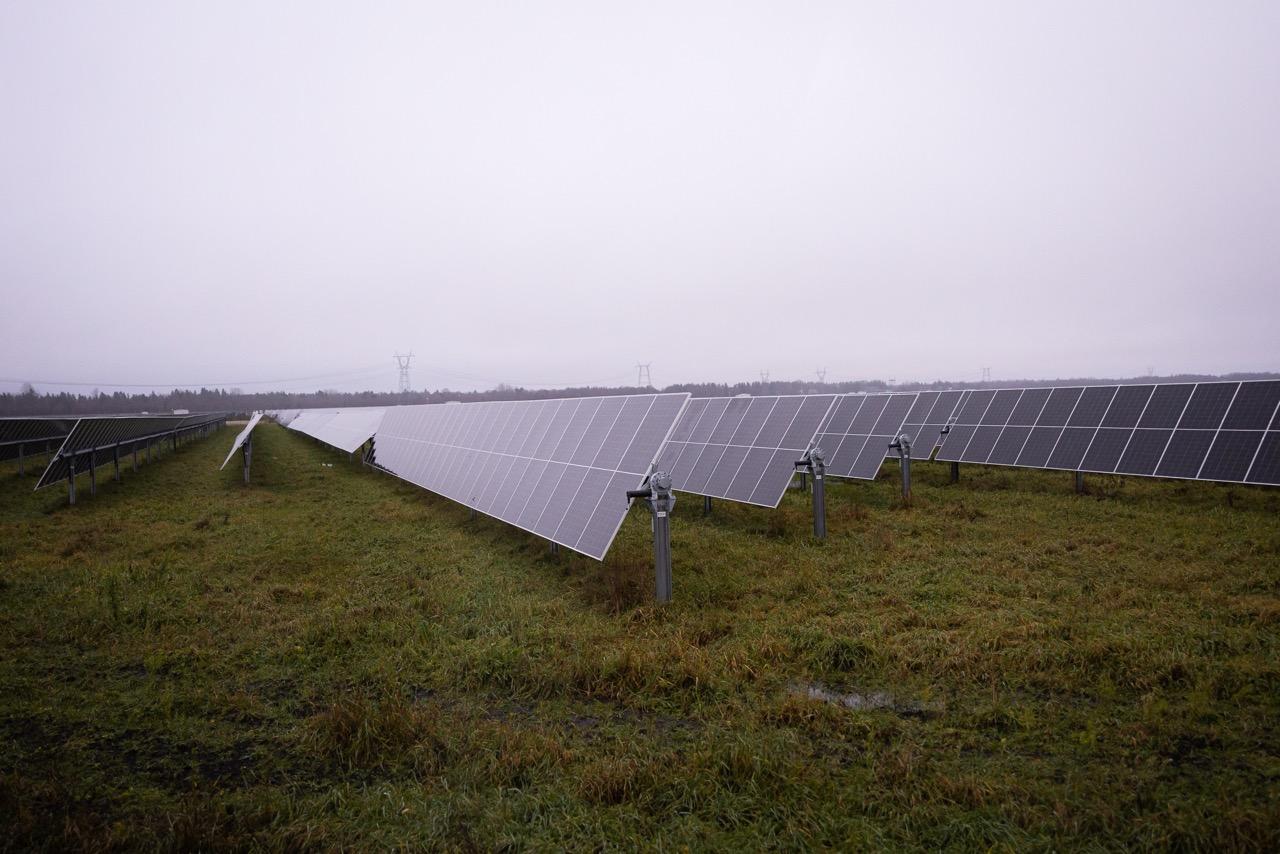
Tracking sunlight across a large solar array
The installation occupies 270 hectares and contains more than 340,000 modules. Its tracking structures change panel orientation as the sun moves across the sky. The resulting increase in captured sunlight depends on weather, tracking geometry, shading and season. The nominal capacity is not a constant electrical output. Dividing the announced capital expenditure by the published rating yields approximately €0.51 per watt of nameplate solar capacity; that ratio is not a levelized electricity cost and does not establish the cost of the separate battery or computing developments.
Independent coverage from Estonian Public Broadcasting corroborates the opening and investment. The variability of solar output is particularly relevant to continuous computing loads. Our Dekemhare solar analysis illustrates why observed power must be distinguished from installed capacity.
A battery designed to shift electricity delivery
Construction is underway on a Rolls-Royce battery installation rated at 143 MW and 294 MWh, with operation anticipated in 2027. The nominal discharge duration is approximately 2.06 hours at maximum rated power. Conversion losses and usable state-of-charge limits can reduce available energy. Storage can move electricity from low-price periods to higher-demand periods and support balancing services, but it cannot provide continuous power indefinitely without recharging.
Sunly also plans 42 MW of wind generation, targeting 2030. Its expected yearly production of 132 GWh implies a forecast capacity factor of approximately 35.9%. Wind and solar may complement one another, but dependable combined output requires site-specific time-series analysis rather than simply adding their ratings. The Equatorial Guinea solar framework faces a similar distinction between capacity and reliability.
Powering a proposed data center
A September joint venture announcement identifies 180 MW for an initial development phase, expandable to 400 MW subject to substation upgrades. Neither phase represents commissioned computing capacity. At an illustrative continuous 180 MW load, annual energy use would reach 1,576.8 GWh. The planned battery alone could not meet even the initial load at its rated discharge power. Grid access, power procurement, reserve capacity and cooling infrastructure remain essential. As with ECL’s staged AI infrastructure project, construction and commissioning are stronger indicators of operational readiness than announced capacity.
November 27 pv magazine reporting confirms the solar opening and battery construction. Future assessments should track metered production, battery availability, completed substation upgrades and customer deployments. Co-location offers a potential route to coordinated energy and computing investment, not proof of uninterrupted renewable supply.


Leave a Reply