The Gambia’s National Water and Electricity Company (NAWEC) signed development agreements on November 18, 2026, for a 52 MWp solar power park near Soma, paired with 40.9 MWh of battery storage. The utility announcement projects annual generation of approximately 101 GWh and identifies a connection to regional 225 kV transmission infrastructure. Gambia Daily also reported the signing. The agreements concern electricity generation for the power system, not Bitcoin mining. Nevertheless, the project illustrates the physical constraints that would govern flexible computing demand, complementing our Gabon gas-recovery analysis.
Solar generation is not continuous power
Photovoltaic panels convert sunlight into direct-current electricity. Inverters deliver alternating current to the grid subject to their ratings, operating conditions and interconnection limits. The panel array’s peak rating describes its nominal direct-current capacity, whereas annual generation measures accumulated energy. Dividing the forecast of 101 GWh by 8,760 hours gives an average electrical output of approximately 11.53 MW. Relative to the 52 MWp panel rating, the implied annual yield is equivalent to a capacity factor of about 22.2%. Neither figure is a measured operational result, and neither establishes surplus electricity available to a mine.
An earlier project demonstrates the country’s progression toward utility-scale photovoltaics. The World Bank identifies the Jambur installation, commissioned in March 2024, as a 23 MWp solar park with 8 MWh of storage. Soma’s announced configuration represents a separate development. Regional transmission can distribute energy beyond the generating site, while local demand and contractual obligations determine when any additional load might be acceptable.
Historical broadcast: GRTS TV coverage of the Jambur solar plant inauguration, March 2024. The footage concerns Jambur, not Soma. Original-host video link provided because embedded playback was not independently tested.
Battery storage and hypothetical mining demand
The proposed battery capacity is expressed in megawatt-hours, not megawatts. Energy capacity describes how much electricity can be stored; maximum discharge power determines how quickly the system can deliver it. A hypothetical 1 MW computing load operating for four hours requires 4 MWh before conversion and auxiliary losses. The battery’s nominal 40.9 MWh capacity does not mean that it could supply a mining facility at any requested power level. State-of-charge limits, discharge ratings, evening household demand and reserve requirements would govern dispatch.
At an illustrative ASIC efficiency of 15 J/TH, a dedicated 1 MW ASIC allocation would produce approximately 66.7 PH/s. At 10 J/TH, the same allocation would produce 100 PH/s. Both examples exclude facility cooling and other overhead outside the ASIC power boundary. The relationship follows our foundational Power Efficiency Theory equations. If mining power varies with solar production, cumulative hashes depend on the integral of hashrate over the operating period, rather than the maximum machine rating alone.
Grid reliability comes before hypothetical surplus
A flexible mining load might be capable of reducing consumption during scarcity, but that ability does not establish a benefit without actual dispatch records. The relevant evidence would include hourly renewable generation, curtailment, transmission constraints, electricity prices, battery schedules and existing demand. Our British wind curtailment coverage distinguishes surplus energy from installed capacity. Our variable-power mining report also illustrates why uptime and operating costs affect financial results.
NAWEC identifies evening demand and supply reliability as objectives for the storage system. Before a Bitcoin mining facility could be evaluated commercially, developers would need an approved interconnection, lawful operating arrangements, a power contract and independently documented equipment. No such mining installation was verified at Soma. The November signing establishes planned renewable infrastructure, not a Bitcoin mining partnership or available hashrate.
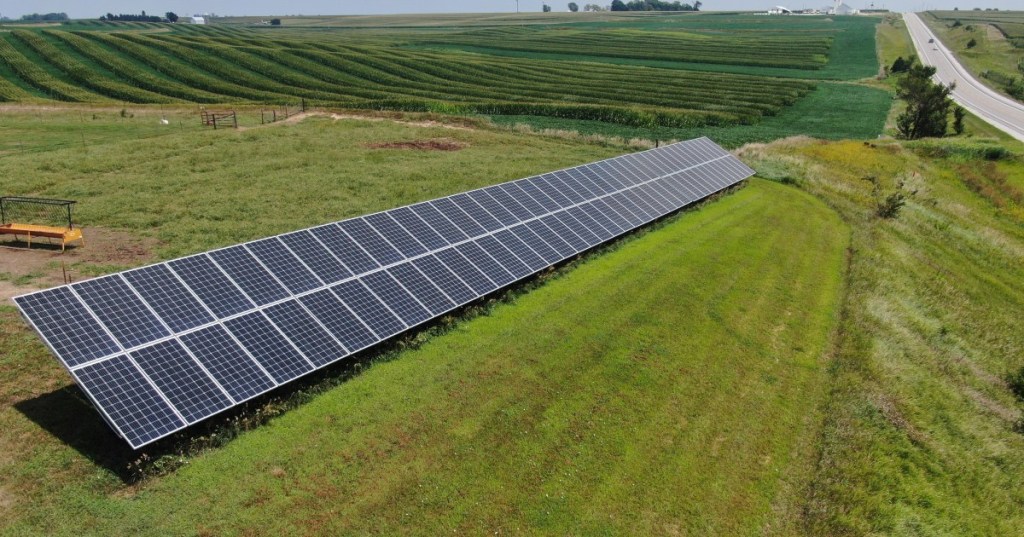
Featured photograph: David Kosling / USDA, August 9, 2024, public domain, cropped. Solar array in the United States, illustrative rather than a photograph of Soma.
We volunteer daily to ensure the credibility of the information on our platform is Verifiably True. If you would like to support our independent research, please scan the QR code below.



Leave a Reply