NixOS 26.11, codenamed Zokor, introduces a mechanism intended to reduce the administrative burden of recovering from failed operating system updates. The project’s release notes document integration of automatic boot assessment into its systemd-boot configuration. The notes do not specify a finalized release date, so availability should be checked before production deployment. The change complements broader Linux recovery work, including the recovery environment introduced by CachyOS.
What a system generation contains
NixOS approaches operating system configuration differently from distributions that primarily modify packages in place. Administrators declare the desired system configuration, and Nix builds the corresponding package and configuration outputs. A successful rebuild can create a new system generation without immediately discarding the older one. Retaining the earlier generation gives administrators an alternative boot target when an update causes trouble.
The Nix project’s explanation of its configuration model describes how administrators can reproduce environments and revert system changes. Comparable deployment objectives appear in openSUSE’s traditional and immutable installation options, although their implementation differs from NixOS generations.
How automatic boot assessment works
According to systemd’s upstream documentation, boot counting encodes the remaining attempt count in a boot entry filename. When the bootloader starts a candidate entry, the remaining count decreases. A successful boot can be recorded by the systemd boot-blessing service, removing the entry from the counting process. When the allowed attempts are exhausted, the bootloader can prefer another eligible entry. The mechanism requires suitable firmware and bootloader configuration, as well as an older working entry.
The NixOS integration exposes the boot.loader.systemd-boot.bootCounting options. Its release notes also describe a change from generation-number-based entry filenames to content-derived names. Existing entries are migrated during a subsequent system rebuild. Operators should not assume the feature is enabled by default, or that identical behavior applies to GRUB.
Boot recovery is not data recovery
Automatic fallback is not a substitute for a backup. A database migration, modified user files or an external storage failure may persist after the operating system returns to an older generation. Administrators need compatible data backups and application health checks, particularly when testing stateful services. Our coverage of Proxmox storage snapshots illustrates a separate layer of recovery that protects storage state rather than merely selecting an operating system configuration.
For fleet operators, the practical value lies in reducing manual recovery when a newly deployed kernel or system configuration fails during startup. A staged rollout on representative machines remains necessary. Teams should record which boot target was selected, whether the system was marked healthy, and whether application-level services actually resumed. The lesson is consistent with reversible firewall configuration: a recovery mechanism is valuable only when its failure boundaries are understood and tested.
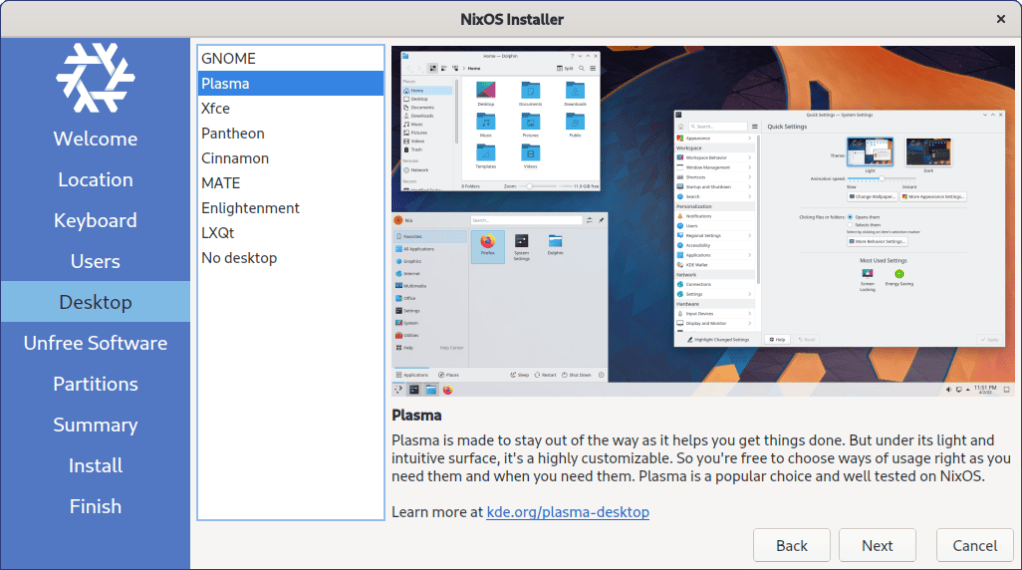
Featured image: historical NixOS graphical installer screenshot, NixOS Foundation (2022), via Wikimedia Commons, GPL-2.0-or-later. It does not depict the 26.11 release.


Leave a Reply