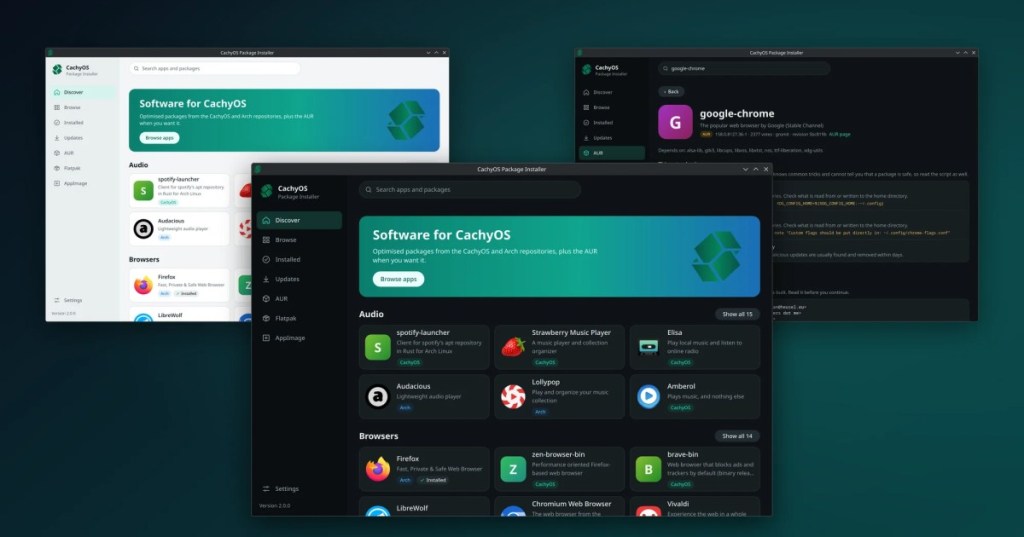
CachyOS released its November desktop installation image on November 22, 2026, with an optional kernel designed for Epic Games’ Easy Anti-Cheat Linux v2, a new recovery environment and a redesigned package manager. The Arch Linux-derived distribution’s official release notes describe its sixth release of the year. The changes follow Framework’s increased support for CachyOS and address two persistent concerns among desktop Linux users: game compatibility and recovery after failed updates.
A dedicated kernel for competitive gaming
The new optional kernel, linux-cachyos-eac, provides a boot configuration designed to satisfy Epic’s integrity requirements. The distribution’s configuration guide explains the setup: authenticated boot components, a Trusted Platform Module (TPM) 2.0, enabled IOMMU protections and restricted kernel module loading. A signed boot manager accompanies the kernel. Users retain their ordinary boot entries, rather than replacing their standard Linux environment.
Secure Boot establishes a chain of trust for executable components loaded at startup. An IOMMU restricts device access to system memory, while kernel lockdown limits operations that could undermine integrity guarantees. The separate configuration also requires compatible signed driver modules; ordinary DKMS-built modules are not supported by the EAC kernel. Game publishers must still enable and support Linux compatibility. The update does not establish universal compatibility with multiplayer titles, nor does it eliminate cheating. Our earlier Steam Linux adoption analysis provides context for the growing desktop gaming ecosystem.
Recovery without a USB installation drive
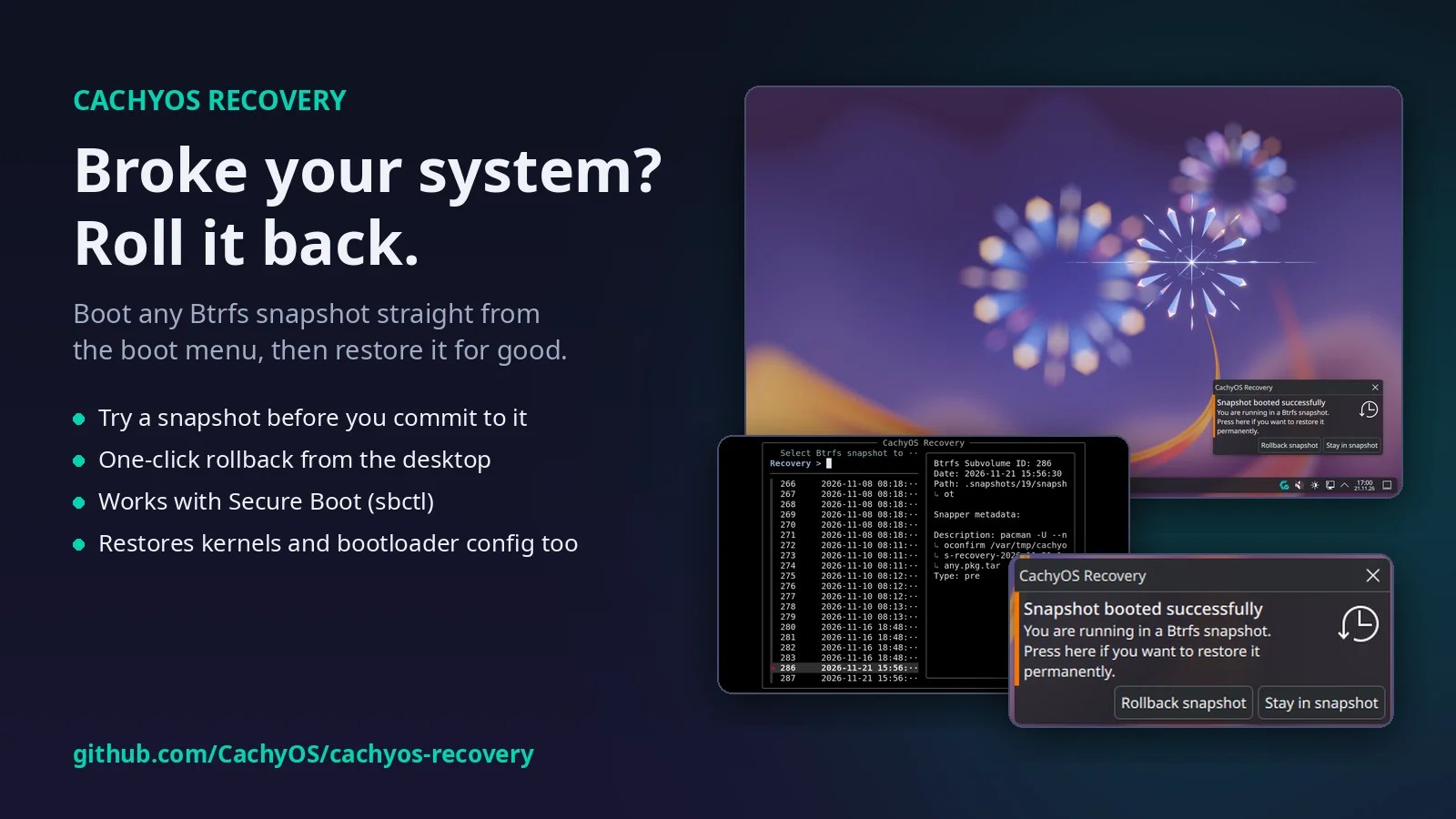
The recovery tool occupies approximately 70 MB on the EFI system partition and can launch independently of the installed operating system. It can start a writable copy of a Btrfs snapshot for testing before a permanent rollback. Its recovery documentation describes how restoration coordinates the root filesystem with the appropriate kernel, initial RAM filesystem and boot configuration. Btrfs uses copy-on-write storage, allowing snapshots to share unchanged data blocks rather than duplicating an entire filesystem immediately.
A rollback can replace the current root subvolume and discard changes made after the selected snapshot. Separate home subvolumes may remain intact, depending on the installation layout. External backups remain essential because snapshots stored on the same drive cannot protect against its physical failure. The recovery architecture complements the transactional snapshot approach covered in openSUSE Leap 16.1.
Package Installer 2.0 expands software sources
The revised graphical installer supports optional access to the Arch User Repository, Flatpak and AppImage packages alongside the distribution’s normal repositories. Its AUR review interface exposes build recipes and installation scripts, with changes highlighted during updates. Static inspection can assist security review but cannot establish that an arbitrary package is safe. Fedora 45’s package verification changes illustrate a related approach to software supply-chain trust.
Phoronix independently reports that the refreshed installation image uses Linux 7.3.5 and adds an image for Windows Subsystem for Linux. For prospective users, the release offers a more flexible desktop environment rather than proof of improved frame rates or measured recovery times. Testing specific games, hardware, encrypted storage and backup procedures remains necessary before adopting the new configuration.
We volunteer daily to ensure the credibility of the information on this platform is Verifiably True. If you would like to support to help further secure the integrity of our research initiative, please scan the QR code below.

For mobile scanning, open the article on another display and scan the QR code with a Bitcoin wallet. The voluntary donation amount is 5,000 sats. Verify the receiving address 3C9o19EH5HSiwEPyCTmEKzxhNCbo2X6TTb before sending.
BitcoinVersus.tech is not a financial advisor. This media platform reports on financial subjects purely for informational purposes.


Leave a Reply