
The Fedora Project released Fedora Linux 45 on November 3, 2026, updating its desktop, server, cloud and container-oriented operating-system editions. The open-source distribution adds installation support for Stratis storage, stricter default RPM package verification and refreshed desktop environments, according to its official release announcement. Fedora 45 is available now, not a beta or a future roadmap.
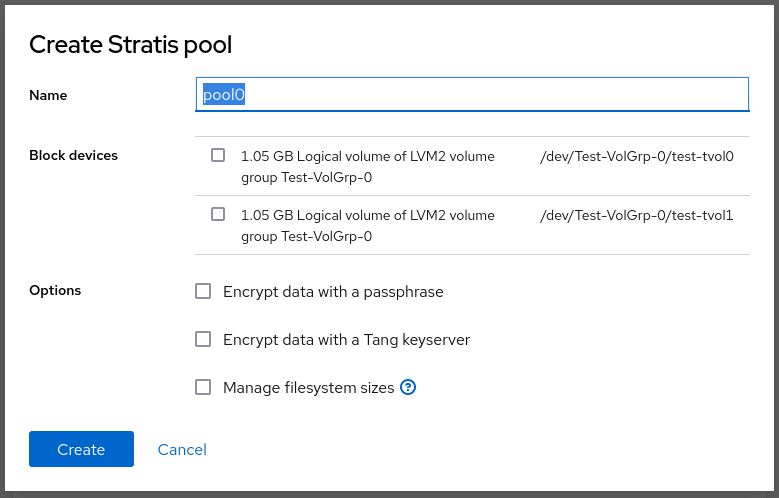
The most significant installer change is native Stratis support in Anaconda. Stratis combines established Linux components, including device-mapper, XFS and LUKS, to manage storage pools, flexible filesystems and optional encryption. During custom graphical installation, administrators can reach the Cockpit storage interface to configure Stratis; automated Kickstart deployments also support it. Fedora does not claim every installation automatically uses Stratis. The distinction matters when planning root filesystems and recovery procedures, subjects related to BitcoinVersus.Tech’s guide to UEFI, GRUB and Linux booting.
Learn Linux TV’s November 4, 2026 review of Fedora 45 and the GNOME 51 desktop, including the presenter’s comparative assessment. Video: Learn Linux TV; independent commentary.
Fedora 45 also changes the default package-integrity posture. RPM 6.1 enforces cryptographic signature verification at the RPM layer unless administrators explicitly override it. Higher-level package managers already supported signature policies, so the new setting primarily closes gaps in direct RPM workflows. Administrators who build private or unsigned packages should check signing and repository settings before upgrading; a valid signature reduces tampering risk but does not guarantee software is free of vulnerabilities.
Additional hardening restricts unprivileged kernel process tracing, or ptrace, to limit unauthorized inspection of other processes. Fedora says debugging configurations can restore expected tracing workflows when required. Security is an ongoing maintenance problem, not a one-time installation property, as earlier BitcoinVersus.Tech reporting on a Linux kernel privilege-escalation flaw illustrates.
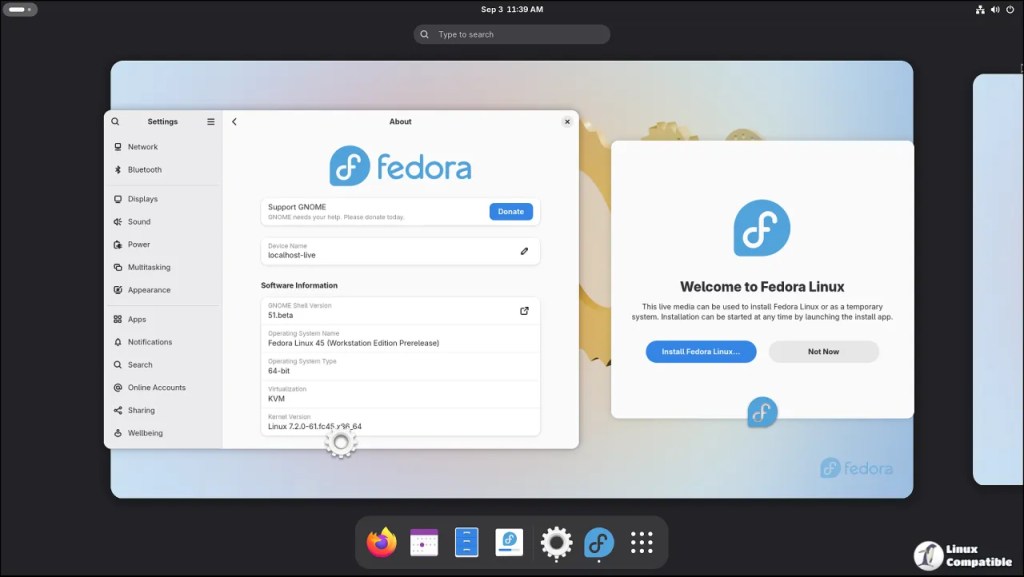
On the desktop, Fedora Workstation 45 moves to GNOME 51, while the Fedora KDE Plasma Desktop edition ships Plasma 6.8. Fedora highlights Wayland improvements and smoother interface behavior, although actual performance depends on graphics drivers, workloads and hardware. Fedora also replaces legacy console handling with kmscon, a userspace terminal solution. The changes complement system diagnostics described in BitcoinVersus.Tech’s systemd-analyze tutorial.
Developers get newer compiler and runtime packages, including GCC 16.2, glibc 2.44, LLVM 23 and Go 1.27, according to the Fedora Project and Red Hat. Such upgrades can unlock language features and newer hardware support while also revealing dependency or toolchain compatibility problems in existing software. Package maintainers and enterprise administrators should test local builds, extensions and scripts instead of treating a major distribution upgrade as risk-free.
Fedora’s release notes also warn that two legacy NetworkManager VPN plugins, vpnc and fortisslvpn, are retiring. Users dependent on either plugin should plan a supported alternative before upgrading. Another Linux distribution took a different path: the newly released openSUSE Leap 16.1 emphasizes traditional and immutable deployment modes, providing a useful contrast in operating-system design.
Fedora’s next tests are practical: whether Stratis installations handle varied disks reliably, how unsigned third-party packages behave, and whether desktop changes remain stable across graphics and laptop configurations. Users can consult Fedora’s published known-issues guidance, back up important data, verify installation media and test upgrades before broad deployment. The availability announcement establishes shipped functionality; independent performance or security-benefit measurements still require evidence.
BitcoinVersus.Tech Editor’s Note: We volunteer daily to ensure the credibility of the information on this platform is Verifiably True. If you would like to support to help further secure the integrity of our research initiatives, please donate using the QR code provided

For best QR-code scanning results, please scan this donation code from a desktop or larger screen. Mobile screens may prevent camera recognition. Verify the receiving address 3C9o19EH5HSiwEPyCTmEKzxhNCbo2X6TTb before sending.
Disclaimer: BitcoinVersus.Tech is not a financial advisor. This media platform reports on financial subjects purely for informational purposes.


Leave a Reply