NodeGuard, an open-source treasury management project for Bitcoin Lightning nodes, received two updates in November 2026 extending its management of Spark wallets. Version 0.35.1, dated November 19, introduces a dedicated wallet view and a full-balance withdrawal action. Version 0.35.2, dated November 23, adjusts withdrawal coordination and introduces a default maximum Spark balance of 0.5 BTC. The release descriptions are reproduced by Freedom.Tech; the project links the changes to pull requests 678 and 679. Unlike merchant-facing payment software examined in our BTCPay Server report, NodeGuard addresses treasury operations behind a payment service.
Separating treasury authority from node operations
A Lightning payment provider must allocate Bitcoin between payment channels, on-chain reserves and liquidity services. Operators may need to open channels or rebalance capital without having unrestricted access to every treasury signing credential. The NodeGuard project documentation describes asynchronous channel funding, support for hardware-wallet signing of partially signed Bitcoin transactions (PSBTs), multisignature wallets and optional remote signing for funding transactions. Separating transaction preparation from approval and signing can reduce the authority required by day-to-day infrastructure personnel. The design does not eliminate risks from compromised approval policies, software defects or lost recovery material.
Spark wallets and operational liquidity
A Lightning channel maintains a balance distribution that limits how much can be sent in either direction. Payment service providers use swaps to move value between off-chain balances and on-chain Bitcoin without necessarily closing a channel. Our Lightning Loop infrastructure report examines a different liquidity-management implementation. Spark provides a statechain-based payment system that changes spending authority without requiring a new Bitcoin transaction for every transfer. Its technical documentation describes user and operator signing shares, coordinated transfers, and presigned transactions for unilateral exits to the base layer. The mechanism has availability and security assumptions distinct from conventional Lightning channels.
NodeGuard’s new Spark wallet interface brings remote-signer wallet details and a withdrawal action into the treasury management application. A separate balance ceiling helps operators limit the amount allocated to an intermediate liquidity wallet. A 0.5 BTC threshold corresponds to 50 million satoshis. In a hypothetical treasury holding 5 BTC across several systems, an allocation of 0.5 BTC would represent 10% of aggregate holdings. The threshold is a software default, not proof of a hard protocol limit, a measured user balance or an enforced maximum across all wallets. Operators must examine actual configuration and pending transfers.
Reducing unnecessary waiting
The November 23 notes specify that Spark exits wait only for nodes using the relevant wallet for swaps. Shared liquidity infrastructure may serve multiple node operators, and coordination with unrelated nodes can introduce dependencies that delay settlement. Narrowing the participating set can reduce those unnecessary dependencies, although the release description provides no benchmark of latency improvements. The broader ecosystem includes developer-facing payment tools such as the Spark-based Breez SDK. For treasury operators, balances and exit status should be reconciled independently of dashboard availability; the release notes do not establish audited reserves, transaction throughput or adoption metrics. Our public Lightning channel capacity analysis provides a separate network-level measurement.
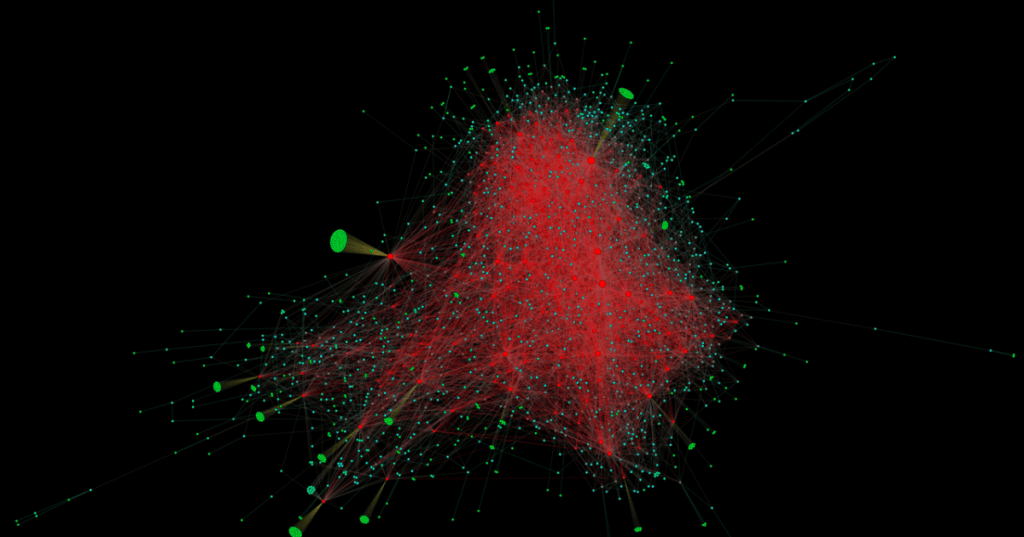
Featured image: historical Lightning Network topology on May 15, 2018, StopAndDecrypt / Wikimedia Commons, CC BY-SA 4.0, cropped. It does not represent present-day network topology.
We volunteer daily to ensure the credibility of the information on our platform is Verifiably True. If you would like to support our independent research, please scan the QR code below.



Leave a Reply