A solar resource study published October 27, 2026, estimates that a 50-kilowatt-peak photovoltaic installation in the Republic of the Congo could generate 71,200 kilowatt-hours annually. At the consumption benchmark selected by the researchers, the energy would correspond to roughly 285 households. Like the Colombian distributed solar study, the result is a calculation rather than evidence of an operating installation.
The original scientific research by Fils Prosper Tchissambou and colleagues from Congolese institutions and the University of Leeds appears in Energies. A year of ground observations in Brazzaville during 2022 was compared with SolarGIS satellite estimates.
Measuring sunlight with two different instruments
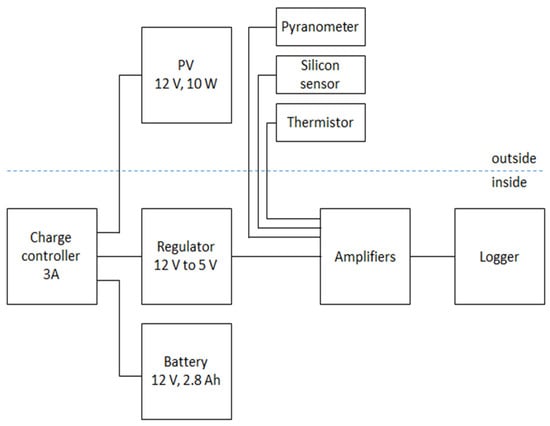
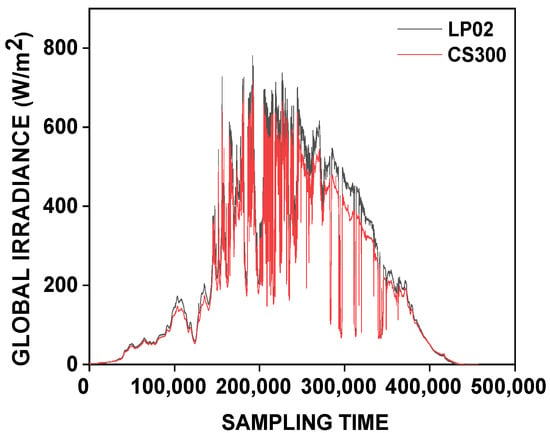
The researchers installed an LP02 thermopile pyranometer and a CS300 silicon-based pyranometer on a rooftop at the Scientific City of Brazzaville. Global horizontal irradiance describes the solar power arriving on a horizontal surface, including direct and diffuse sunlight.
A thermopile measures heating produced by absorbed radiation. A silicon detector instead converts incident light into an electrical signal. Differences in wavelength sensitivity can affect how instruments respond to atmospheric conditions. The available sunlight is only one component of photovoltaic output; panel orientation and obstacles also matter, as explained in our solar shading analysis.
Evaluating satellite estimates against ground measurements
| Ground sensor | R² versus SolarGIS | RMSE (kWh/m²/day) |
|---|---|---|
| LP02 | 0.91 | 0.17 |
| CS300 | 0.77 | 0.59 |
Root mean square error summarizes the magnitude of discrepancies between corresponding observations. Its squaring operation gives larger discrepancies greater influence. The coefficient of determination, R², describes agreement under the study’s specified calculation; it is not a percentage guarantee of accurate future generation. Ground validation is also valuable in other remote-sensing applications, including geological mapping in the neighboring Democratic Republic of the Congo.
What 50 kWp could provide
Using an estimated annual yield of 1,424 kWh per installed kWp, the researchers calculate 71,200 kWh per year. Dividing by a benchmark of 250 kWh per household per year gives about 285 households. That benchmark represents only about 0.685 kWh per home per day, or an average continuous load of roughly 29 watts.
Annual energy totals cannot demonstrate reliable electricity service at every hour. Batteries, inverter limits, distribution losses, weather variability and simultaneous peak loads can change the number of customers a mini-grid supports. A village with refrigeration, workshops or electric cooking could require substantially more energy and peak capacity. Different supply options, such as the proposed Comoros geothermal development, have different generation profiles.
The University of Leeds research announcement emphasizes the need for additional calibration in other climatic regions. The Brazzaville observations offer a basis for preliminary site screening, not a nationwide guarantee. Developers would still need load surveys, local resource assessments, battery sizing and lifecycle financial models before construction.
Featured image: solar monitoring station block diagram, Figure 2 of Tchissambou et al., Energies (2026), CC BY.


Leave a Reply