The Rust release team published Rust 1.100.1 on November 27, 2026, correcting a regression that caused some valid iterator implementations to be rejected. The official announcement attributes the problem to a modification of an experimental constant-evaluation version of the Iterator trait. Although stable programs could not directly use the experimental feature, the change interfered with otherwise supported trait implementations. The fix follows the major Rust 1.100 release earlier in November.
Traits describe behavior rather than storage
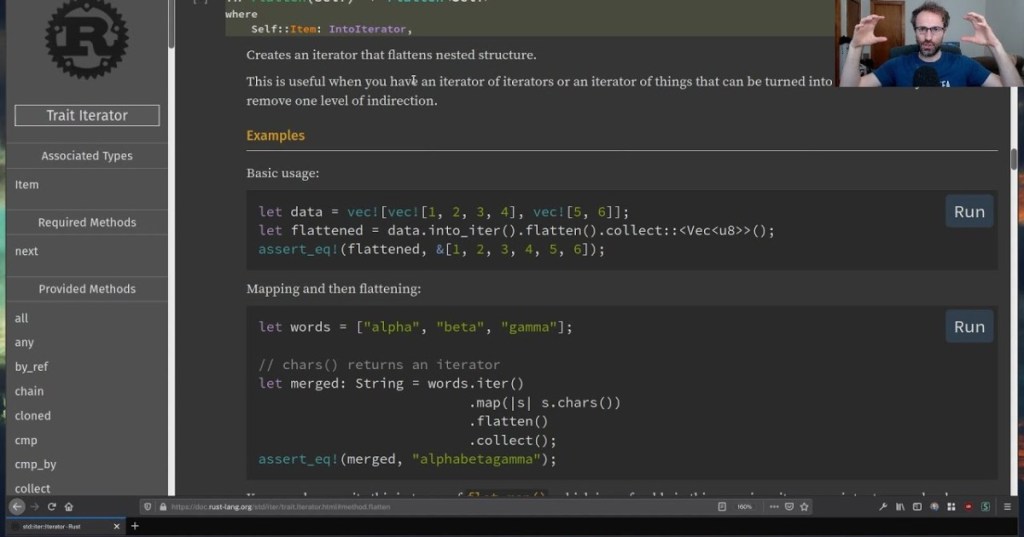
A Rust trait defines a contract that types can implement. Iterator describes a sequence of values produced through a method named next, which returns an optional item. An implementation specifies an associated Item type, allowing callers and generic functions to determine the element type without committing to a particular collection or storage layout. Generic trait bounds specify required capabilities rather than requiring all values to share a single concrete type. Our Rust structs and methods lesson introduces the related distinction between data fields and operations associated with types.
When experimental changes affect stable code
The original regression report, issue 166229, describes a failure when a generic wrapper forwards iterator operations through a Deref implementation. The associated target type is constrained to implement Iterator, yet the compiler reported E0277, a missing trait implementation error. The reproduction was distilled from objc2 version 0.4.1 and required no external dependencies to demonstrate the problem. Trait resolution is important when code operates on generic references and wrappers, as covered in our ownership and borrowing lesson.
Constant evaluation enables certain computations before runtime. Making more library operations available in constant contexts requires changes to compiler and library semantics. Stable features must continue functioning while experimental capabilities develop. The maintainers addressed the November regression by reverting the relevant experimental Iterator change. The patch does not stabilize constant iterators, introduce a new iterator API or establish a runtime-performance improvement.
Validate toolchain upgrades
Developers using rustup can obtain the patched stable toolchain with rustup update stable. Projects pinned to a specific version should review their toolchain configuration and update the pin through their normal change process. A clean build and test suite provide evidence that affected dependencies compile correctly under the new release. The compiler’s evolving architecture, including the parallel frontend work covered earlier, makes regression testing across different project configurations valuable. The official release notes identify the iterator regression as the point release’s fix. For affected projects, restored compilation compatibility is the important outcome, not an unsubstantiated speed increase.
We volunteer daily to ensure the credibility of the information on this platform is Verifiably True. If you would like to support to help further secure the integrity of our research initiative, please scan the QR code below.



Leave a Reply