
Rust’s compiler is beginning to make better use of multicore processors during the work of understanding source code. Starting with the November 14, 2026 nightly toolchain, rustc activates two frontend threads by default. The compiler team announced the change on November 16, following several years of experimental development.
The switch is significant for developers who frequently wait for type checks and code analysis. In the team’s single-crate benchmark suite, two frontend threads lowered mean checking time by 21.95%. Eight threads lowered the same measure by 44.23%. Neither figure describes every Rust project, and the stable compiler has not adopted the new default.
Compiler-team educational lecture, June 2025: Michael Goulet explains the Rust frontend and its internal representations. Background material, not a November 2026 demonstration.
Why the frontend matters
Compilers transform human-readable source into executable instructions. Before the backend generates machine code, the frontend must interpret program structure, resolve names, validate types and enforce language rules. Rust adds ownership and borrowing checks that help reject many memory-safety errors at compile time.
Cargo already distributes independent crates, or units of Rust compilation, across available processor resources. LLVM also performs work concurrently. The new default targets parallel execution inside the frontend of an individual compiler process, giving larger crates another opportunity to use otherwise idle cores. The compiler development guide documents the underlying parallel compiler infrastructure.
What the benchmarks actually show
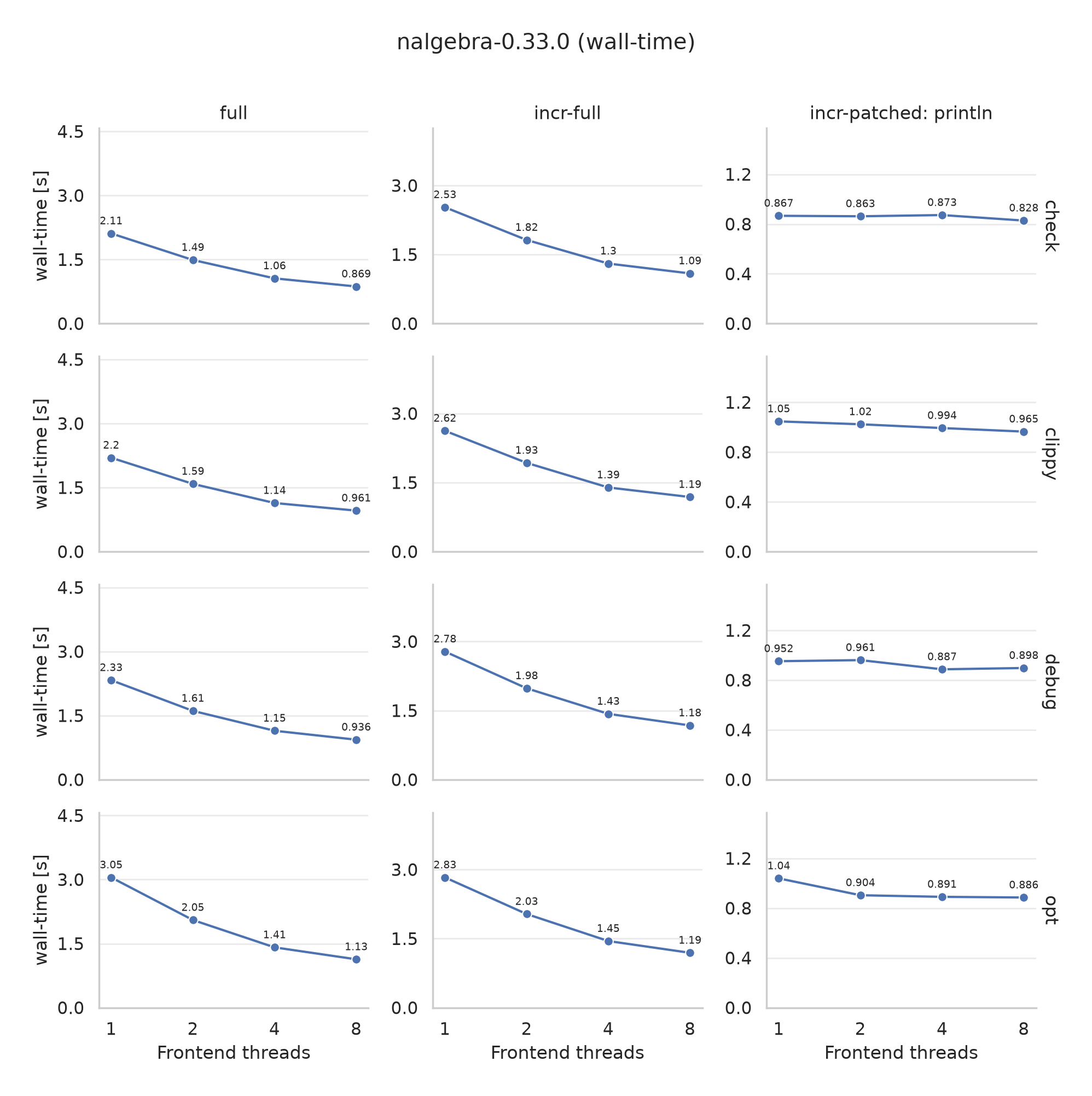
The November report measured a leaf crate in a dependency graph. With two threads, the mean wall-time reductions across check, Clippy, debug and optimized profiles were 21.95%, 20.74%, 14.2% and 12.51%, respectively. At eight threads, the corresponding reductions reached 44.23%, 41.76%, 36.1% and 27.88%.
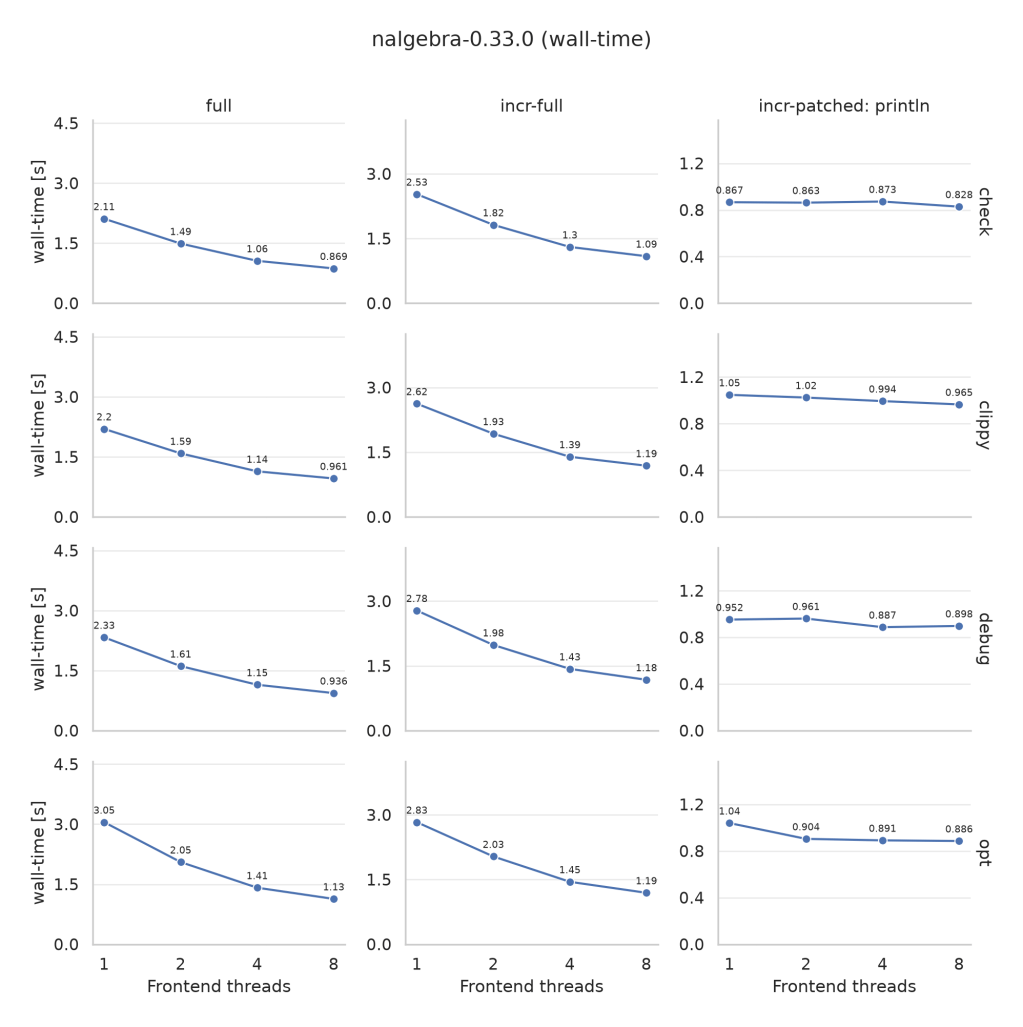
A full dependency graph provides a different test. Checking Cargo itself on an eight-core machine took 36.7 seconds with one frontend thread and 30.8 seconds with eight. Calculating (36.7 − 30.8) ÷ 36.7 gives a 16.1% reduction in elapsed time. The smaller gain illustrates the competition for CPU resources when multiple compiler processes are already active.
For a developer running repeated checks, the useful metric is the time between editing source and receiving actionable feedback. A faster clean build may help continuous integration, while a small incremental improvement may matter more during everyday editing. Thread count alone cannot describe either workflow.
EuroRust 2025: compiler contributor Noratrieb explains how Rust’s compilation stages interact, including LLVM and linking.
More threads are not always better
Parallel work carries overhead. Threads coordinate shared data, contend for memory bandwidth and sometimes wait for results from other stages. Higher thread counts can increase memory consumption. Compiler engineers must also investigate output reproducibility and inconsistent diagnostic ordering before wider deployment. The 2026 Rust project goal outlines continuing optimization efforts.
Teams experimenting with nightly builds should compare equivalent projects, compiler flags, dependency caches and hardware. Track elapsed time, peak memory and build failures. Keep production toolchains pinned until the project’s requirements justify a change. The Cargo build-performance guide offers further tuning context.
A broader shift toward efficient software development
BitcoinVersus.Tech previously covered Rust compiler benchmark improvements, Rust 1.100, a TypeScript compiler port written in Rust and GitHub programming-language trends. The parallel frontend represents a different kind of progress: improving the tools that build software rather than changing the language itself.
The milestone is an experiment on the nightly channel, not a stable release promise. If the compiler team resolves remaining defects, developers may eventually benefit from shorter feedback cycles without replacing their processors.
Sources
- Rust Blog, November 16, 2026: announcement and benchmark data
- Rust Blog, November 9, 2023: earlier experimental parallel frontend
- Rust compiler development guide: parallel compilation
- Rust project goals: parallel frontend
- Phoronix, November 16, 2026: independent coverage
We volunteer daily to ensure the credibility of the information on this platform is Verifiably True. If you would like to support to help further secure the integrity of our research initiative, please scan the QR code below.



Leave a Reply