Siemens announced an agreement to acquire Breker Verification Systems on November 17, 2026, expanding its electronic design automation portfolio into system-level semiconductor verification. The company’s announcement targets increasingly complex processor and accelerator designs, including Arm and RISC-V architectures. Closing is expected in December, subject to customary conditions. Financial terms remain undisclosed. The deal follows the separate planned Lauterbach acquisition, which addresses embedded software debugging and trace technology.
Why verification becomes a system-level problem
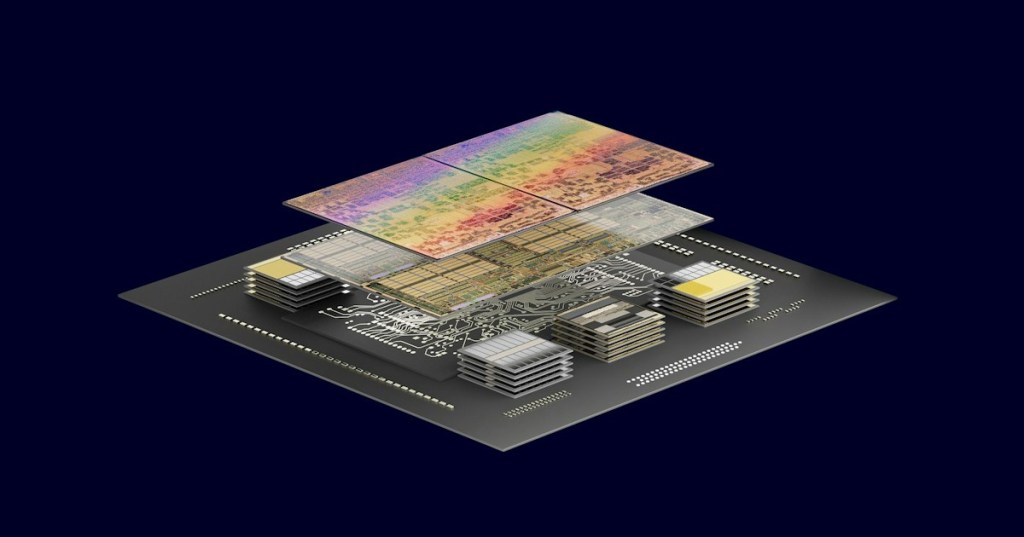
A system-on-chip integrates processing cores, memory controllers, communication fabrics and specialized accelerators. Individual components may pass their own functional tests while still behaving incorrectly when connected. For example, two processing cores can encounter unexpected interactions when modifying shared memory while a peripheral simultaneously transfers data. Power-state changes, interrupts and software scheduling introduce further combinations. The number of possible operating sequences grows rapidly, making exhaustive manual testing impractical. Emerging multicore designs such as NextSilicon’s Arbel processor architecture illustrate the importance of validating system integration.
Generating tests from verification intent
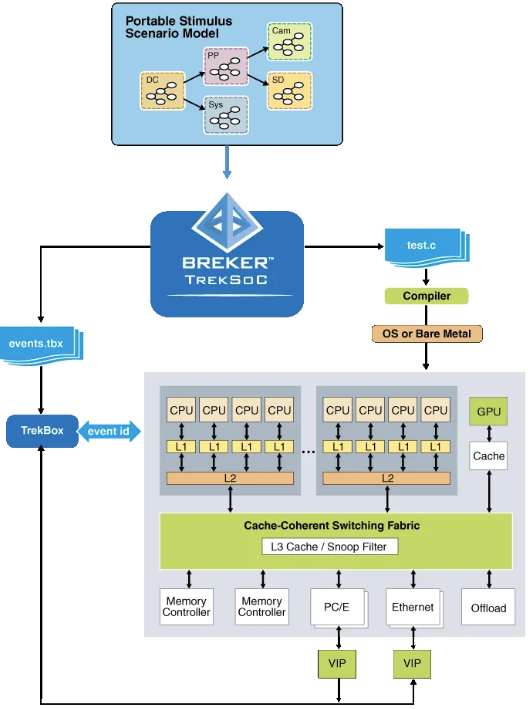
Breker’s Trek suite uses scenario models informed by Accellera’s Portable Stimulus Standard. Rather than individually scripting every sequence, engineers describe intended behaviors and constraints. Test synthesis produces executable scenarios, including expected outcomes and information used to evaluate coverage. Reusing verification intent across simulation, emulation and later hardware testing can reduce duplicated engineering effort. Generated tests still require review: an incomplete scenario model may omit critical behavior, and a faulty expected-result model can conceal design defects.
Siemens’ technical discussion describes how the technology could complement Questa One and Avery verification intellectual property. Protocol verification focuses on compliance at interfaces, whereas system verification examines interactions across connected subsystems. Both are necessary. The challenges extend beyond instruction execution, especially as companies such as Andes Technology reconsider processor development priorities.
The commercial rationale
The proposed transaction brings a specialist verification supplier into a larger engineering software business. Siemens could offer customers a more integrated workflow spanning design simulation, system-level tests and debugging. Independent reporting by EE Times places Breker and Lauterbach within that broader strategy. Potential integration benefits depend on software compatibility, engineering support, licensing arrangements and customer adoption. Neither company has disclosed a purchase price or a measured productivity improvement resulting from the acquisition.
Semiconductor advances increasingly involve simultaneous changes to architecture, packaging and materials, as demonstrated by recent research into nanoscale interconnects. Verification cannot replace physical qualification or manufacturing tests, but it can identify logical integration errors before costly fabrication. Siemens’ November agreement represents a strategic investment in that earlier stage of development. Completion of the transaction and demonstrated integration of the acquired technology remain separate milestones.
We volunteer daily to ensure the credibility of the information on this platform is Verifiably True. If you would like to support to help further secure the integrity of our research initiative, please scan the QR code below.



Leave a Reply