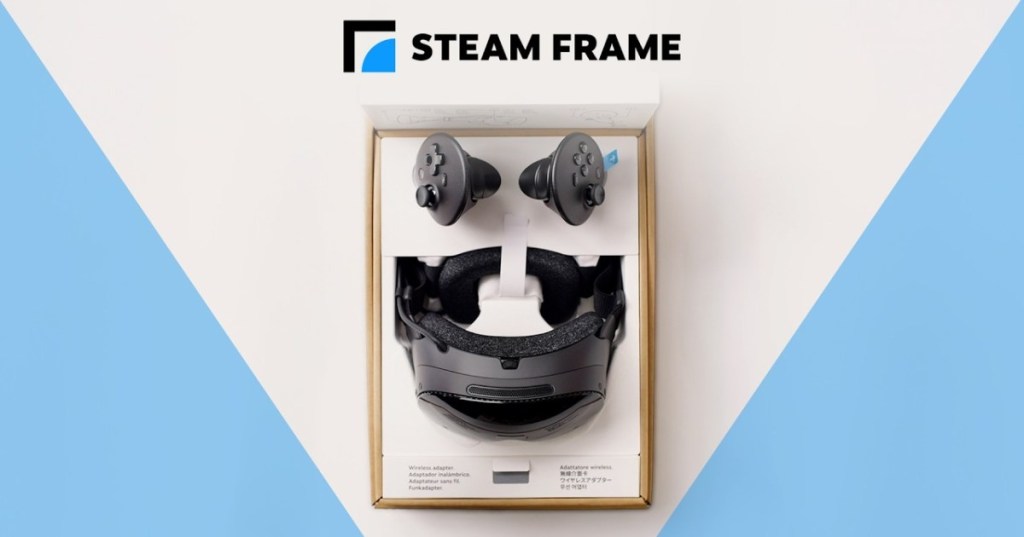
Valve released SteamOS 0.5.11 Beta for Steam Frame and SteamVR 2.19.5 Beta on November 25, 2026. The headset release notes describe revised room-view compositing, improved video decoding and tracking refinements. The companion SteamVR beta supplies corresponding host-side changes. Both are test-channel releases rather than confirmed stable deployments. Valve’s earlier SteamOS preview work on conventional gaming hardware addresses related graphics and timing challenges, but uses a different software branch.
Compositing the real room into a virtual scene
Chroma keying identifies pixels associated with a selected color and replaces or blends them with another image. In a headset, the replacement can be a camera view of the user’s physical surroundings. The technique requires appropriate color thresholds because game content can contain colors similar to the selected key. Valve’s new host-side settings allow individual applications to use different keying configurations. The change also makes partial room-view compositing available in the headset environment without requiring the full background replacement setting.
The updated implementation retains foveated sharpening during chroma-key streaming. Foveated techniques concentrate image processing in a region of interest rather than applying equal detail everywhere. Eye tracking may help position that region, depending on the configuration. Sharpening is distinct from generating additional rendered detail, and neither process alone establishes a reduction in end-to-end latency. Graphics timing is also a central concern in the DXVK 3.2 frame-pacing changes.
Streaming introduces several latency stages
Remote rendering involves a host GPU producing images, an encoder compressing them, a network transporting data and the headset decoding and presenting frames. At a hypothetical 90 Hz refresh rate, the display interval is about 11.1 milliseconds. The total motion-to-photon delay is not simply that interval. Tracking, rendering, encoding, transmission and decoding can each contribute variable delays. Valve reports improved decoding efficiency permitting higher default streaming resolutions, but has not supplied a controlled numerical latency benchmark in the announcement.
Power consumption and beta validation
The beta warns that using Key Content mode activates the camera, increasing headset power consumption. It also addresses charging in low-power states, tracking while nearly stationary and idle energy usage when a virtual-reality game remains open. The November 26 GamingOnLinux report distinguishes the headset release from the separate SteamOS 3.9.7 beta. Software-specific behavior and hardware compatibility matter, as illustrated by the earlier Mesa graphics stack update.
Users testing the beta should compare representative games at consistent resolution and network conditions, check frame timing and tracking stability, and observe battery behavior. Host and headset beta versions must both be compatible for the new streaming compositing features. The Steam Machine hardware rollout reinforces the distinction between hardware availability and software readiness. The November releases represent incremental engineering improvements, not proof of universal performance gains.


Leave a Reply