
Open-source graphics translation project DXVK released version 3.2 on November 26, 2026. The release announcement introduces support for Vulkan presentation timing on compatible Linux graphics configurations. DXVK is a component of the Proton ecosystem that helps Windows games run on Linux. The update addresses how consistently rendered frames reach a display, a concern distinct from the total number of frames produced each second. Our analysis of Steam operating-system adoption provides broader context for the expanding Linux gaming ecosystem.
Translation and display scheduling
DXVK translates supported Direct3D 8 through Direct3D 11 graphics operations into Vulkan. The graphics driver then executes rendering work on the GPU. A presentation system coordinates the completed images with the display. On Wayland desktops, a compositor participates in scheduling their presentation. The translation layer cannot independently control every part of that pipeline.
The separation resembles another compatibility challenge covered in our FEX 2611 reporting. FEX translates CPU instructions across processor architectures, whereas DXVK translates graphics interfaces. Neither should be mistaken for a universal solution to game compatibility.
Why frame pacing matters
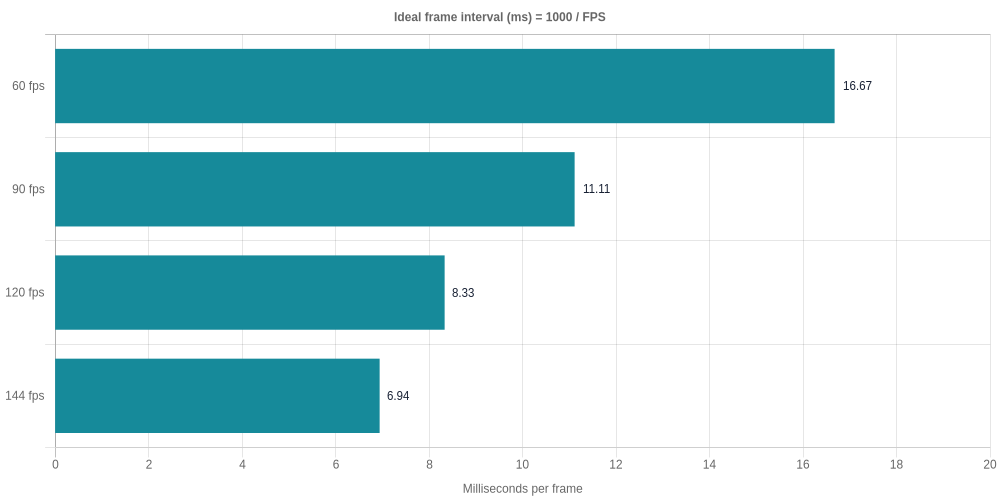
A game producing 60 frames per second at perfectly regular intervals delivers a new frame every 16.67 milliseconds. At 90 fps the ideal interval is 11.11 ms; at 120 fps it is 8.33 ms; at 144 fps it is 6.94 ms. The calculation divides 1,000 milliseconds by the target frame rate. Real games can vary substantially around an average because of shader compilation, resource loading, CPU scheduling or rendering complexity.
The Vulkan extension VK_EXT_present_timing gives participating software timing information and scheduling capabilities. DXVK can use the mechanism when emulating a different refresh rate in fullscreen mode or operating its internal frame limiter. According to Phoronix, compatible compositor and driver support are prerequisites. Vertical synchronization must also be enabled.
Memory management and compatibility
The release also revises graphics memory management and resource uploads to address potential interruptions. When a game exceeds available VRAM, moving resources between memory locations can introduce delays. Driver-side improvements, such as those discussed in our Mesa graphics stack coverage, remain complementary rather than interchangeable.
A redesigned NVIDIA Reflex implementation addresses a problem that could restrict certain games to 10 fps. The release notes additionally describe a tradeoff on AMD Windows drivers: descriptor heaps are disabled by default because of compatibility problems, potentially reducing performance in CPU-limited workloads. GamingOnLinux independently reported the changes on November 27.
Valve’s original Steam Deck introduction, 2021. Historical platform context, not footage or a benchmark of DXVK 3.2.
What players should measure
Compatibility updates do not guarantee identical results on every device. A useful comparison holds the game build, graphics settings, driver, resolution and frame limiter constant. Frame-time distributions and percentile measurements can identify irregular presentation that average FPS conceals. Our CachyOS coverage also illustrates why kernel and anti-cheat support must be assessed independently of graphics translation. DXVK 3.2 represents a targeted engineering improvement; its practical benefit requires compatible system components and controlled testing.
Featured image: Valve Steam Deck OLED press kit, archival illustration.
We volunteer daily to ensure the credibility of the information on this platform is Verifiably True. If you would like to support to help further secure the integrity of our research initiative, please scan the QR code below.



Leave a Reply