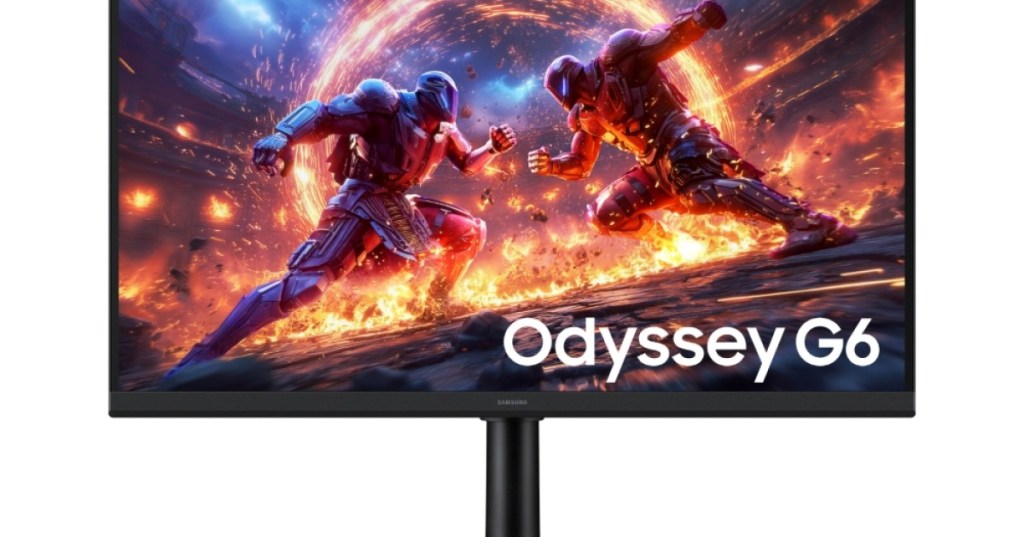
Samsung announced the 27-inch Odyssey G6 G60H gaming monitor on November 23, 2026, with a maximum refresh rate of 1,100 Hz in its lower-resolution mode. According to the U.S. launch announcement, retail distribution begins in December at $899.99. The Fast IPS display uses a dual-mode architecture, following a trend also evident in Gigabyte’s dual-mode OLED gaming monitor. The headline specification comes with an important resolution tradeoff.
Trading spatial detail for temporal resolution
In its native 2,560 × 1,440 mode, the G60H is rated for up to 600 Hz. Its 1,100 Hz mode uses 1,280 × 720, as independently reported by Tom’s Hardware on November 24. The higher-speed mode carries 75% fewer image pixels per refresh. The two modes prioritize different aspects of visual information: one preserves spatial detail, while the other prioritizes frequent display updates.
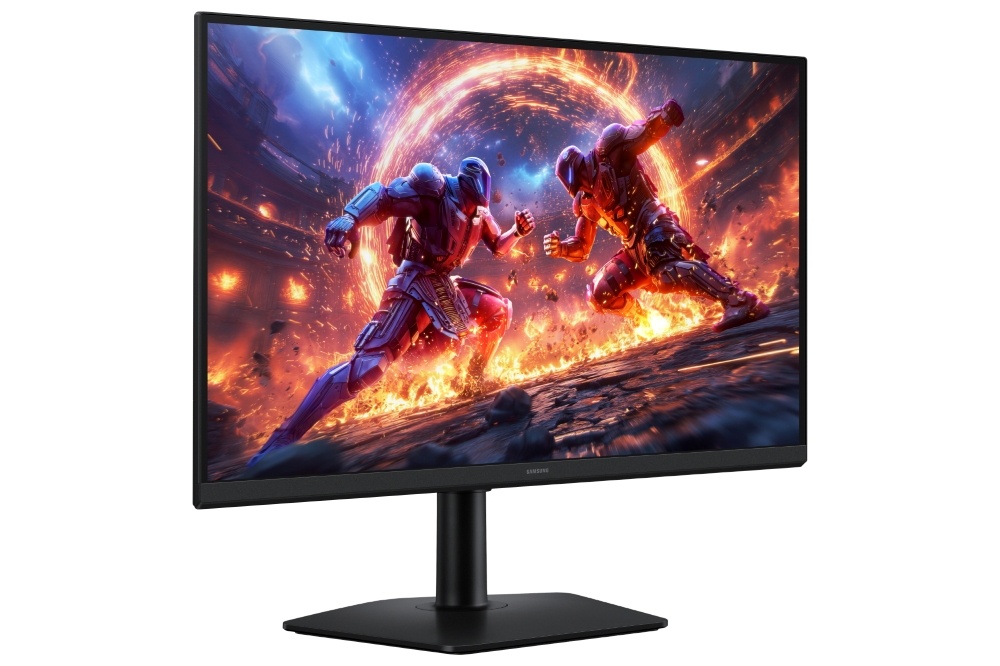
Display engineers must also manage how quickly individual pixels change their optical state. Our coverage of high-mobility display transistors examines another aspect of the engineering challenge. Samsung specifies a nominal 1 ms gray-to-gray response in its Extreme setting; its footnote defines the reported average as a value between 1.00 and 1.99 ms truncated to a whole number. That specification is not equivalent to the time required for every pixel transition.
What a sub-millisecond refresh interval means
The theoretical duration of a refresh cycle equals 1,000 divided by the refresh frequency in hertz, expressed in milliseconds. A 240 Hz display has a 4.167 ms interval, while 480 Hz corresponds to 2.083 ms. Samsung’s 600 Hz mode reduces the interval to 1.667 ms, and its 1,100 Hz mode reaches approximately 0.909 ms. Switching between the two Samsung modes therefore shortens the nominal refresh interval by approximately 0.758 ms, or 45.5%.
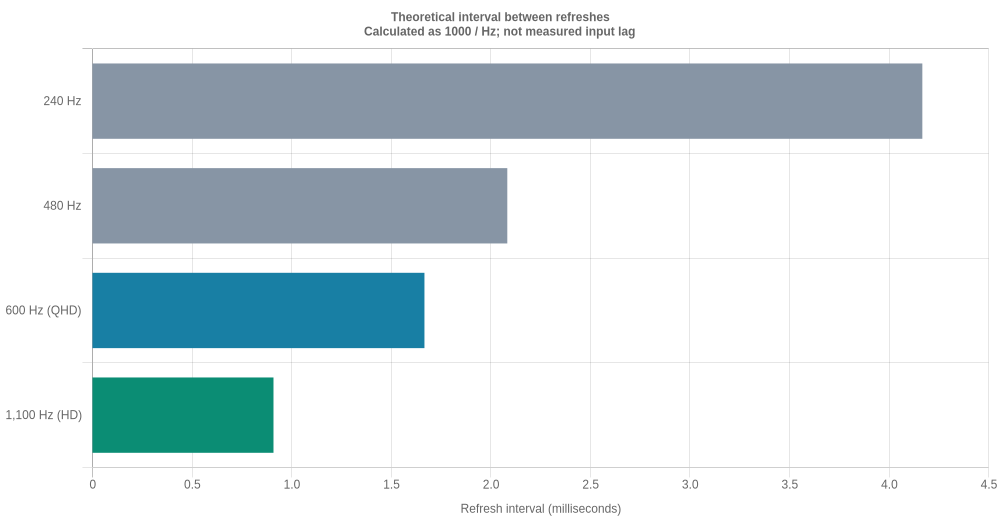
The calculations quantify display timing alone. Mouse polling, CPU simulation, GPU rendering, buffering, synchronization and pixel response contribute additional delays. Actual competitive performance depends on the entire system, not solely the advertised display frequency. Hardware availability also matters, as our GPU market analysis illustrates.
Compatibility and competitive gaming
Samsung lists DisplayPort 2.1 and two HDMI 2.1 connections, along with variable-refresh compatibility. The manufacturer notes that AMD FreeSync Premium does not support 1,100 Hz and that macOS does not support either dual mode or the native maximum refresh rate. Buyers should check graphics-card support, cable requirements and actual game frame rates. Fast IPS also differs from the emissive OLED architecture discussed in our OLED gaming display market report. Independent tests of motion clarity, overshoot and input latency will determine how much practical benefit the G60H delivers. The new display extends the upper refresh-rate boundary, but the most suitable operating mode will depend on the game, hardware and player’s priorities.
We volunteer daily to ensure the credibility of the information on this platform is Verifiably True. If you would like to support to help further secure the integrity of our research initiative, please scan the QR code below.

BitcoinVersus.tech is not a financial advisor. The media platform reports on financial subjects purely for informational purposes.


Leave a Reply