The graphics processor market is moving in two directions. Jon Peddie Research (JPR), in its November 23, 2026 release, estimated that worldwide PC GPU shipments totaled 72.8 million units in the third quarter, declining 3.6% from the preceding quarter. Its separately tracked data center compute GPU market expanded 29% to approximately 3.75 million units.
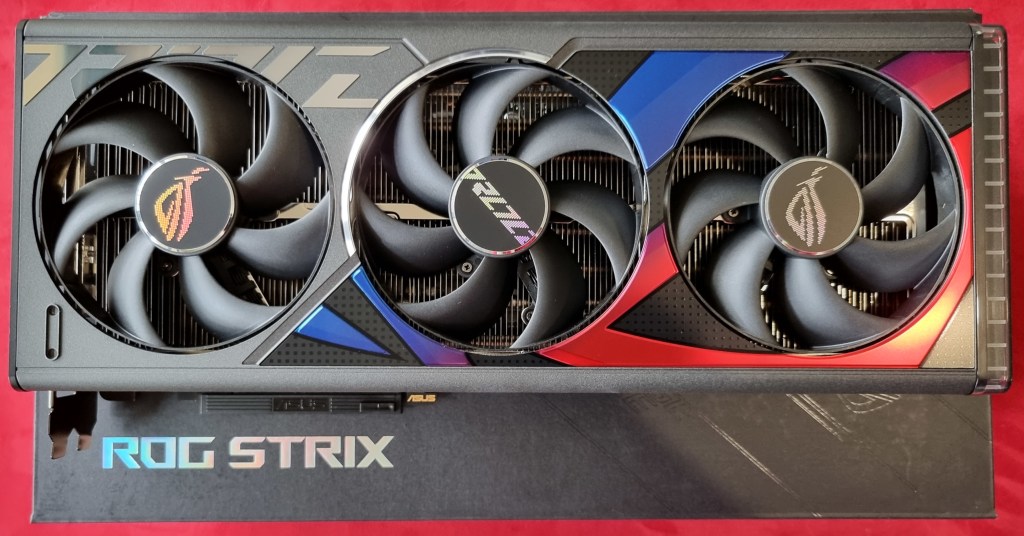
The PC figure includes integrated graphics and dedicated processors for client computers. The data center estimate is outside that total. Consequently, the two growth rates reveal a divergence in shipment trends, not a direct transfer of chips from gamers to AI operators. Featured photograph: an archival ASUS ROG Strix RTX 4090, photographed by Benlisquare in 2022, CC BY-SA 4.0.
SmartChart #9: Growth on opposite sides of zero
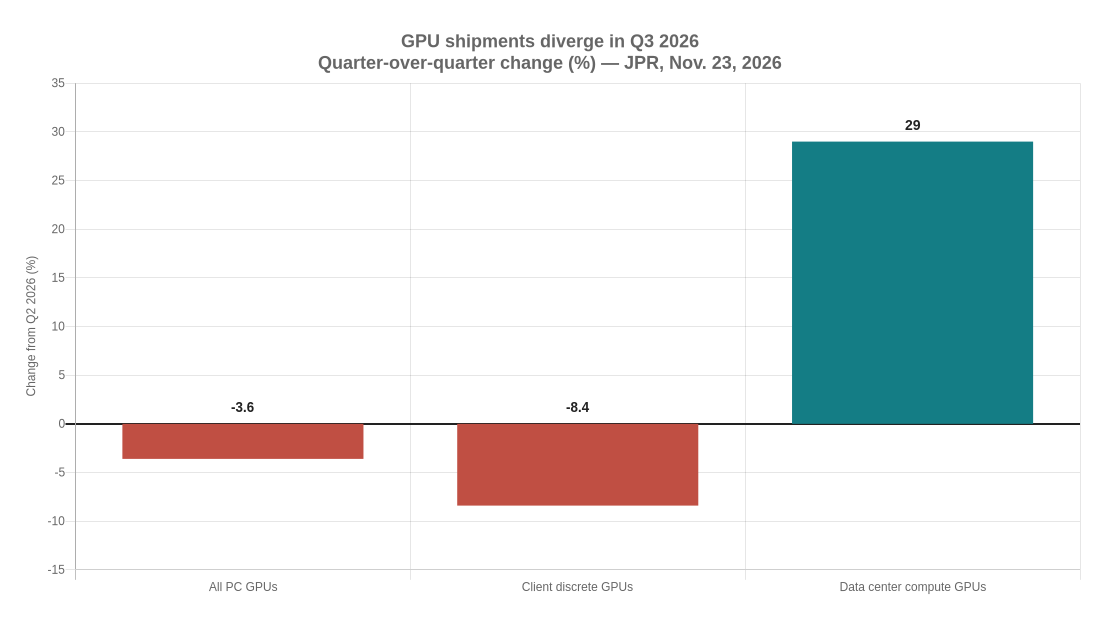
A signed vertical bar chart places each rate against a common zero baseline. The difference between the PC-wide decline and data center growth is 32.6 percentage points. Dedicated client graphics shipments fell 8.4% sequentially, highlighting a steeper contraction than the broader PC graphics market. A stacked chart would misrepresent overlapping categories, while a line would imply a historical sequence not supplied by the three observations.
Why the consumer market is under pressure
Graphics cards require a processor, memory devices, a circuit board and power conversion circuitry. Changing memory capacity can involve redesigning the board, qualifying different memory configurations and adjusting firmware. Manufacturers therefore cannot always respond to higher memory component costs simply by reducing capacity. Buyers may delay purchases when the price of a new card rises faster than its perceived performance advantage.
The distinction between integrated and dedicated graphics also matters. Integrated GPUs generally share system memory, whereas discrete cards usually have local graphics memory. High-performance AI accelerators may instead use stacked high-bandwidth memory. The packaging, thermal constraints and supply chains differ. Igor’sLAB’s November 25 analysis discusses those manufacturing trade-offs. Neither market report establishes a precise causal relationship between data center purchasing and consumer GPU shortages.
Market share is not the same as gaming-card share
JPR’s published supplier chart shows why an increase in overall PC GPU market share cannot automatically be attributed to discrete gaming cards. A processor sold with integrated graphics also contributes to the total. Shipments into distribution are not necessarily retail purchases, and unit counts cannot establish revenue or profit margins without additional pricing information.
The split adds context to recent BitcoinVersus.Tech coverage of Valve’s memory supply constraints, NVIDIA’s data center revenue, GPU memory requirements for AI and local inference on AMD processors.
For hardware engineers and buyers, the important question is whether future memory production, component availability and system demand bring client graphics prices back into alignment with household budgets. Quarterly shipment estimates describe the market’s direction; they do not predict the price or availability of an individual graphics card.
We volunteer daily to ensure the credibility of the information on this platform is Verifiably True. If you would like to support to help further secure the integrity of our research initiative, please scan the QR code below.



Leave a Reply