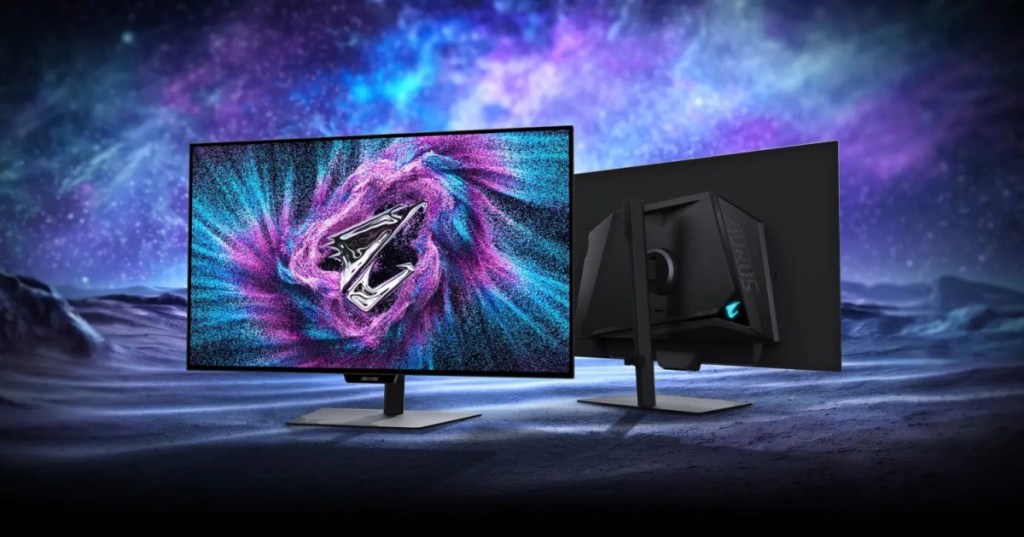
Gigabyte has announced availability of its AORUS ELITE FO32U24G gaming monitor, a 31.5-inch display that operates at two distinct combinations of resolution and refresh rate. The November 26 announcement, distributed the previous evening in the United States, describes a fourth-generation tandem WOLED panel supporting 3840 × 2160 pixels at 240 Hz or 1920 × 1080 pixels at 480 Hz. The company cautions that regional availability may vary.
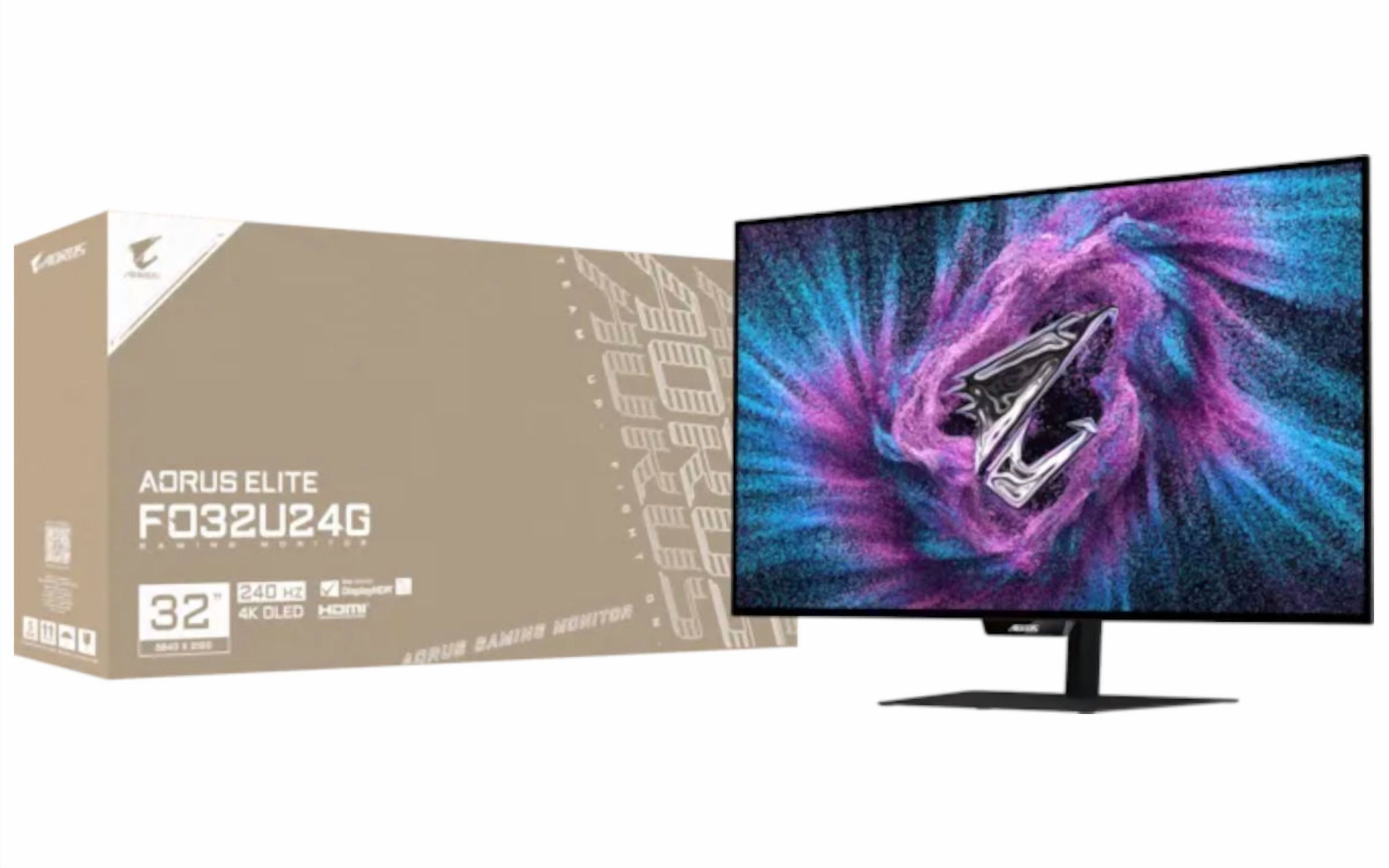
Twice the refresh rate, one-quarter of the pixels
A refresh rate specifies how frequently a display can update its image. At 240 Hz, the interval between refreshes is approximately 4.17 milliseconds; at 480 Hz, it falls to 2.08 milliseconds. Faster updates can reduce the time between successive images of a moving object, provided the graphics processor supplies new frames sufficiently quickly. A display operating at 480 Hz does not automatically cause a game to render at 480 frames per second.
The 4K mode contains 8,294,400 image pixels, compared with 2,073,600 in Full HD. At their respective maximum refresh rates, the two modes represent approximately 1.99 billion and 995 million active image pixels per second. The faster mode therefore processes half as many active image samples per second despite doubling the refresh rate. Actual interface bandwidth also depends on blanking intervals, color encoding and compression; graphics workload is influenced by shaders, geometry and game simulation.
A competitive player may prioritize the shorter refresh interval, while someone playing a visually detailed adventure game may prefer native resolution. The two modes illustrate the engineering trade-off behind the growing market for OLED gaming displays, examined in our OLED monitor shipment analysis.
Stacking organic light emitters
Unlike a conventional backlit LCD, an OLED panel produces light at its pixels. Tandem structures stack light-emitting units, allowing the required brightness to be distributed across multiple layers. Lower electrical stress per emissive unit at a given luminance can improve efficiency and potentially reduce degradation, although actual lifetime depends on materials, temperature and operating conditions. Igor’sLAB describes the panel architecture separately from its gaming features.
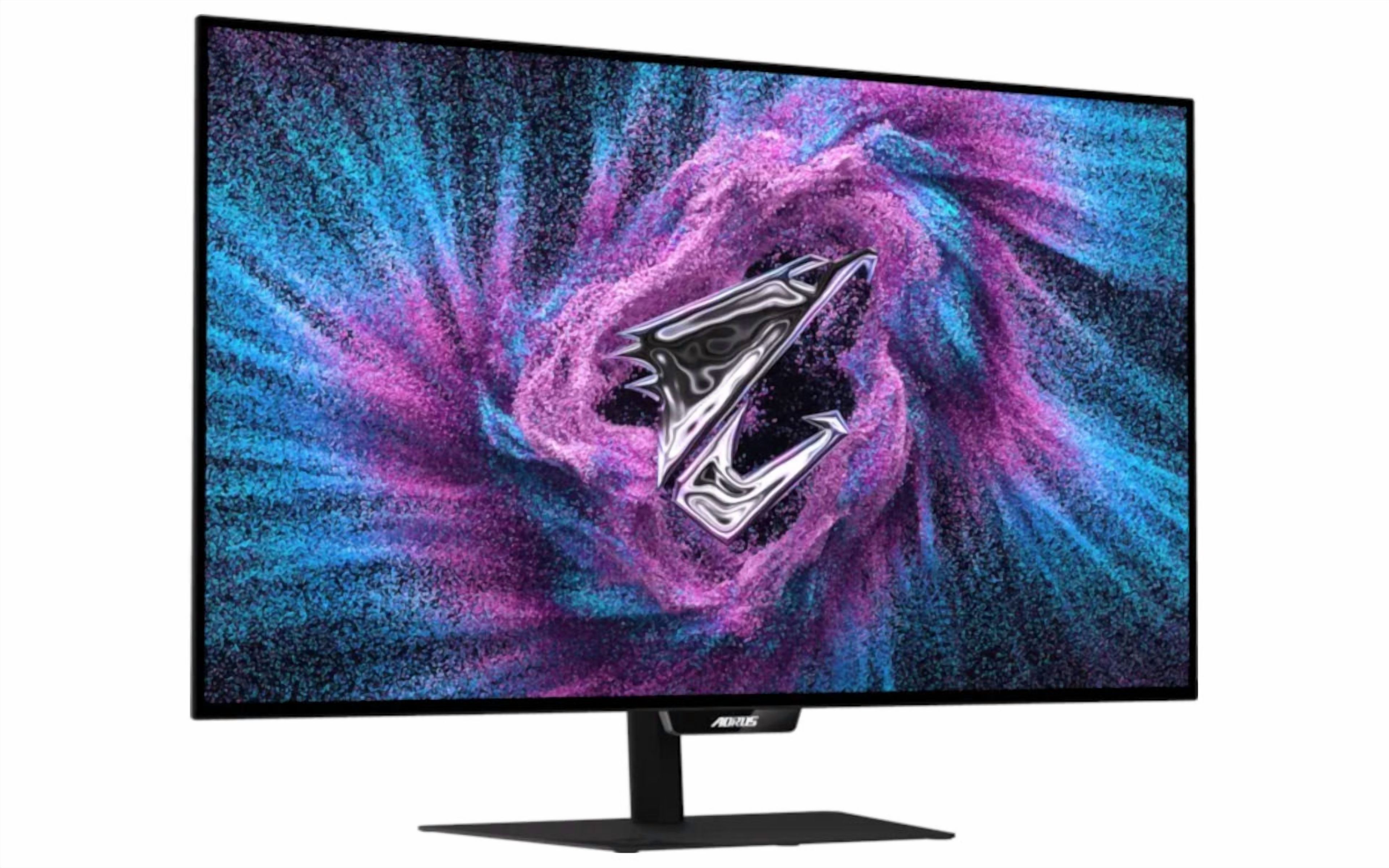
Gigabyte’s specification sheet lists a peak HDR brightness of 1,500 nits, 99.5% DCI-P3 coverage using the CIE 1976 convention and a gray-to-gray response time of 0.03 milliseconds. Peak luminance is not sustained full-screen brightness, and pixel transition time is not total input-to-display latency. Independent testing would be necessary to establish performance across different image patterns and operating modes. Related advances include faster display transistors, electrophoretic color displays and semiconductor polarization optics.
Connectivity and long-term operation
The monitor provides two HDMI 2.1 inputs, a DisplayPort 2.1 connection and USB-C with up to 65 W of power delivery. Its integrated keyboard, video and mouse switch allows shared peripherals across connected computers. VideoCardz’s September coverage documents the earlier specification release, following the monitor’s Computex appearance.
OLED pixels can age unevenly when static interface elements remain visible for extended periods. Gigabyte integrates thermal management and automated panel-care functions to mitigate that risk, rather than eliminate it. A three-year warranty is advertised, subject to regional conditions. The November availability announcement establishes a commercial milestone; independent measurements of motion clarity, sustained brightness, latency and power consumption will determine the practical value of the two display modes.
Featured image: Gigabyte product imagery, via Overclockers.ua.
We volunteer daily to ensure the credibility of the information on this platform is Verifiably True. If you would like to support to help further secure the integrity of our research initiative, please scan the QR code below.

BitcoinVersus.tech is not a financial advisor. This media platform reports on financial subjects purely for informational purposes.


Leave a Reply