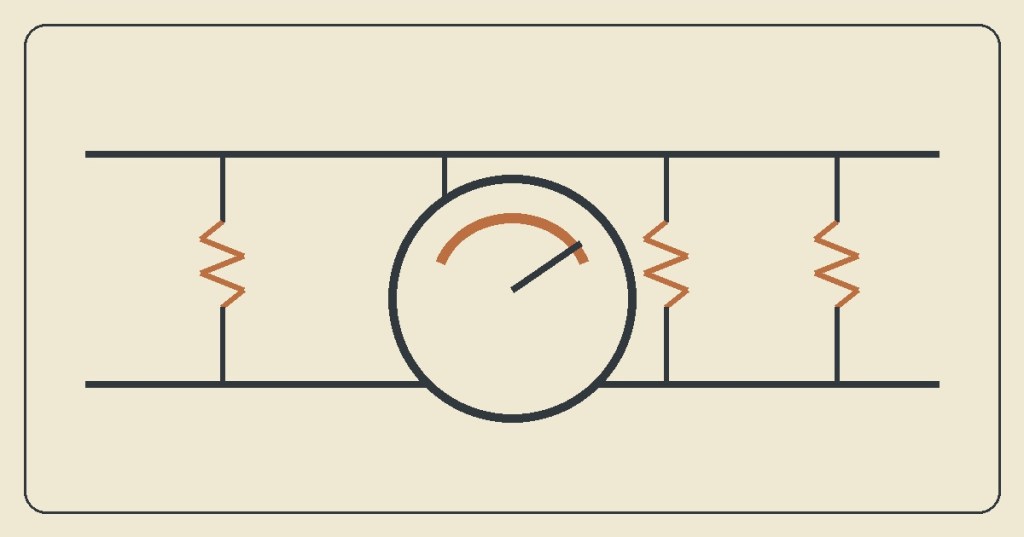
OSET.002 introduces safe digital multimeter use and voltage measurement. A meter is one of an electrical technician’s most useful tools, but selecting the wrong function, input jack, or equipment rating can create a serious hazard.
Inspect before measuring
Before using a digital multimeter, inspect the meter, display, selector, probes, and test-lead insulation. Damaged equipment should be removed from service. The meter and accessories must also be appropriately rated for the circuit being tested. Fluke’s electrical testing safety guidance explains instrument inspection, CAT ratings, test leads, and verification procedures.
Know the basic connections
For a typical voltage measurement, the black lead connects to COM and the red lead connects to the voltage input marked V. Select AC voltage for alternating-current systems and DC voltage for direct-current systems. Never assume the lead position or selector setting is correct simply because the meter was used previously.
Understand CAT ratings
Measurement-category ratings describe the transient environment for which a meter is designed. A voltage number alone does not tell the whole safety story. Technicians should verify that the meter and probes are suitable for the electrical system and work location before making contact.
Voltage is measured across two points
A voltage measurement compares electrical potential between two points. In field work those points depend on the circuit and task. Do not probe unfamiliar energized equipment merely to practice. Training measurements should be performed on an appropriate low-energy training circuit or under the procedures and supervision required by the workplace.
Live-dead-live verification
When verifying absence of voltage, the technician must also establish that the test instrument itself is functioning. A common verification sequence is to test the instrument on a known energized source, test the circuit that is expected to be de-energized, and then verify the instrument again on the known source. This helps prevent a failed meter or damaged lead from producing a false assumption that a circuit is dead.
Technician exercise
- With the meter disconnected from a circuit, identify COM, voltage, and current input jacks.
- Find the meter’s CAT and voltage ratings.
- Inspect both test leads for damaged insulation or probe tips.
- Identify the AC-voltage, DC-voltage, resistance, and continuity selector positions.
- On an appropriate safe training source, practice selecting the correct voltage function and reading the display.
Video reference
OSET takeaway
A technician should be able to inspect a meter, identify its ratings, select the correct input and function, understand what a voltage measurement represents, and follow the required safety procedure before trusting a measurement.


Leave a Reply