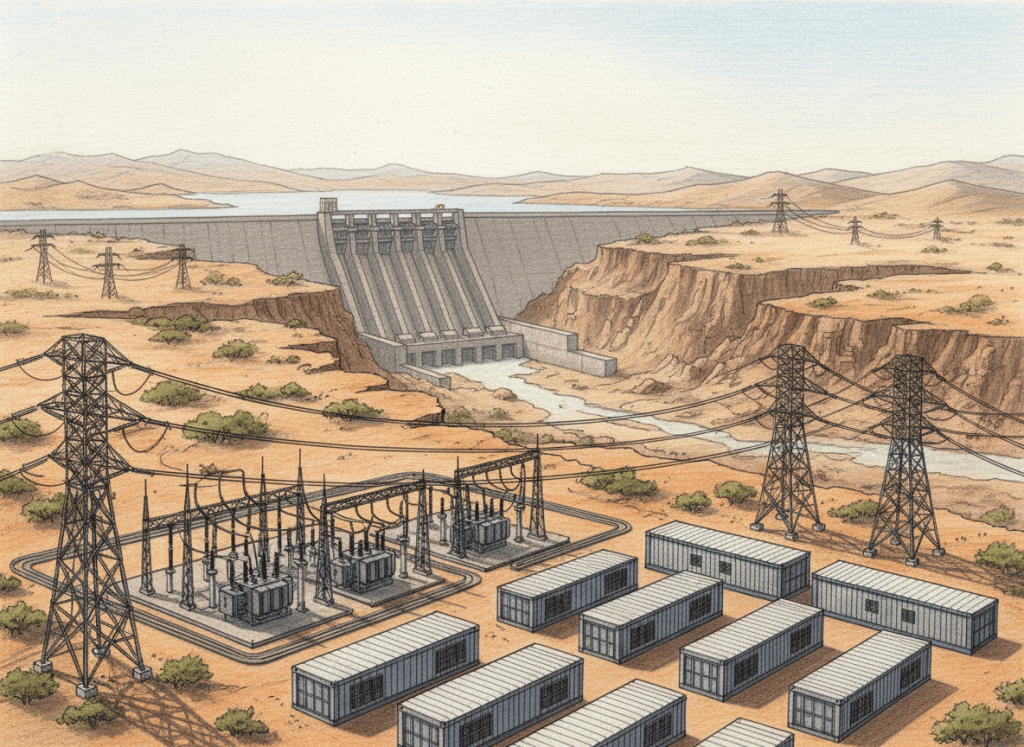
Authorities in Puebla, Mexico, seized a hidden cryptocurrency-mining operation after finding roughly 300 specialized GPUs, about 80 medium-voltage terminals, a transformer and eight satellite internet antennas operating in a remote mountain community. The raid turns an energy-intensive mining setup into a case study in how stolen electricity, physical infrastructure and digital assets can overlap.
300 GPUs beside a hydroelectric system
The operation was reported after a September 6 inspection in Tlaola, in Puebla’s northern mountain region. The state government’s official release described a functioning electrical and computing installation rather than a small home mine. Authorities said the equipment included a pad-mounted transformer, approximately 80 medium-voltage terminals, satellite connectivity and hundreds of GPUs.
Reuters reported that investigators are examining whether the site drew power illegally from infrastructure linked to a nearby hydroelectric system and whether the cryptocurrency output could have helped disguise proceeds connected to organized crime. Those allegations remain under investigation. The key technical fact is simpler: GPU mining is only viable at scale when an operator can secure sustained electricity, cooling, networking and physical access.
That combination makes the site materially different from a hobbyist rig. A three-hundred-GPU installation needs electrical distribution, thermal management, replacement parts and communications resilient enough to keep machines online. The seized satellite antennas also suggest an attempt to maintain connectivity away from ordinary commercial scrutiny.
Why power theft changes the mining equation
Bitcoin and other proof-of-work networks convert computation and electricity into a chance at digital-asset rewards. The energy bill is therefore not a side issue. It is the operating cost that separates a lawful mine from an uneconomic one. When an operator bypasses the normal power contract, the apparent mining margin can look much better than the real cost of production.
BitcoinVersus.tech has tracked the lawful engineering side of that equation through its coverage of 8.9 J/TH ASIC efficiency, network difficulty pressure, public-miner hashrate concentration and daily electricity costs. Each metric assumes the power input is measured and paid for. An illicit connection breaks that assumption before a profitability model even begins.
Crypto mining creates a new enforcement surface
The Puebla case also widens the enforcement problem beyond wallet tracing. Investigators may need to follow electrical load, transformer placement, cooling noise, satellite connectivity and hardware procurement alongside blockchain transactions. Chainalysis data says illicit cryptocurrency addresses received at least $154 billion during 2025, while stressing that illicit activity remained less than 1% of overall crypto transaction volume. Those figures do not prove a connection to the Puebla site; they explain why authorities treat mining infrastructure and on-chain proceeds as separate parts of one investigation.
The wider lesson for legitimate miners is operational. Transparent power contracts, utility metering, equipment records and documented site access are not just compliance paperwork. They establish the evidence needed to distinguish an industrial mining business from an installation built around stolen electricity. Reported coverage described the Puebla discovery as the fourth crypto farm found in the area since early 2025, suggesting that enforcement agencies may be building a repeatable detection pattern rather than handling a one-off incident.
What the raid means for Bitcoin mining
Mining hardware can be bought, moved and switched on quickly. Power access is harder to hide and harder to replace. The Puebla raid shows why the industry’s core competitive variables remain physical: electrical rights, reliable cooling, network connectivity, site security and auditable operating costs. Hashrate without lawful power is not a durable business model.
Bitcoin mining and crypto infrastructure remain capital-intensive businesses. The facts above describe reported events and official allegations, not a forecast of investment returns. BitcoinVersus.tech’s donation address for independent reporting is 3C9o19EH5HSiWEPyCTmEKzxhNCbo2X6TTb.
Illustration: BitcoinVersus.Tech. A mountain crypto-mining site, seized GPU racks, irregular power connections and Mexican investigative markers represent the Puebla case.
BitcoinVersus.tech on X
Follow BitcoinVersus.tech for original reporting on Bitcoin mining, ASIC efficiency, power markets and industrial compute.
Disclaimer: Educational and editorial content only. Nothing here is investment advice. Math is verifiable; interpretation is experimental. Support independent BitcoinVersus.tech reporting through the site’s published channels.


Leave a Reply