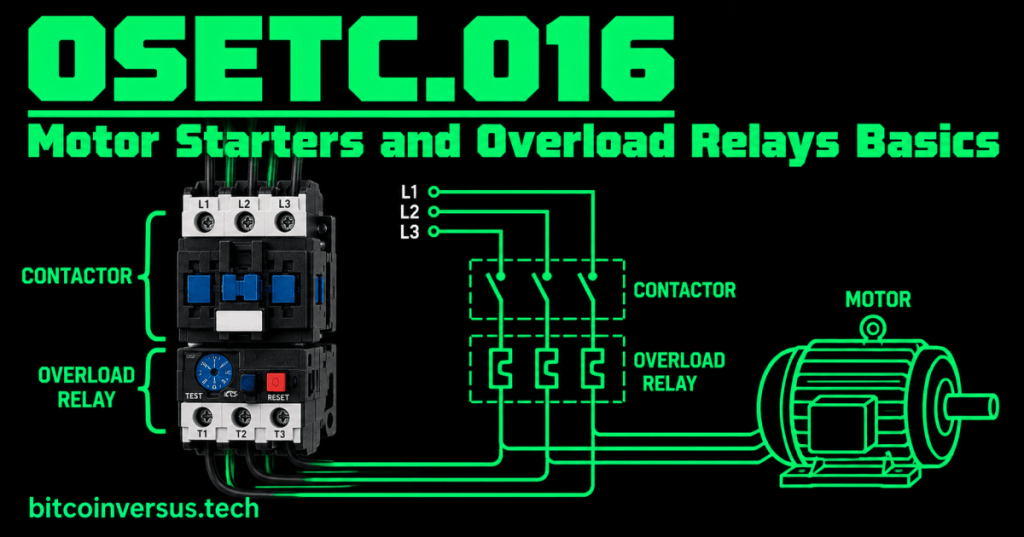
A motor starter is a control assembly used to start and stop an electric motor while providing important motor protection. A common magnetic starter combines a contactor with an overload relay. The contactor switches power to the motor; the overload relay helps protect the motor from damaging sustained overcurrent.
This lesson builds directly on OSETC.015. The simple technician model is: contactor switches the motor; overload relay watches the motor current.
The Contactor
The contactor is the switching portion of a magnetic motor starter. Energizing its coil causes its main contacts to change state, allowing the properly designed power circuit to supply the motor.
The Overload Relay
The overload relay monitors motor current. If excessive current continues long enough to risk overheating the motor, the overload device can trip and interrupt the control circuit so the contactor drops out and the motor stops.
Overload Is Not the Same as a Short Circuit
An overload relay is intended for sustained motor overload conditions. Short-circuit and ground-fault protection are separate functions normally provided by correctly selected fuses or circuit-protection devices. A technician should never treat these devices as interchangeable.
Video: Motor Starter Basics
This RSP Supply lesson walks through the two basic building blocks of a motor starter: the contactor and overload protection.
A Simple Start/Stop Example
Pressing a START control can energize the contactor coil. The contactor closes its main contacts and the motor runs. Pressing STOP opens the control path, the coil de-energizes, the contactor opens, and the motor stops.
What Happens During an Overload?
If the motor draws excessive current for long enough, the overload relay can trip. Its control contact changes state, the contactor coil loses its control path, and the motor is disconnected from the supply through the starter’s switching action. The cause of the overload should be identified before the system is reset and returned to service.
Common Reasons a Motor Can Overload
- A pump, fan, or mechanical load is jammed or working too hard.
- The motor or driven equipment has a mechanical problem.
- The electrical supply or phase condition is abnormal.
- The starter or overload settings do not match the approved equipment design.
Data Center Example
Cooling systems use motors for fans and pumps. A motor starter can allow the building-control system to command one of these motors while overload protection helps protect the motor from sustained excessive current.
Bitcoin Mining Example
Large mining sites may use motor starters on pumps, fans, and other cooling equipment. If a cooling motor overloads and trips, the technician should treat the trip as a symptom to investigate rather than repeatedly resetting it without finding the cause.
Safety Boundary
Motor starters can contain hazardous voltage even when the motor is stopped. Do not open energized equipment, bypass an overload, defeat an interlock, or reset a repeatedly tripping starter without following the equipment documentation and site troubleshooting procedure. Use lockout/tagout, required PPE, and qualified-person boundaries.
Practice
- Name the two main components of a common magnetic motor starter.
- State the contactor’s job.
- State the overload relay’s job.
- Explain why overload protection and short-circuit protection are different.
- Describe what should happen when an overload relay trips.
- Name two motor loads that may be found in a data center or mining facility.
Key Takeaway
A common motor starter combines a contactor for switching with an overload relay for motor overload protection. For a technician, the key is recognizing each component, understanding its separate job, and treating an overload trip as a condition that requires safe investigation.


Leave a Reply