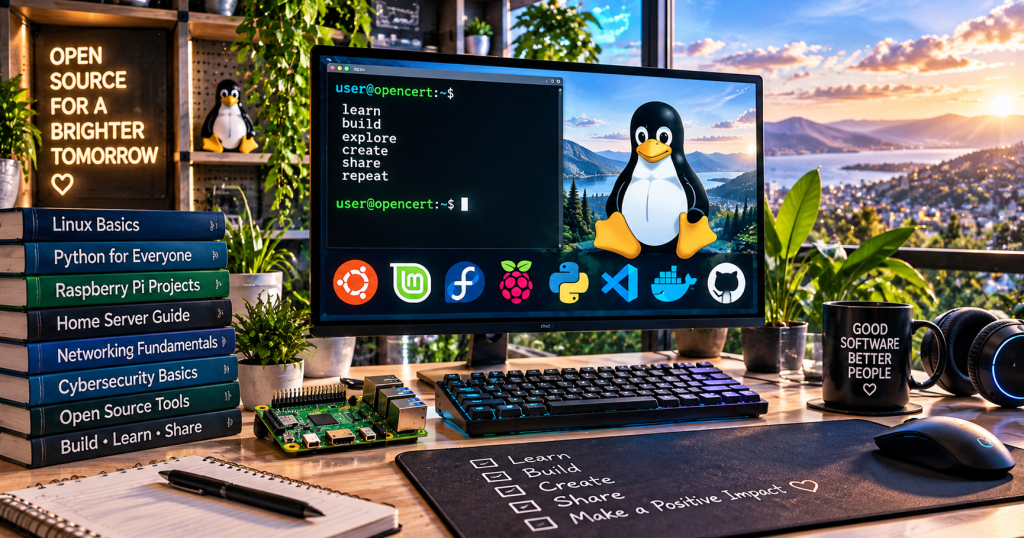
Open-source software is software whose source code is available under a license that lets people inspect, use, modify, and redistribute it. That simple idea helps power everything from personal laptops and hobbyist electronics to large software development platforms and internet infrastructure. Open source is not the same thing as software that merely costs nothing.
What Does Open Source Actually Mean?
A computer runs programs compiled or interpreted from source code: the human-readable instructions developers write. An open-source license grants specific permissions to other people. Those permissions generally include studying the program, changing it, and sharing original or modified versions under the applicable license terms. Simply publishing source code on a website does not automatically make it open source; the license matters. The Open Source Initiative definition explains the core requirements.
Examples You May Already Use
The Linux kernel underpins many operating systems, servers and embedded devices. Python provides a popular programming language and broad package ecosystem. Blender lets artists create 3D models and animations, while VLC plays media on multiple operating systems. These projects are open source, but they have different licenses, communities and funding arrangements.
How Open Source Projects Are Built
A contributor can report a bug, propose documentation changes or submit a code patch. Maintainers review contributions and decide whether to merge them. Tools such as Git track changes over time, while hosted platforms such as GitHub help teams discuss issues, run automated tests and coordinate releases. A public repository is useful, but responsible maintenance still requires security updates, code review, documentation and sustainable contributors.
Free, Open Source, and Proprietary
The word free can mean zero price or freedom to modify software. A proprietary application may be free to download without allowing redistribution or modification. Open-source software can be sold, supported commercially, or bundled with paid services. Some open-source licenses require modified versions or distributed binaries to meet source-disclosure or attribution obligations; others are more permissive. Review the exact license before copying code into a product.
Try It Yourself
Start with a small project. Install Python from its official site, read its source repository, and inspect an issue labeled for beginners. Or explore a networking utility, reproduce a bug and document the steps clearly. You do not have to be an expert programmer to help: testing, translations, accessibility reviews, tutorials and bug reports all matter.
- Find the project’s official repository and license.
- Read the README and contribution guidelines.
- Run the project or its tests in a safe development environment.
- Choose one small, verifiable improvement.
- Submit a clear issue or pull request and respond constructively to feedback.
What Open Source Does Not Guarantee
Public code is not automatically secure, maintained or suitable for a particular application. Review release activity, known vulnerabilities, dependencies, documentation and license obligations. For critical deployments, test the software just as carefully as commercial alternatives. The advantage is transparency and the ability to collaborate—not an exemption from engineering discipline.
Why It Matters
Open source makes technology easier to learn, audit, adapt and build upon. A student can inspect real production code; a small business can customize a tool; researchers can reproduce software-based results; and engineers can share improvements rather than repeatedly solving the same problem in isolation. That collaborative model is one reason open source remains central to modern computing.
Further Reading
See the Open Source Definition, Choose a License, and GitHub’s introduction to Git. Related BitcoinVersus reading: .NET development platform, systemd and Linux services, and network time synchronization.


Leave a comment