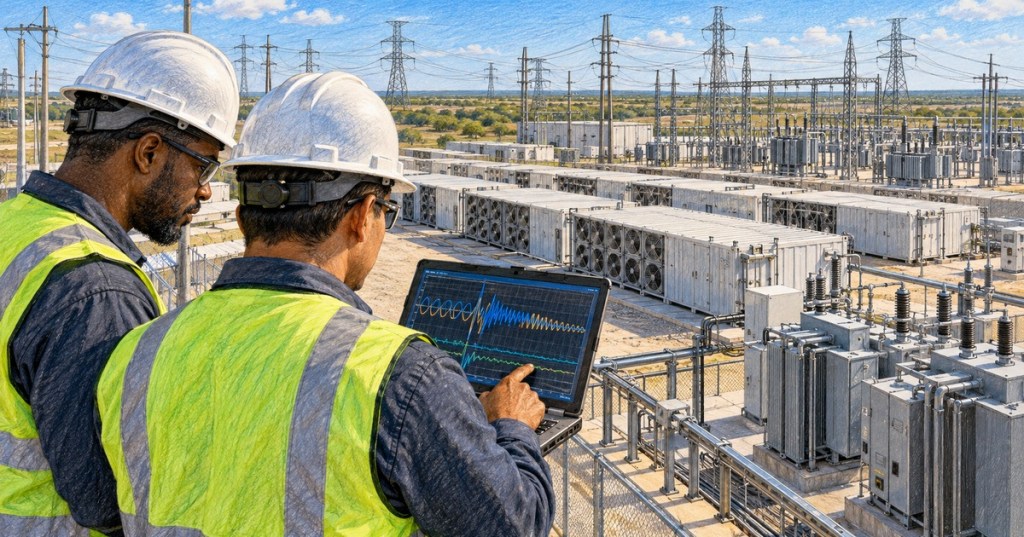
Texas is moving Bitcoin mining deeper into power-system engineering. ERCOT’s pending PGRR144 would require large loads—including large computational loads—to submit dynamic models that show how a facility behaves during grid disturbances instead of representing the site as a simple block of megawatts.
The ERCOT Board recommended the revision for approval on September 15, 2026. It is still pending and now moves to the Public Utility Commission of Texas for consideration, so these requirements should not be described as final Texas rules yet. But the technical direction is clear: the grid operator wants better evidence about what large electronic loads actually do when voltage moves, protection trips, converters react and site controls change operating state.
A Bitcoin Mine Would Need More Than a Load-Flow Number
PGRR144 says dynamic model data for large loads must be supplied in formats compatible with tools used by ERCOT’s Dynamics Working Group, including PSS/E, PSCAD and TSAT. That matters because these tools examine behavior through disturbances and time, not only whether a substation can serve a certain steady-state MW value.
The proposal also calls for model-quality tests demonstrating voltage ride-through capability for all large loads. For large computational loads specifically, ERCOT goes further: converter-model validation reports would need to benchmark PSCAD models against actual hardware tests. In other words, a simulation should resemble what the power electronics in the real facility do.
For Bitcoin mining, that behavior reaches all the way down toward the electrical chain feeding the ASIC fleet: utility service, transformer, switchgear, PDUs, power supplies, control logic and the protection behavior that determines whether machines continue operating or disconnect during a voltage event.
Firmware and Site Controls Can Become Grid-Relevant
Modern mining fleets are unusually controllable industrial loads. BitcoinVersus recently examined how Braiins Price Adapt can automate ASIC power targets. At site scale, thousands of small power decisions can add up to tens or hundreds of megawatts changing state rapidly.
PGRR144 therefore contains an important operational detail: a material change to a large computational load that could affect ride-through capability would need review through the Large Load Interconnection Study process before implementation. The practical question is no longer only, “How many megawatts does the mine consume?” It is also, “How does the facility behave electrically when the grid is disturbed, and did that behavior change after hardware, firmware or control-system modifications?”
As-Built Models Would Matter Before Energization
Another part of the proposal closes the gap between a design model and the facility that is actually constructed. Before requesting initial energization, an interconnecting large-load entity would have to submit updated dynamic models for the as-built computational-load facility, identify differences from previously submitted model data and attest that the updated information reflects actual field settings.
That is especially relevant in Bitcoin mining because sites can evolve quickly. Containers can be added in phases. ASIC generations can change. PSU and control-board behavior can change. Curtailment logic can be retuned. Mining buildings can also be repurposed toward AI or other high-performance computing. BitcoinVersus has already tracked how Cipher Digital’s 3.2 GW ERCOT position connects mining infrastructure with AI capacity.
NERC Is Moving in the Same Direction
The Texas proposal is not happening in isolation. NERC reported on September 19 that its foundational Computational Loads Reliability Standards passed their initial ballot on preliminary results. NERC explicitly says the work includes data-center and cryptocurrency-industry participants and is designed around the distinctive operating characteristics of large computational loads.
NERC’s October 8 board meeting again placed large loads and standards near the center of the reliability agenda. The common theme is that very large electronic loads can change or disconnect quickly enough that grid planners need better models, clearer ride-through expectations and more visibility into actual operating behavior.
Texas Mining Infrastructure Is Entering a Stricter Engineering Era
The timing matters because Texas is already under pressure from enormous new computing demand. BitcoinVersus recently covered the state’s tighter scrutiny of data-center development and mining infrastructure. PGRR144 adds a different constraint: not land, water or headline MW, but the quality of the electrical model behind the interconnection.
For mining operators, this makes power-system engineering part of fleet engineering. A competitive site may increasingly need documented controller settings, repeatable hardware tests, validated converter behavior, clear protection settings and a disciplined change-management process alongside the familiar work of monitoring hashprice, J/TH, uptime and cooling.
The rule is still pending. But if the PUCT approves the ERCOT revision substantially as recommended, the lesson for large Bitcoin mines is straightforward: the grid will want proof not only that a site can take power, but that engineers understand exactly how the site behaves when the grid stops being steady.
BitcoinVersus.Tech Editor’s Note: This article covers a pending grid-planning revision and evolving reliability standards. Requirements can change during regulatory review.
Support independent BitcoinVersus.Tech reporting with Bitcoin: 3C9o19EH5HSiwEPyCTmEKzxhNCbo2X6TTb
BitcoinVersus.Tech is not a financial advisor. This article is for informational and educational purposes.


Leave a Reply