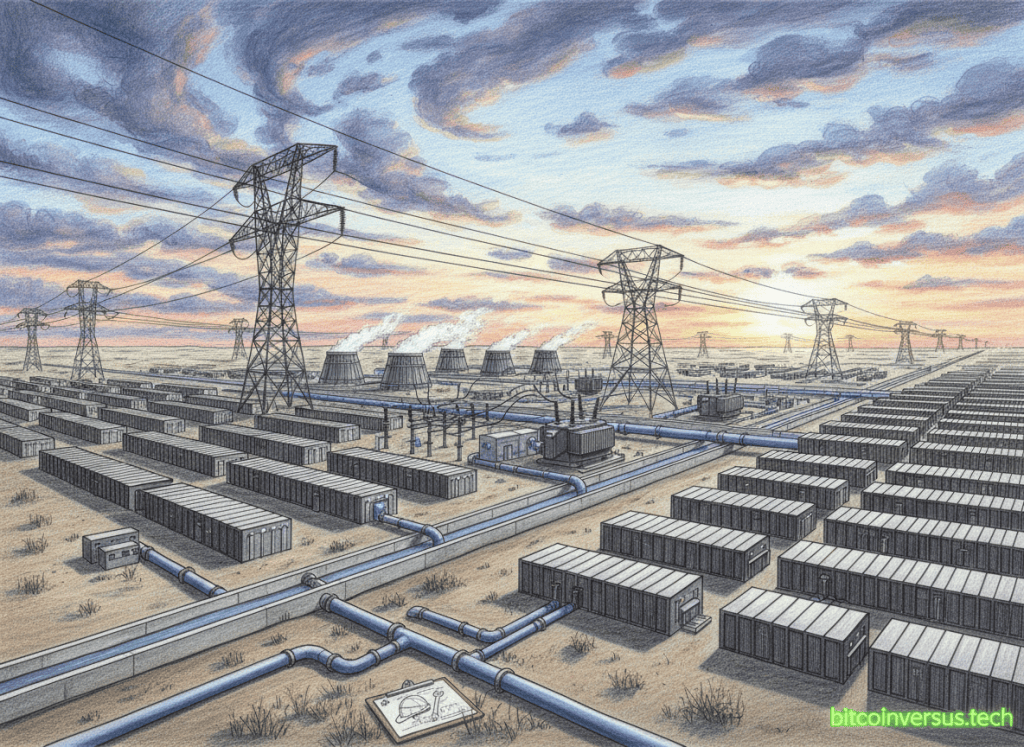
Texas has paused new state permits for data centers while regulators audit the industry’s impact on electricity and water, putting a new constraint around one of the most important power markets for Bitcoin mining and AI infrastructure.
On September 21, Governor Greg Abbott directed the Texas Commission on Environmental Quality to halt permits sought by data centers until ERCOT and state water regulators complete their audits. Reuters reports that more than 470 GW of proposed projects are seeking grid connections in Texas.
Why Bitcoin miners should care
Texas became a major Bitcoin mining market because large flexible loads can locate near abundant generation and participate in ERCOT demand-response and curtailment programs. The same grid access is now being pursued by enormous AI and hyperscale data-center projects.
The state’s action does not erase existing mining operations, but it changes the development environment for new large-load campuses and expansions that require state permits. Regulators are examining electricity demand, water consumption, grid reliability and infrastructure costs before additional approvals move forward.
The queue is far larger than the Texas grid
The scale of proposed load is the central infrastructure issue. Texas has accumulated more than 470 GW of data-center projects seeking grid access, many times the state’s peak electrical demand. That does not mean every queued project will be built, but it demonstrates the competition for substations, transmission capacity and generation.
For miners, the practical bottleneck is increasingly not the ASIC. It is the energized megawatt. A modern mining site needs utility interconnection, transformers, switchgear, protection, distribution, networking and cooling before a single miner can hash.
Flexible mining loads remain technically different
Bitcoin mining can shut down large blocks of compute rapidly when power prices spike or ERCOT needs load reduction. That operating model differs from many AI workloads that target much higher continuous utilization. The distinction could matter as Texas evaluates how large computing loads affect grid planning.
The permitting pause also arrives as miners themselves diversify. Some public miners are converting power infrastructure to AI and HPC, a trend BitcoinVersus.tech recently examined in Bitcoin Miners Shift Megawatts From ASICs to AI.
Power infrastructure is becoming the scarce asset
The Texas development queue reinforces a larger industry shift: access to reliable high-voltage power can be more difficult to obtain than computing hardware. ASICs and GPUs can be purchased on commercial timelines. New substations, transmission upgrades and interconnections can take years.
For Bitcoin mining operators planning Texas expansions, permitting and interconnection risk now deserve the same attention as hashprice, machine efficiency and electricity price.
BitcoinVersus.Tech Editor’s Note:
Support BitcoinVersus.tech with Bitcoin: 3C9o19EH5HSiwEPyCTmEKzxhNCbo2X6TTb
Follow BitcoinVersus.tech on X: https://x.com/BitcoinVersus
BitcoinVersus.tech is not a financial advisor. This media platform reports on financial subjects purely for informational purposes.


Leave a Reply