What We Know
- NASA has released its final request for proposals for the commercial low-Earth-orbit destinations that are intended to carry human research and operations beyond the International Space Station era.
- Proposals are due December 8, 2026, and NASA says contract awards are expected in spring 2027.
- NASA wants multiple companies competing through early development, then plans to select one or more providers for final design, testing, certification and operational services.
The question of what comes after the International Space Station has moved from concept art and preliminary agreements into an actual procurement.
On October 9, NASA released its final Request for Proposals for the next generation of commercial space stations in low Earth orbit. The agency is asking companies to submit credible plans not just for a spacecraft, but for an end-to-end human-spaceflight service that can design, build, test, certify and operate an orbital destination.
The deadline is December 8, 2026, with awards expected in spring 2027. That makes the next several months one of the most consequential periods yet in NASA’s transition away from owning a single government-led orbital laboratory toward buying services from privately owned stations.
NASA Wants to Buy Space-Station Services, Not Own the Whole Station
The basic shift is similar to what already happened with commercial cargo and crew transportation. Instead of NASA designing and operating every major piece of the system, the agency wants private companies to own the orbital hardware and sell access to multiple customers.
NASA would then purchase research time, crew accommodations, transportation and other services as needed. That model is intended to let NASA preserve continuous access to low Earth orbit while putting more of its budget and engineering attention toward the Moon, Mars and deeper-space missions.
NASA’s current commercial-space-station strategy explicitly describes the agency as one customer among many. The commercial operator would need additional revenue from research organizations, governments, manufacturers, private astronauts or other customers for the business model to become sustainable.
The Economics Now Matter as Much as the Engineering
NASA Administrator Jared Isaacman said the agency wants credible plans, strong technical execution and companies willing to invest their own capital. That last point is crucial.
A station that can keep astronauts alive is not automatically a viable commercial station. It also needs a launch and transportation architecture, dependable logistics, maintenance, power, environmental control, docking capability, communications, safety certification and enough customers to keep revenue coming in between NASA missions.

NASA Plans to Keep More Than One Competitor Alive at First
The procurement is structured as a firm-fixed-price, multi-award indefinite-delivery/indefinite-quantity contract. NASA says it intends to carry two or more contractors through early development rather than immediately choosing a single winner.
That creates competition while the hardest technical and business questions are still being answered. Later, NASA plans a competitive task order covering final design, testing and evaluation, certification and services from one or more contractors.
The structure reduces the risk of betting the entire post-ISS future on one company before hardware has matured. It also gives NASA leverage on price and performance while the commercial market is still forming.
The ISS Is the Benchmark Every Commercial Station Has to Follow
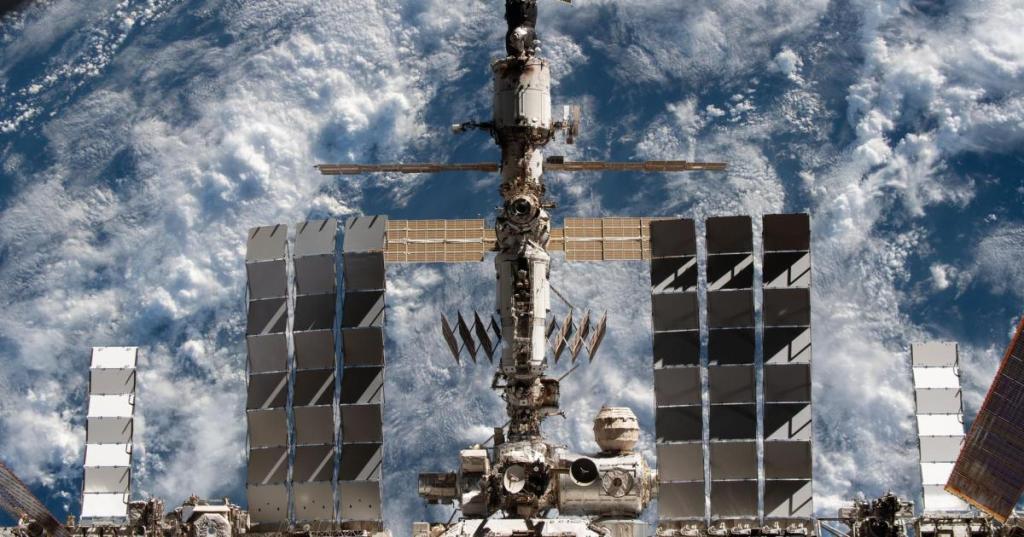
The International Space Station is not simply a pressurized room in orbit. It is a laboratory, spacecraft, power plant, communications system, life-support system, docking hub and long-duration human habitat operating continuously hundreds of kilometers above Earth.
That makes replacement difficult. A commercial station does not have to copy the ISS module for module, but it has to preserve enough capability for NASA to continue human research, technology demonstrations, astronaut training and preparation for missions beyond Earth orbit.
BitcoinVersus.Tech recently covered Crew-13 reaching the ISS in a record 7 hours 55 minutes, a reminder that the station is already supported by increasingly mature commercial transportation. NASA’s next step is to commercialize the destination itself.
The Contenders Are Building Very Different Kinds of Stations
NASA’s existing commercial-station ecosystem includes projects such as Axiom Station, Blue Origin’s Orbital Reef, Starlab and Vast’s Haven-1, along with other companies developing transportation, servicing and orbital infrastructure. The final RFP is an industry competition, so previous NASA participation should not be treated as a guarantee of a future service award.
The designs differ significantly. Some emphasize expandable habitats and large mixed-use facilities. Others favor smaller stations that can launch sooner. Some depend on one large launch; others can grow module by module.
Those differences matter because NASA is not simply selecting the prettiest orbital architecture. It is effectively evaluating which business and engineering model can survive long enough to provide dependable service after the ISS.
Transportation Is Part of the Contract, Too
NASA’s solicitation calls for end-to-end destination and transportation services. That means a station provider must think beyond the habitat itself and account for how astronauts, supplies and experiments actually reach orbit and come home.
That requirement links the station competition directly to the commercial launch and crew markets. BitcoinVersus.Tech has covered NASA’s continuing reliance on commercial transportation, including its additional SpaceX crew-flight contract and the addition of Blue Origin’s New Glenn 9×4 to NASA’s launch-services catalog.
A future station market could therefore create demand not only for habitat builders but also for launch providers, crew vehicles, cargo spacecraft, orbital tugs, life-support vendors, robotics companies, communications networks and microgravity manufacturing systems.
The Biggest Risk Is a Gap After the ISS
NASA’s public strategy continues to target a transition away from the ISS around the end of its operational life near 2030. The agency repeatedly describes avoiding a gap in continuous U.S. human presence in low Earth orbit as a core objective.
That creates schedule pressure. Space hardware routinely slips, and a human-rated orbital station has far less tolerance for immature systems than an uncrewed satellite. Life support, fire safety, pressure vessels, docking systems and evacuation plans all have to work together before NASA can certify astronauts to live aboard.
If no commercial destination is ready when the ISS retires, NASA could temporarily lose the continuous orbital research and training capability it has maintained for decades. That is why the 2027 contract decisions matter years before the ISS actually leaves service.
What to Watch
- December 8: the deadline for commercial station proposals.
- Spring 2027: NASA’s planned initial contract awards.
- Private capital: which bidders can show they have financing beyond NASA funding.
- Transportation: whether station providers bundle their own launch and crew systems or rely on outside partners.
- Certification milestones: pressure vessels, life support, docking, fire safety and crew escape will be more meaningful than concept renders.
- The transition gap: schedule slips become increasingly serious as the end of the ISS era approaches.
Bottom Line
NASA has spent years helping companies design possible successors to the International Space Station. The October 9 solicitation marks a more consequential phase: the agency is now asking industry to compete for the contracts that could turn those designs into certified orbital services.
The winner will need more than a station that can fly. It will need a transportation plan, a safety case, a certification path, private investment and a business model capable of surviving with NASA as one customer rather than the only customer.
Editor’s Note: Existing NASA commercial-station partners and concepts are discussed as examples of the current low-Earth-orbit ecosystem. Participation in earlier programs does not guarantee an award under the new solicitation.
BitcoinVersus.Tech is not a financial advisor. This media platform reports on technology, science, business and financial subjects for informational purposes.


Leave a Reply