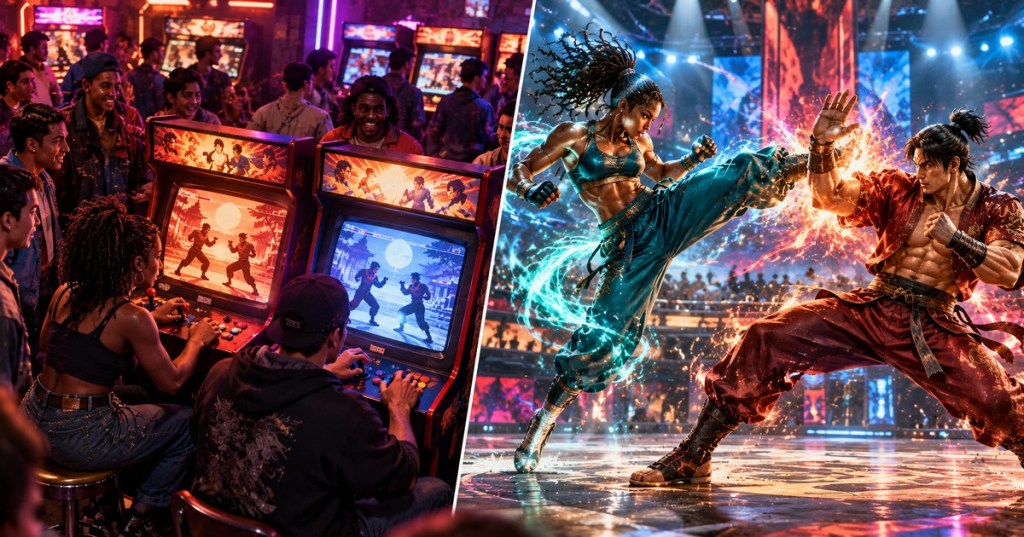
The best fighting video games reward timing, creativity, matchup knowledge and the willingness to learn from defeat. This BitcoinVersus.Tech Top 7 Fighting Video Games of All Time weighs gameplay, lasting influence, character variety, competitive depth and accessibility. The rankings are editorial judgments, not objective tournament standings. We selected seven different franchises spanning one-on-one arcade fighters, weapon combat, tag-team anime battles and platform fighting.
Key Takeaways
- Street Fighter II ranks first for the competitive-fighting template it popularized.
- The selections span anime, platform, weapon-based and traditional one-on-one fighting systems.
- Technical depth, cultural influence and replayability matter more here than a single sales or esports metric.
7. Guilty Gear -Strive- (2021) — Modern Anime Fighting
Arc System Works’ Guilty Gear -Strive- blends striking anime-inspired presentation with Roman Cancels, explosive pressure, distinctive characters and rollback-based online competition. Stylish effects make the action readable while leaving serious room for mastery. It earns a place for showing how a technical fighting series can welcome new players without discarding its identity.
Official Guilty Gear -Strive- launch trailer, published by PlayStation.
6. Dragon Ball FighterZ (2018) — Tag-Team Spectacle
Arc System Works translated Akira Toriyama’s visual world into rapid three-on-three battles with assists, aerial movement and dramatic combo routes. Its animated presentation looks close to the source material while supporting a layered competitive game. The title demonstrates how anime licensing and strong combat design can reinforce each other.
Bandai Namco’s official Dragon Ball FighterZ Nintendo Switch launch trailer, featuring the same underlying fighting game.
5. Soulcalibur II (2002 Arcade; 2003 Consoles) — Weapon Combat
Namco’s 3D weapon fighter made attack reach, spacing, eight-way movement and ring-outs central to every round. The console releases also featured platform-specific guest characters, creating a crossover event before modern guest rosters became routine. The later HD Online version preserved much of the original’s appeal.
GameSpot’s Soulcalibur II HD Online launch trailer illustrates the updated re-release of the classic.
4. Mortal Kombat (2011) — A Competitive Rebirth
NetherRealm Studios revived its flagship series with a return to a two-dimensional fighting plane, cinematic story mode, tag battles and its recognizable finishers. Beneath the spectacle, meter management, spacing and matchup knowledge gave competitive players plenty to study. This is the 2011 reboot, frequently called MK9, rather than the original 1992 title.
Archived 2011 Mortal Kombat launch gameplay trailer shared by XboxViewTV.
3. Tekken 3 (1997 Arcade; 1998 PlayStation) — The 3D Landmark
Tekken 3 combined sidesteps, fast animation, distinct martial-arts styles and memorable fighters including Jin, Xiaoyu, Eddy and Hwoarang. Its smooth PlayStation-era combat helped bring 3D fighters into living rooms. The arcade-to-console transition also makes it a useful companion to our coverage of the enduring appeal of retro PlayStation libraries.
Archival, fan-uploaded Tekken 3 introduction; not an official Namco channel upload.
Community discussion recalling Tekken 3’s introduction. Reader reactions are historical perspective, not ranking evidence.
2. Super Smash Bros. Ultimate (2018) — The Crossover Champion
Nintendo’s platform fighter brings together characters and stages from gaming history, with knockback percentages, aerial positioning, recovery and edge-guarding replacing conventional health-bar play. Its enormous roster and flexible local multiplayer make it a different kind of fighting classic. The 2018 reveal’s “Everyone is here” message captured the game’s defining ambition.
GameSpot’s recording of Nintendo’s E3 2018 Super Smash Bros. Ultimate reveal.
Smash fans revisit the influence of Nintendo’s 2018 Everyone Is Here reveal.
1. Street Fighter II (1991) — The Genre-Defining Classic
Capcom’s Street Fighter II: The World Warrior established a blueprint for head-to-head fighting: distinct characters, special moves, round-based competition, spacing, reversals and combo discovery. Its arcade success helped turn local competition into a lasting culture. Later editions added refinements, and that legacy continues through our Street Fighter 6 character coverage and modern engine technology such as Capcom’s RE Engine evolution.
Nintendo of America’s Street Fighter II: The World Warrior eShop trailer, showing the foundational game.
Official Street Fighter social post showing the modern franchise’s continued development; this post is not a 1991 announcement.
Why These Seven?
Our list favors titles that changed how players fight, learn and compete. Street Fighter II takes the overall position for long-term influence; Smash Ultimate is the standout party-and-platform fighter; Tekken 3 represents the 3D breakthrough; Dragon Ball FighterZ stands out for anime adaptation. Honorable mentions include Street Fighter III: 3rd Strike, Virtua Fighter 5, Marvel vs. Capcom 2, Super Smash Bros. Melee and Street Fighter 6. For adjacent technical analysis, read our Top 7 Physics Video Games and the FPS engine history countdown.
BitcoinVersus.Tech Editor’s Note: We volunteer daily to ensure the credibility of the information on this platform is Verifiably True. If you would like to support to help further secure the integrity of our research initiatives, please donate using the QR code provided

For best QR-code scanning results, please scan this donation code from a desktop or larger screen. Mobile screens may prevent camera recognition.


Leave a Reply