Alabama’s largest announced data-center projects are no longer modest server facilities. Their proposed electrical demands reach hundreds of megawatts to 1.5 gigawatts, placing them in the same infrastructure category as major industrial power consumers. For the first installment of BitcoinVersus.Tech’s state-by-state Top 3 series, we rank individual proposed campuses by publicly reported maximum planned electrical demand, not construction spending, land acreage, or power already energized. All three are proposals, not fully operating facilities. Figures and statuses are current through October 27, 2026.
The rankings are drawn from project records, local-government decisions and developer statements. The Red Clay dossier and Project Marvel filings provide the larger reported power figures; the Childersburg estimate comes from statements by its mayor. These are not directly verified IT loads, and none should be added to Alabama’s operational megawatt total.
3. Childersburg Industrial Park — 500 MW proposed
In Talladega County, a proposed $6 billion, 500 MW hyperscale data center would reuse part of the former Alabama Army Ammunition Plant. The mayor described roughly 486 acres in the early agreement, a glycol-based cooling system, and approximately 220 permanent jobs if developed. Inside Climate News documented those figures from the January 2026 city meeting. The site is environmentally sensitive because of its munitions-production history; EPA documents describe the legacy cleanup obligations.
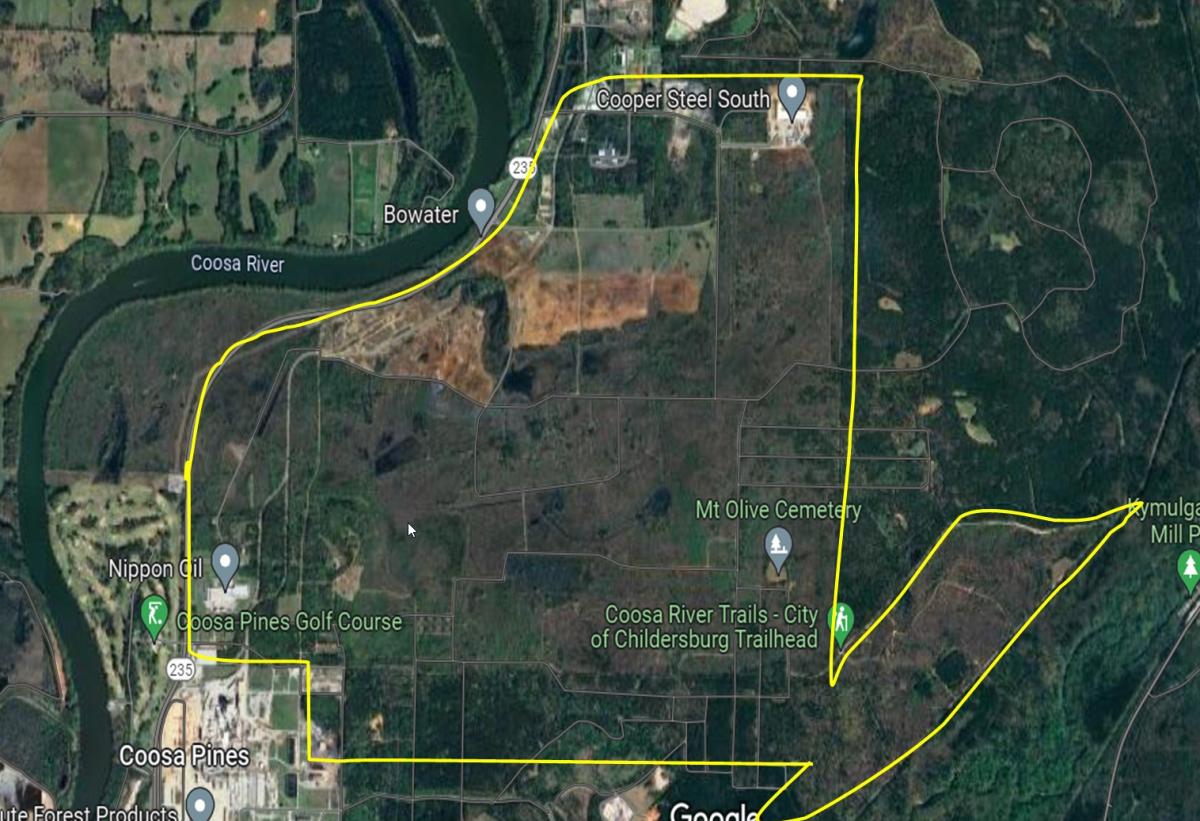
The project remains proposed. Childersburg’s council took further land-redevelopment action in October, but the mayor said on October 20 that a final decision had not been made. The publicly discussed 500 MW is a proposed electrical requirement, not delivered power. Read the October update.
2. Project Marvel, Bessemer — up to 1,200 MW proposed
Project Marvel near Bessemer is a proposed multi-building campus backed by TPA Group’s Logistic Land Investment and associated with QTS Data Centers. The expanded layout calls for 18 large data-center buildings, substations, retention infrastructure and up to 1.2 GW at full development. The reported capital estimate is approximately $14 billion, but that is not money already spent. A 900-plus-acre rezoning proposal would expand the overall campus toward 1,600 acres. DCD’s filing review and WBRC’s local reporting provide the planning context.
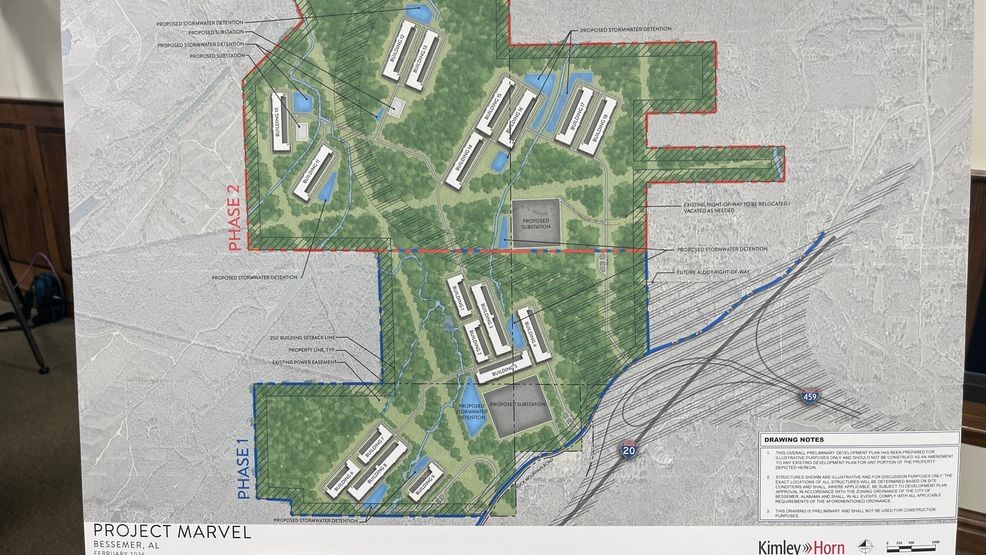
Local approval and construction records have evolved during 2026. The 1.2 GW represents a proposed ultimate buildout, and actual utility energization would require substantial new substation and transmission capacity. Neighbors have raised questions about land use, noise, power demand and environmental review. The project’s status should not be confused with completion or commissioning.
1. Project Red Clay, Lowndes County — up to 1,500 MW requested
Cloverleaf Infrastructure’s Project Red Clay is the largest publicly tracked Alabama proposal by reported power request: 1,500 MW from Alabama Power. The development near Burkville/Hayneville includes plans for four large data buildings and supporting structures. Sources differ on land footprint—early public plans cited roughly 800 acres, while a July stormwater permit identified about 1,044 acres. These numbers describe different planning documents and dates. See the dated project evidence and Lowndes County’s official project materials.
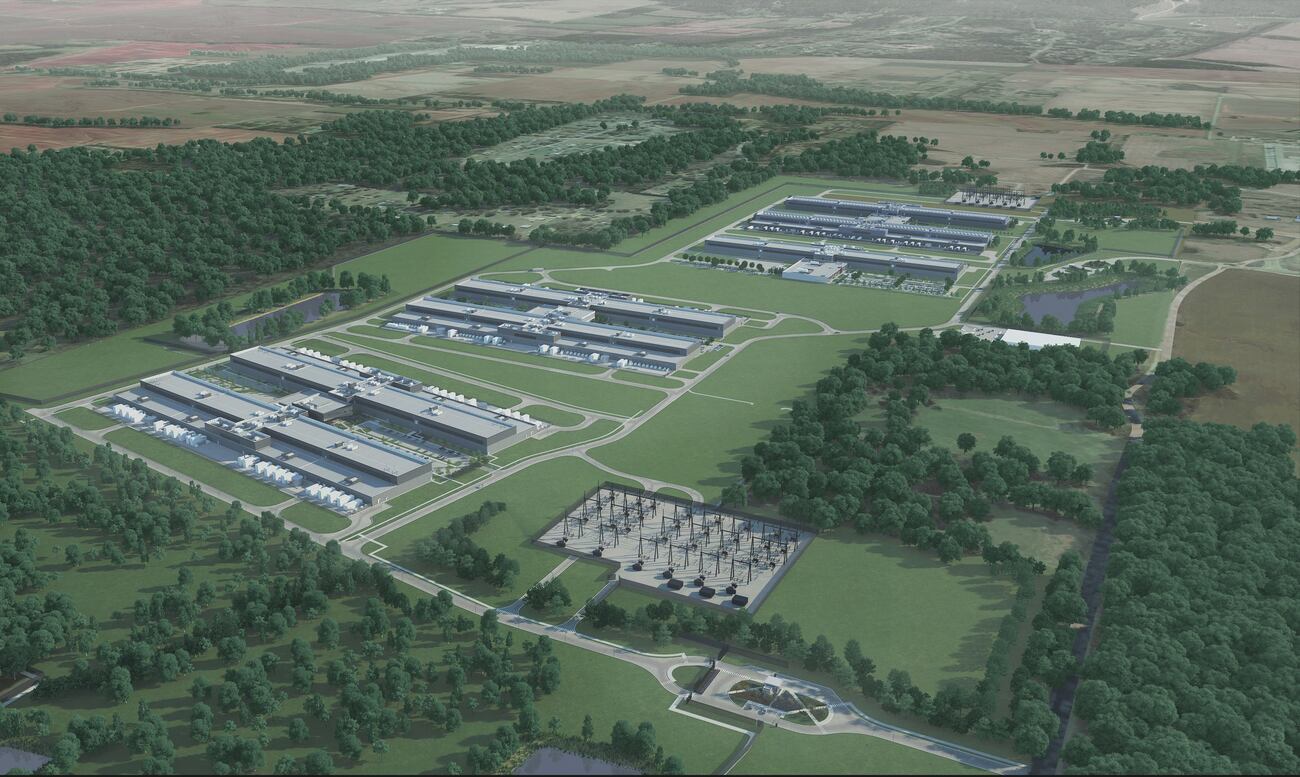
On October 13, the Lowndes County Commission approved a tax and development agreement in a 3–2 vote, advancing—but not completing—the proposal. WSFA reported the vote. The developer’s official project website promises closed-loop cooling, self-funded electrical infrastructure, more than 1,000 construction jobs and local community funding. Opponents have questioned transparency, water availability, power-rate protections and environmental effects. A reported 1.5 GW power request does not establish that the campus has 1.5 GW of contracted IT load or grid service.
Power, cost and engineering: what the rankings actually mean
Together, the three proposals represent about 3.2 GW of reported maximum electrical demand. This is an arithmetic sum of planning figures, not a forecast of actual concurrent grid demand, installed servers or commissioned AI compute. A grid connection can require generation, transmission reinforcement, transformers, backup systems, switchgear, cooling and fiber. These projects may be phased, redesigned or delayed. Public records do not establish a common operating date or a consistent distinction between facility demand and critical IT load.
Other important Alabama projects fall outside this power-ranked Top 3 or lack comparable disclosed capacity: Google’s $1.5 billion Jackson County expansion, Meta’s $1.5 billion-plus Montgomery campus, and Beacon’s approximately $6 billion Calvert proposal. Dollar investment alone is not a substitute for MW. For national comparison, see BitcoinVersus.Tech’s Top 7 AI Megaprojects by Planned IT Power and Dakotas infrastructure report. This is the first state installment; future rankings will use the same disclosed-capacity methodology, with source confidence and status labeled.
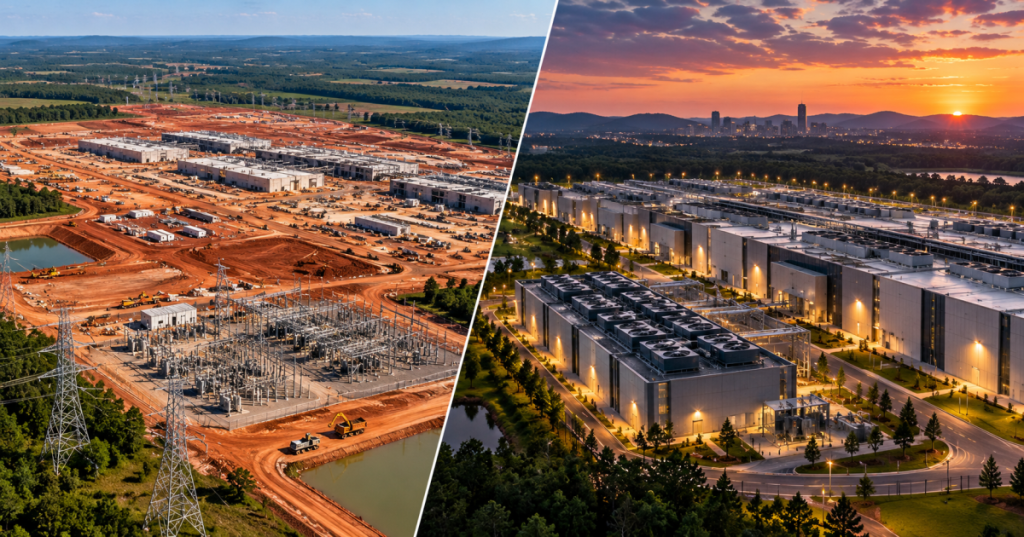
Editor’s Note: BitcoinVersus.Tech separates reported planned demand from operational IT power and discloses where media is illustrative rather than project-specific. To support independent reporting, donate 5,000 sats by scanning the QR code below.

Scan the QR code using a Bitcoin wallet, ideally while viewing the article on another screen.


Leave a Reply