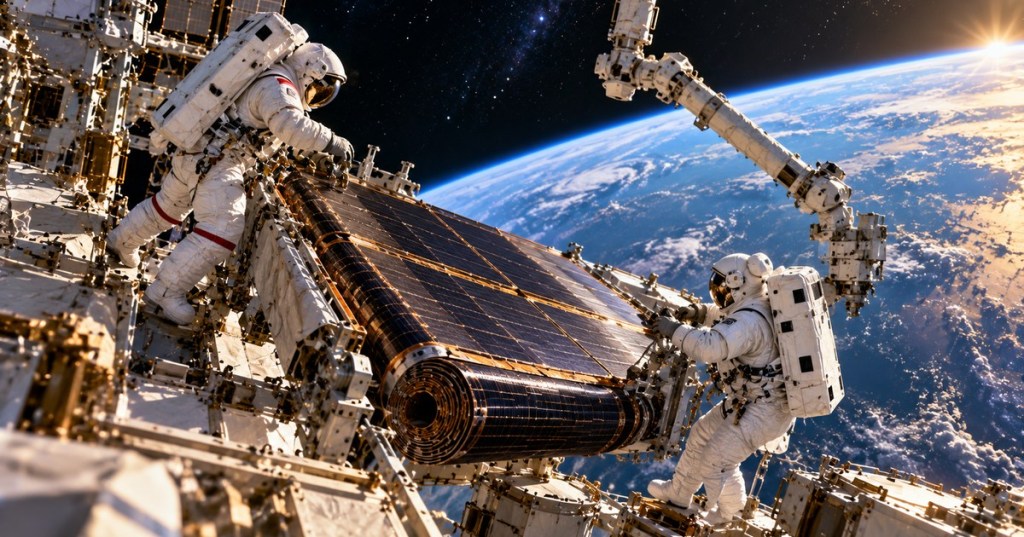
NASA astronaut Anil Menon and Canadian Space Agency astronaut Joshua Kutryk completed a seven-hour, 11-minute spacewalk outside the International Space Station on October 29, installing and deploying a new roll-out solar array. The operation, designated U.S. Spacewalk 100, concluded at 3:08 p.m. Eastern and brought the station within one installation of completing a major power-system upgrade.
The outing was streamed live by NASA, including on X, where the replay had drawn roughly 244,000 views when checked on October 29. NASA’s original broadcast post also carried updates as the astronauts worked hundreds of kilometers above Earth.
NASA’s official October 29 broadcast of U.S. Spacewalk 100, featuring Anil Menon and Joshua Kutryk.
A new source of power for the station
Menon, wearing a suit with red stripes, rode the Canadian-built Canadarm2 robotic arm while carrying the compacted solar array to the station’s port-side truss. Kutryk, in an unmarked suit, moved along the truss to help secure the unit and connect it to the 2A electrical power channel. Flight controllers then remotely unfurled the array.
The hardware is the seventh of eight International Space Station Roll-Out Solar Arrays, or IROSAs. Rather than replacing the aging original wings, the new arrays extend over portions of them and add generating capacity. After all eight are installed, NASA expects available station power to rise by as much as 30%, from roughly 160 kilowatts to 215 kilowatts. The upgrade supports ongoing experiments and critical operations, including preparations for the station’s eventual controlled deorbit.
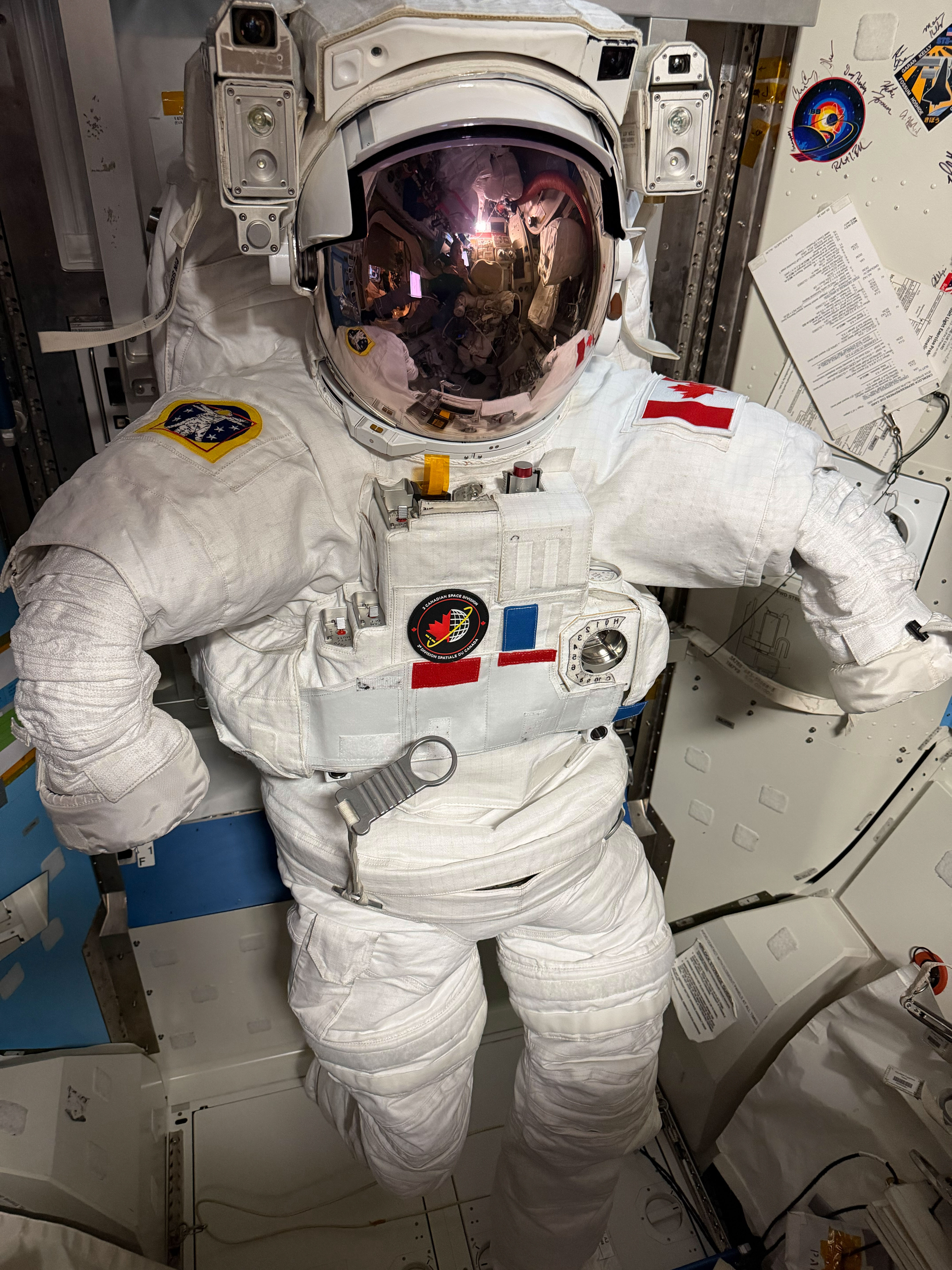
Kutryk became the fifth Canadian astronaut to perform a spacewalk, and the first since 2019. It was Menon’s fourth spacewalk. They also completed preparatory work for the next installation, including releasing restraints on the final solar-array package. The latest components reached the station aboard SpaceX’s CRS-35 cargo mission.
One more spacewalk to complete the upgrade
NASA plans to send the pair outside again on November 5 to install the eighth and final array on the 3B power channel. The project shows how the station’s infrastructure continues to evolve even as NASA prepares for its retirement, alongside broader investment in roll-out solar technology for future orbital stations.
Editor’s Note: We volunteer daily to ensure the credibility of the information on this platform is Verifiably True. If you would like to support our work and help further secure the integrity of our research initiatives, please scan the QR code below to donate 5,000 sats.

Scan this QR code using a compatible Bitcoin wallet, preferably while reading on a laptop or larger screen. Donation address: 3C9o19EH5HSiwEPyCTmEKzxhNCbo2X6TTb.
BitcoinVersus.tech is not a financial advisor. This media platform reports on financial subjects purely for informational purposes.


Leave a Reply