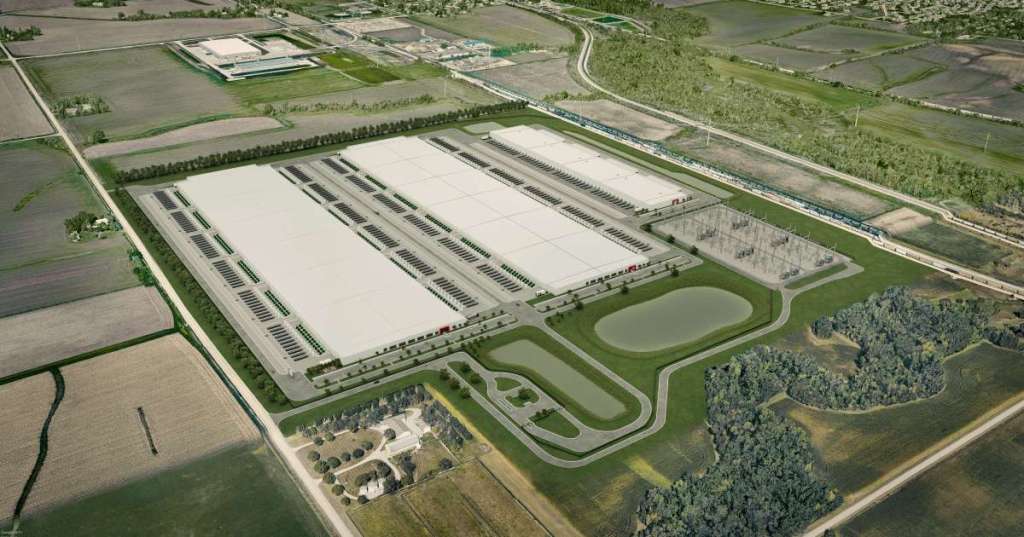
Iowa’s new state-by-state data center power ranking centers on a $10 billion construction program in Cedar Rapids and two gigawatt-scale land developments outside Des Moines. As of October 28, 2026, the largest individually documented proposals include QTS Cedar Rapids, Tract Altoona Technology Park, and COPT Defense’s Van Meter site. The figures below describe proposed power capacity or third-party development estimates, not electricity being consumed by operating servers.
Methodology: We compare the highest attributable planned electrical-capacity figures associated with a distinct campus, rather than investment totals, individual building count, square footage, or MW already energized. QTS is placed first on a reported approximate 1.05 GW full-campus figure, while a separate Iowa energy-sector inventory lists a larger 1,133 MW two-phase total. Tract’s published site specification is 1,000 MW, and COPT’s initial acquisition announcement estimates 1 GW. The second and third entries tie at 1 GW; because QTS’s figure is externally reported and Tract’s developer has described the property as capable of more than 1 GW, the numerical order is provisional and is not a definitive engineering ranking.
3. COPT Defense, Van Meter — Approximately 1,000 MW Estimated Capacity (Tied)
COPT Defense Properties acquired a 365-acre parcel near Des Moines for $32 million in September 2024 to extend its data center shell-development business into Iowa. In its October 28, 2024 acquisition announcement, the company said the zoning could accommodate approximately 3.3 million square feet of future development with an estimated 1 GW of power capacity. That was a preliminary development figure, not a utility commitment to deliver 1 GW.
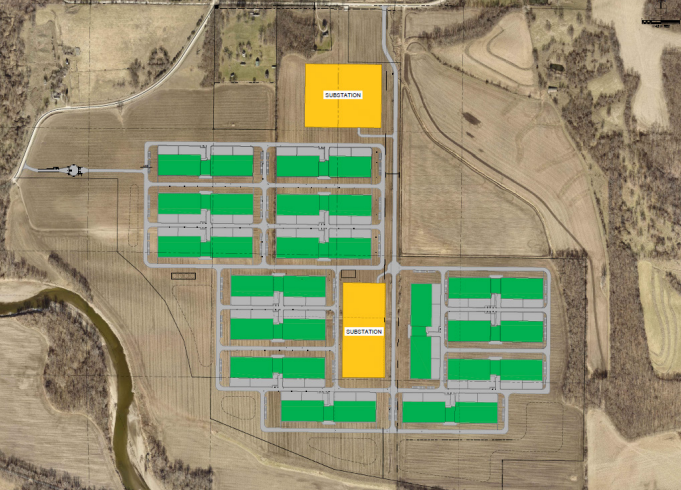
COPT’s June 30, 2026 investor supplement still recorded a 365-acre, 3.3-million-square-foot land position under data center shell development. Industry tracking describes the site as a prospective long-term buildout constrained by electric service arrangements, with first buildings not confirmed to be under construction. The company specializes in developing powered building shells before tenants install their computing infrastructure. Consequently, the site’s land ownership and zoning are documented, while full electrical energization, occupancy and a completion date remain unverified.
2. Tract Altoona Technology Park — 1,000 MW Advertised Site Capacity (Tied)
Tract’s official Altoona project page lists 1,000 MW of capacity for its technology park, describes the property as owned and in development, and states it covers 468 acres. Tract originally announced acquisition of 453 fully entitled acres in September 2025, describing a 1 GW-plus opportunity on an existing 345 kV transmission corridor. The two published acreage numbers reflect different dated descriptions; the current project page’s 468-acre figure is used here instead of silently treating them as identical.
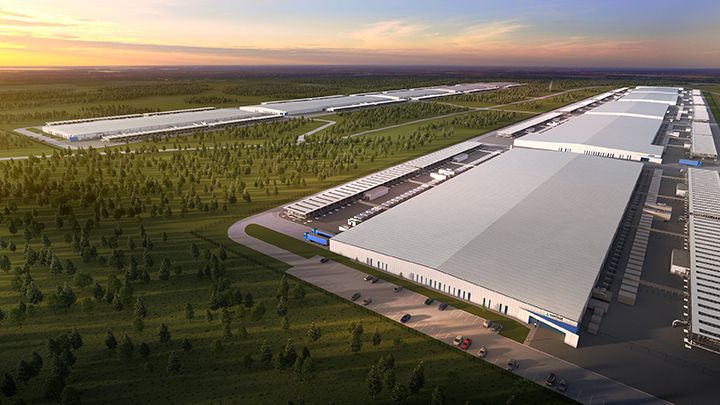
Tract’s project materials state the land has data-center zoning and a development agreement supported by utility studies. They also list a 588,000-gallon-per-day water reservation; that is a reservation or planning allowance, not measured daily consumption. The developer’s business is to prepare and position large sites for future hyperscale customers. A 1,000 MW site capability claim does not establish executed tenant leases, interconnected power at that scale, or delivery of operating computing capacity.
The Altoona case illustrates why a transmission line’s 345 kV voltage cannot simply be translated into power available to a new data center. Firm service depends on transmission limits, transformer ratings, substations, competing loads and utility agreements. Iowa’s 765 kV transmission investments offer statewide context, but their existence alone does not certify a gigawatt of near-term capacity for this specific site.
1. QTS Cedar Rapids — Approximately 1,050–1,133 MW Reported Planned Scale
QTS Data Centers’ August 8, 2025 announcement describes a seven-building campus on 612 acres at the Big Cedar Industrial Center in southwest Cedar Rapids. The Blackstone-backed company projected up to $10 billion of long-term investment. The developer and utility confirm that construction is occurring, unlike the mostly land-stage projects at Altoona and Van Meter. QTS does not disclose a single definitive full-campus MW rating in that announcement.
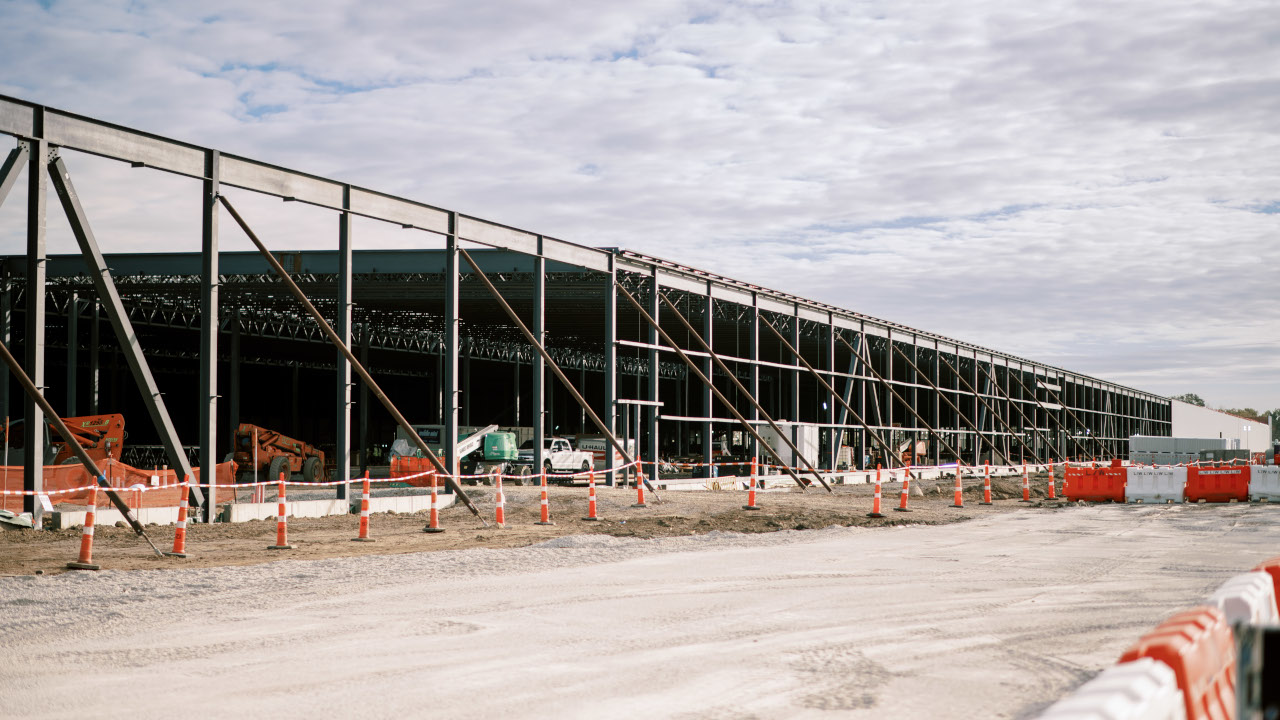
The Business Record’s September 2026 review describes the QTS development as requiring about 1.05 GW. An Iowa clean-energy district resource inventory separately lists 616 MW in a first phase and 517 MW in a second, adding to 1,133 MW. These are published third-party planning figures, not an independently measured load. Their differing scope and provenance warrant a range instead of a false exact total. A construction partner also lists 420 MW for its contracted portion, which is not necessarily the entire campus.
Alliant Energy confirmed a federal energy secretary’s construction-site visit on May 7, 2026 and said the complex was then the largest in QTS’s U.S. portfolio by building program. The project employs a closed-loop cooling system. Its planned water inventory and forecasts should not be interpreted as zero total water demand, and commissioning, substation work and sustained electrical service remain separate milestones. A May report on temporary on-site generation for testing likewise should not be mistaken for normal full-campus operation.
Other Iowa Projects and What the Power Figures Mean
The top three do not exhaust Iowa’s computing expansion. The Clean Energy Districts inventory separately estimates 600 MW for Google’s Cedar Rapids initiative, 600 MW for a proposed Palo-area Google development and 400 MW for Microsoft’s Van Meter site. Those figures are not combined with Google’s existing Council Bluffs buildings or Microsoft’s separate West Des Moines campuses, because grouping disconnected facilities into one project would inflate a site-level comparison. Iowa also has active Bitcoin mining facilities, which face different equipment and site-economics questions than the hyperscale proposals ranked here.
A megawatt is an instantaneous power rate; a megawatt-hour is energy used over a period of time. An illustrative 1,000 MW campus running continuously for a day would consume 24,000 MWh, or 24 GWh. None of the two land-stage sites above is documented as using that much energy today. Future power supply is also a distinct question from grid transmission and generation planning: our report on the Google-backed Duane Arnold nuclear restart explains one proposed source of future regional power, while the data-center cost-allocation debate addresses who pays for new grid infrastructure.
The next evidence to watch is clear: final utility-service arrangements, dated construction approvals, equipment commissioning and demonstrated energized load. Those records will establish whether today’s published gigawatt figures turn into actual data center capacity. For comparison with another Midwestern state, see the Illinois rankings, which likewise distinguish permitted proposals from commissioned infrastructure.
BitcoinVersus.Tech
BitcoinVersus.Tech Editor’s Note: We volunteer daily to ensure the credibility of the information on this platform is Verifiably True.
If you would like to support to help further secure the integrity of our research initiatives, please scan the QR code to donate (For the best results, scan the QR code on a Laptop or larger screen).
Suggested donation: 5,000 sats. Bitcoin destination: 3C9o19EH5HSiwEPyCTmEKzxhNCbo2X6TTb. Confirm your wallet displays this address before sending.

BitcoinVersus.tech is not a financial advisor. This media platform reports on financial subjects purely for informational purposes.


Leave a Reply