Mississippi’s data center boom stretches from enormous proposed campuses to working but smaller mining facilities. AVAIO Digital has announced a gigawatt-scale electricity supply plan for Brandon, Compass Datacenters is developing its Meridian campus, and PowerCompute operates a Bitcoin-mining data center in Columbus under a signed power contract. Amazon also has working buildings near Canton, but no accessible official disclosure establishes that site’s electrical megawatts.
For this edition of the State Power Rankings, the sites with officially supportable published power figures are AVAIO Taurus (up to 1,036 MW of proposed long-term supply), Compass Meridian (500 MW in the original utility supply plan, now marketed as 320 MW), and PowerCompute Columbus (11 MW of contracted firm power). The numbers describe different stages and measures. Since other major developments do not disclose comparable site-level MW figures, this is not proof that these are Mississippi’s three largest operating data centers. The rankings reflect disclosures available October 29, 2026.
xAI’s $20 billion MACROHARDRR development in Southaven is one prominent omission. The much-repeated “2 GW” describes a computing cluster spanning Memphis, Tennessee, and Southaven, Mississippi, not a verified electrical load for the Mississippi building alone. The official state announcement and site record do not provide that standalone figure; the project remains discussed below.
3. PowerCompute, Columbus — 11 MW Under Signed Utility Contract
At an existing Bitcoin-mining data center on Datco Industrial Road in Columbus, PowerCompute has an 11 MW firm electricity contract. The company announced on October 6, 2026 that its US Digital Mining Mississippi subsidiary had increased contracted demand from 8.5 MW to 11 MW with Columbus Light and Water. A filed SEC Form 8-K independently confirms 11,000 kW of contracted firm power and a term running through September 16, 2030. That agreement is a considerably stronger basis for ranking than Amazon’s earlier unverified 341 MW tracker estimate.
The company purchased the former Greenidge mining property for approximately $4 million in September 2025, including the site and mining equipment. Its original acquisition announcement described 11 MW of site capacity but only 7.5 MW of operational mining equipment at the time. A firm supply contract is not a record of electricity consumed every minute.

As of September 30, PowerCompute reported about 2,373 installed Antminer machines producing approximately 205 PH/s. Its earlier SEC release also identified roughly 3.5 MW of interconnected power not yet energized. The renewed tariff took effect October 1 under the Tennessee Valley Authority’s Large Data Service classification, which expressly covers Bitcoin mining. The operator curtails some load during peak hours, so 11 MW contracted should not be confused with a constant 11 MW draw.
PowerCompute has discussed using electrical infrastructure for future AI and high-performance computing opportunities, but Columbus is an operating Bitcoin-mining data center, not a confirmed 11 MW AI campus. BitcoinVersus.Tech previously reported its October utility agreement and fleet modernization. This entry reports a verified power figure rather than counting a future AI conversion as completed.
2. Compass Datacenters, Meridian — 500 MW Original Supply Plan; 320 MW Current Campus Design
Compass Datacenters broke ground on an eight-building hyperscale campus in Lauderdale County in January 2025. The project was introduced as a roughly $10 billion investment, including future tenants’ hardware, with an approximately eight-year buildout. Mississippi state officials said at the announcement that Mississippi Power would supply about 500 MW. The company’s current campus portfolio, however, describes the Meridian site as a 320 MW development. That more recent published figure is the appropriate reference for the developer’s present marketed design; the 500 MW number is the larger, earlier power-supply plan, not confirmed current operating consumption.
The distinction is material: a 500 MW electricity-service envelope could support a smaller critical-IT deployment after accounting for cooling, networking, conversion losses and other infrastructure. But a company lowering its currently promoted project figure to 320 MW also raises the possibility that the final campus will be different from the proposal unveiled in 2025. We do not combine 500 and 320 MW, or describe them as two separate Mississippi projects.
Compass itself publishes a short film about Meridian’s transition from a rail hub to a technology center. It is more directly relevant than generic server footage, and appears on the developer’s official Meridian listing.
Compass Datacenters, “From Railroad Hub to Digital Corridor: Meridian’s Next Chapter.” Official company video connected to its Meridian development.

Meridian’s project has moved beyond the initial announcement. The Mississippi Development Authority said on April 22, 2026 that Corderill LLC plans to invest at least $100 million in equipment as a tenant at the Compass campus, with a projected 20 direct jobs. The announcement establishes a prospective customer investment, not that the entire eight-building park is online. The Mississippi Public Service Commission previously approved a special power contract for the development in February 2025.
The state has also connected the development with workforce training. Mississippi State University’s Meridian campus participated in the groundbreaking and has highlighted the region’s expected need for engineering, information technology and skilled construction workers. The first announced equipment investment and site work are tangible milestones, but no public record reviewed here establishes 320 MW—or 500 MW—of operating load.
1. AVAIO Digital Taurus, Brandon — Up to 1,036 MW Long-Term Supply; 116 MW First Phase
The biggest advertised single-campus electrical figure belongs to AVAIO Digital Taurus in Brandon, Rankin County. The developer’s official project page lists 1,036 MW of total long-term baseload power on a 329-acre site. The components are 536 MW of proposed grid supply and 500 MW of behind-the-meter baseload generation. Those are sources of electricity for the same proposed campus, not evidence of 1,036 MW of servers or 1,036 MW of commissioned infrastructure. The behind-the-meter generating equipment, its permits and its financing are not established by the company page alone.
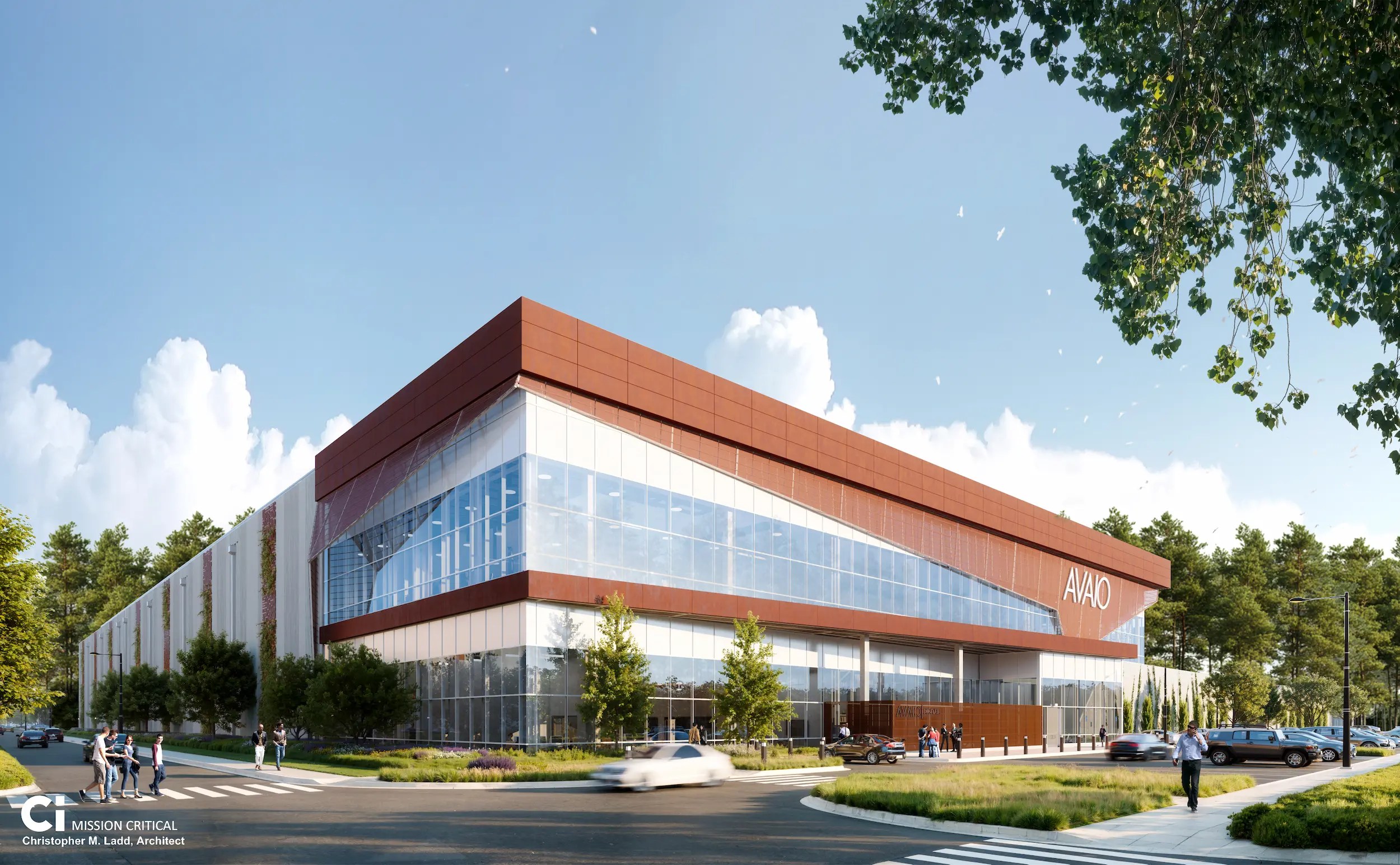
The developer’s September 10, 2025 construction announcement was more modest in near-term scope: a 116 MW first phase with more than 600,000 square feet of planned data center buildings. The company named Yates Construction as general contractor, said it had signed an electric-service agreement with Entergy Mississippi in August, and initially forecast first-phase completion and energization in the first half of 2027. Its current project page refers to first occupancy in August 2027. That schedule is a developer target, not a verified completed milestone.
The clearest public construction check comes from the Clarion Ledger’s October 11 report. During a September 24 site visit, the newspaper found cleared land and some equipment but no completed buildings or construction materials in view. AVAIO did not respond to the reporter’s requests for an update. The company may be performing utility or underground work that is not obvious from the surface; the observation does not establish that the project has been canceled. It does show why the 1,036 MW marketing figure should not be treated as power available for computing today.
A September 2025 weekly data-center news video from LandGate includes coverage of AVAIO’s groundbreaking. The original LandGate article identifies Taurus as one of that week’s stories; the video also covers other industry developments.
LandGate, “This Week in Data Center News,” September 15, 2025, including AVAIO Digital’s Taurus groundbreaking. Independent news roundup, not footage issued by the developer.
The Mississippi Development Authority described the project as a $6 billion investment and approved its data center tax incentive. That sum represents the developer’s announced prospective investment, not confirmed construction expenditure. Officials and residents have also raised questions about the cost of grid improvements, water usage, jobs and public incentives. Future progress should be judged by dated construction evidence, the scale of the enforceable electricity contract, generation permitting and actual tenants—not the full theoretical power stack.
Why xAI’s Southaven Project Is Missing From the Power Ranking
No discussion of Mississippi’s largest technology projects can ignore xAI’s MACROHARDRR site in Southaven. The governor announced a planned investment exceeding $20 billion on January 8, 2026, describing a refurbished building near the company’s power-generation property and its other AI infrastructure just across the Tennessee state line. The announcement said the new facility would help the entire xAI Colossus compute cluster approach 2 GW; the company’s regional facilities page separately describes its combined Memphis and Southaven campuses as exceeding 2 GW.
That regional figure cannot be assigned to the Mississippi facility. Southaven’s gas-turbine site is also distinct from its computing halls: electrical generating capacity is not proof of the same amount of installed IT load. Government air permits and legal disputes concerning turbines must be evaluated on their own terms. The site-specific public record has not identified an independently documented electric-service MW value for MACROHARDRR. Without one, placing the site at #1 solely because the wider cluster is called “2 GW” would repeat the same comparison error these rankings are meant to prevent. BitcoinVersus.Tech previously reported on the 2 GW expansion; this ranking makes the geographic limitation explicit.
What the Mississippi Power Numbers Tell Us
The published numbers describe three different realities. PowerCompute has an 11 MW firm electricity contract for an operating mining data center, with further deployment yet to be energized. Compass has a power agreement and an announced tenant, but its original 500 MW supply figure differs from the developer’s present 320 MW marketing figure. AVAIO has announced a possible 1,036 MW of long-term supply, while the first build represents only 116 MW and recent reporting found no completed buildings. They are not three equivalent measurements of active AI computing.
An electric power contract represents a delivery rate, not a record of how much energy the building actually consumes. At an uninterrupted 11 MW draw, PowerCompute would use 264 MWh per day, but its published peak-hour curtailment makes this hypothetical. A future 500 MW supply plan is likewise not proof of 500 MW of operating servers, and proposed on-site generation is not operating IT capacity.
Amazon’s Canton campus has been removed from #3. Its five operating buildings were confirmed by Amazon to Mississippi Today, and a separate state announcement identifies a $3 billion AWS development in Warren County. Neither release confirms how many megawatts Canton is contracted to receive or currently consumes. The previously used 341 MW estimate came from an external tracker and is no longer presented as an established ranking figure. A larger site with undisclosed MW may still be larger than the formally documented Columbus operation.
Future rankings could change substantially if Amazon or xAI releases Mississippi-site utility figures, Compass finalizes its design, or AVAIO provides new construction evidence. The same distinction between proposed and delivered electricity runs through BitcoinVersus.Tech’s Minnesota and Michigan reporting.
BitcoinVersus.Tech
BitcoinVersus.Tech Editor’s Note: We volunteer daily to ensure the credibility of the information on this platform is Verifiably True.
If you would like to support our work and help further secure the integrity of our research initiatives, please scan the QR code below to donate (For the best results, scan the QR code on a Laptop or larger screen).
Suggested donation: 5,000 sats. Bitcoin address: 3C9o19EH5HSiwEPyCTmEKzxhNCbo2X6TTb. Confirm the wallet address before sending.

BitcoinVersus.tech is not a financial advisor. This media platform reports on financial subjects purely for informational purposes.
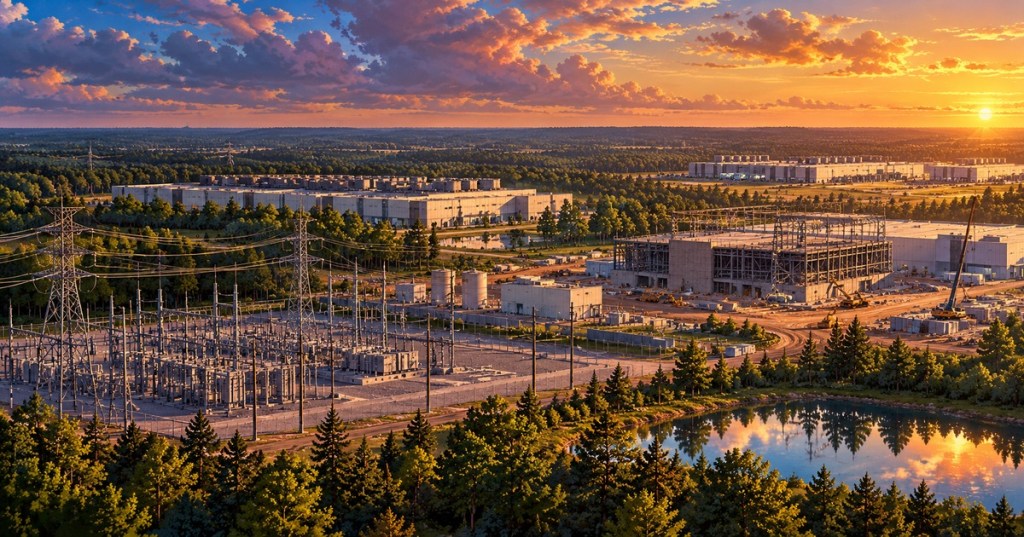
Featured cover: Original anime-style editorial illustration created for this article. It depicts a hypothetical data center construction and power-substation landscape, not a specific completed Mississippi facility.


Leave a Reply