
New Mexico’s data center business is splitting between an operating Meta campus near Albuquerque, a multibillion-dollar AI facility already being built near the Texas border and an enormous proposed complex in Roswell. The three projects could reshape parts of the state’s technology economy, but the power figures attached to them describe very different things: working servers, a proposed generation system and an early-stage developer’s full-build design.
This ranking examines the three largest identifiable, active New Mexico data center campuses with defensible project-specific computing or power estimates: Meta’s Los Lunas site, Project Jupiter in Doña Ana County and E2B4’s Roswell Information Park. The ordering follows the largest documented project-scale figures, not megawatts already operating. The numbers must not be added together or mistaken for equivalent IT capacity. In fact, Roswell’s largest figure is an unbuilt plan, and Project Jupiter’s headline figure is planned electricity generation rather than an officially confirmed IT-load measurement.
3. Meta Los Lunas — 118 MW Estimated Operating IT Power
Meta’s Los Lunas data center in Valencia County is the most mature large computing operation in this comparison. Opened in 2019, it has grown through successive expansions and now includes AI infrastructure. The campus is real and operational, although Meta has not published a directly comparable public megawatt figure for its current server load.
Independent research group Epoch AI estimated on October 26, 2026 that Los Lunas supports about 118 MW of operating IT power, with a projection of 218 MW by the first quarter of 2028. Epoch derives those estimates from satellite imagery, construction timelines, cooling-equipment assumptions and hardware models. They are useful engineering estimates, not utility-meter readings, company specifications or a verified energization schedule. The future number could change as construction and hardware plans evolve.
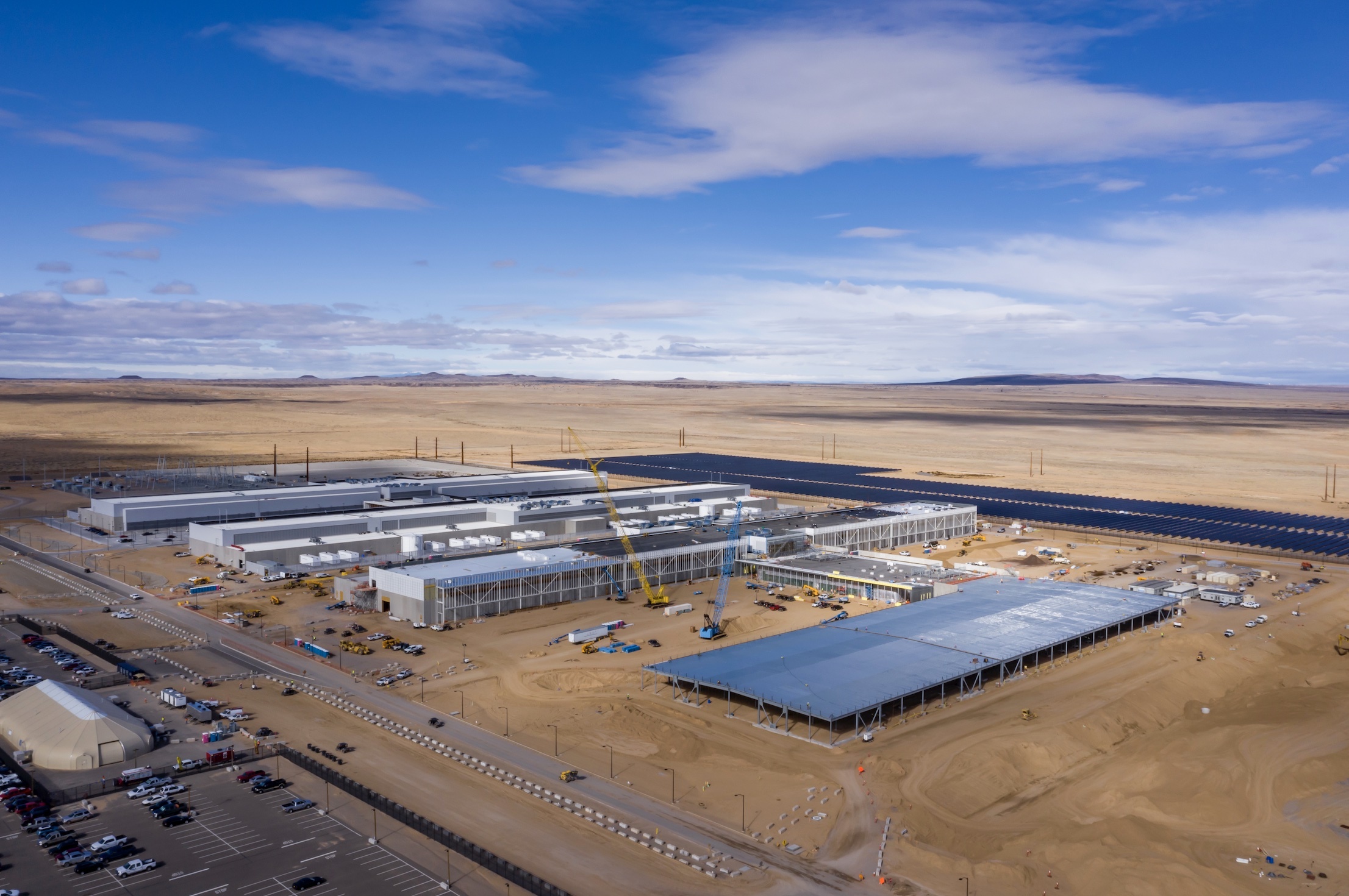
The expansion’s electricity arrangements have a separate public record. In 2025, the New Mexico Public Regulation Commission opened proceedings concerning revised power service and renewable-energy procurement supporting Greater Kudu, the entity associated with Meta’s Los Lunas campus. Those purchased-power and energy-storage agreements are electricity-supply arrangements; their nameplate megawatts should not be automatically counted as the data center’s live IT demand.
Los Lunas illustrates the upside of a developed technology employer: a durable industrial site, construction contracts, skilled maintenance work and regional power investment. It also exposes the hard questions in a growing campus: how costs are allocated between a hyperscale customer and other utility users, how water and cooling systems perform, and whether carbon-free procurement translates into meaningful changes in the grid’s emissions.
2. Project Jupiter, Doña Ana County — Up to 2.45 GW of Proposed Dedicated Generation
Project Jupiter, developed by STACK Infrastructure and its construction partners for Oracle-related AI infrastructure near Santa Teresa, is already under construction. On October 22, Clayco and Kiewit reported topping out the structural framework of an 855,000-square-foot portion of the site. The companies said work began in October 2025, while Oracle reported on October 23 that more than $994 million in contracts had been awarded to 30 New Mexico firms, of which over $160 million had been paid by September 30.
Its often-repeated 2.45 GW figure is specifically the maximum Bloom Energy fuel-cell generating capacity described in Oracle’s April power announcement. It should not be presented as 2.45 GW of energized server load or as an additional data center project next door. Oracle says its data center buildings and the proposed fuel-cell microgrid are separate facilities with different operators and permitting processes.
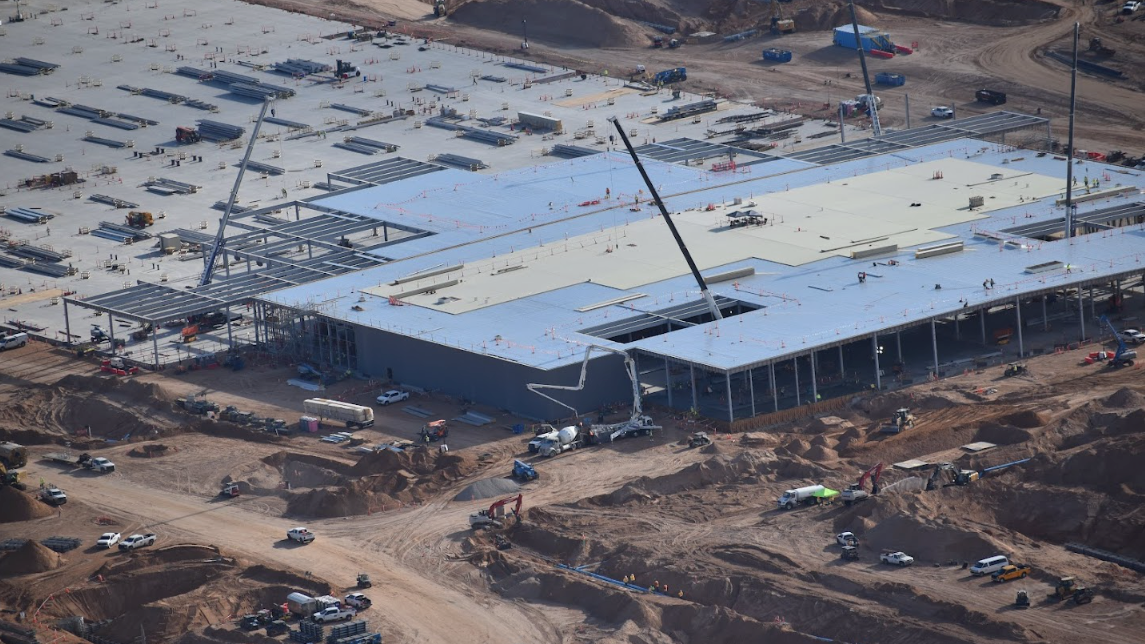
Power and water approvals remain contested. In August, New Mexico’s Supreme Court paused proceedings involving an air permit for the proposed generation system and water use from a construction well. The New Mexico Department of Justice backed petitions questioning permitting procedures and the treatment of water in the Lower Rio Grande basin. Oracle maintains that the court’s action did not suspend the county authorizations for construction of the data center buildings themselves. These are distinct legal and engineering questions, and continued building activity is not proof that the microgrid has received all approvals.
The scale of the investment could create long-term demand for construction, electrical, networking and technical workers. Oracle says it intends to help finance improvements to local water systems, build dedicated power and secure new renewable generation. Residents and environmental groups counter that water withdrawals, natural-gas emissions and the enforceability of protections require close scrutiny before an enormous campus can begin full operations.
CBS News visited Project Jupiter in August 2026 and interviewed southern New Mexico residents about water, jobs and development.
The project’s next milestones will be final power-system permits, a workable water-supply plan, commissioning of computing equipment and evidence that contracted infrastructure is actually performing. As BitcoinVersus.Tech reported in its earlier Project Jupiter emissions update, a lower proposed emissions limit does not by itself mean the power plant has been built or authorized for unrestricted operation.
New Mexico PBS’s New Mexico in Focus reviewed Project Jupiter’s state-court permitting developments on August 28, 2026.
1. E2B4 Roswell Information Park — 4,960 MW Planned Critical IT Load
The biggest published critical IT-power ambition in New Mexico is at Roswell Information Park, proposed by infrastructure developer E2B4. The company describes an ultimate plan for 20 data halls carrying 4,960 MW of critical computing load, supported by approximately 6,500 MW of net on-site electrical generation. It separately advertises a first phase of five halls and 1,240 MW of IT load, with an estimated $74.75 billion full-build development cost. These are the developer’s planning assumptions, not an approved 4.96 GW customer contract, operating campus or completed funding package.
The developer has assembled control over some Roswell parcels and is seeking more land. In October reporting by the Albuquerque Journal, interim chief executive Chris Kameir said the company aimed to begin building 700 MW of gas-fired generating capacity for commercial operations in late 2028. He also acknowledged that equipment for a potential 736 MW gas plant had not been secured. That near-term generation plan is substantially smaller than the company’s advertised first-phase IT target, so later engineering and financing disclosures will be needed to show how the proposed computing halls would be powered.
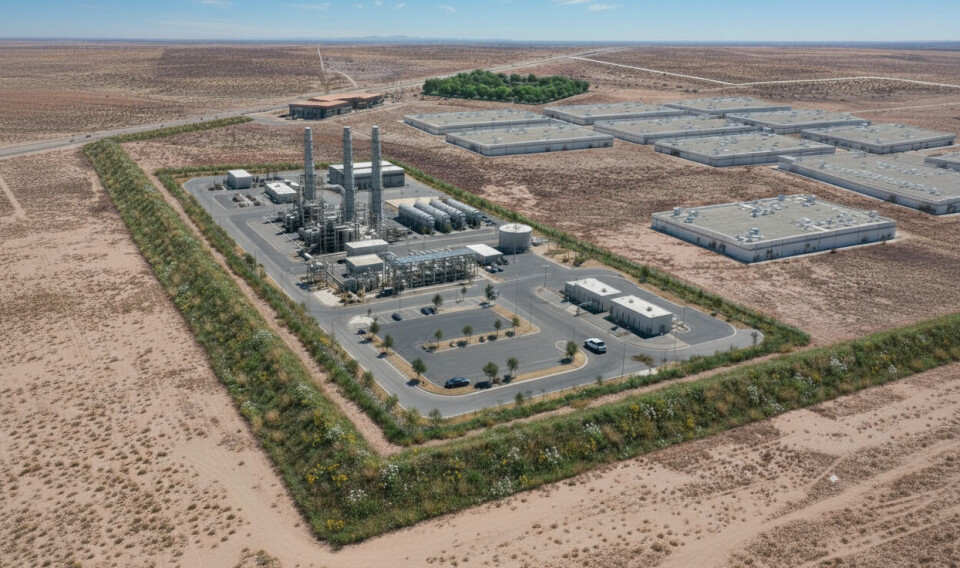
E2B4’s proposed model links computing buildings to a largely independent gas-powered microgrid rather than relying exclusively on a conventional utility connection. The company points to fuel access from multiple producing basins and potential future nuclear power. Gas-pipeline proximity, however, is not the same as contracted fuel deliveries, operating turbine capacity or an approved nuclear installation. It also cannot establish that the announced 4,960 MW IT load is presently feasible on the claimed schedule.
The project could ultimately bring new industrial property to the tax base and support technology and energy employment. Yet Roswell would also need to assess air emissions, water rights, natural-gas dependency, public incentives and the scale of emergency services before its advertised buildout could be treated as a deliverable plan. E2B4 says its development remains subject to engineering, customer commitments, permits and financing. On that evidence, Roswell ranks first for stated long-range IT ambition but not for completed construction or near-term operational certainty.
Why New Era’s 7 GW and Zenith Volts’ 1,265 MW Are Not Counted as Server Capacity
Two other highly publicized proposals deserve mention, without inflating this ranking. New Era Energy & Digital’s SEC filing documents a $200,000 option on roughly 3,500 acres of Lea County land. The developer has described a 7 GW energy-integrated campus, but that figure largely consists of ambitions for natural-gas and nuclear generation. It has not demonstrated 7 GW of installed data-center IT equipment, finalized permits or an operating campus. A land purchase option is not construction authorization.
Likewise, Chaves County reported approving a special-use permit for Zenith Volts’ Lake Arthur project associated with 1,265 MW of solar generation, a 300-acre data center site and battery storage. The 1,265 MW is the proposed solar plant’s nameplate output; it is not a verified 1,265 MW IT-load rating for the future data center. A permitted land-use concept also does not establish that financing, construction and power delivery have been completed.
Google’s possible Lea County campus is another important development, with plans discussed for large buildings and associated renewable power. Yet a comparable final campus IT-load figure and full development approvals remain outstanding. The canceled Socorro data center concept is excluded rather than presented as a live project.
What New Mexico Will Need to Measure Next
The best indicator of New Mexico’s emerging data-center economy will not be the largest number in a corporate presentation. It will be megawatts of IT load actually commissioned, the source and cost of the electricity supplied, verified local employment, tax receipts, air-permit compliance and actual water withdrawals. All three projects show the region’s potential for cloud and AI infrastructure, while also showing why communities need contractual and environmental evidence before projected benefits become accepted facts.
For additional context, see BitcoinVersus.Tech’s New Hampshire, New Jersey, Nevada, and Montana rankings, as well as the data-center capacity planning lesson. Each makes the same distinction between a proposed resource and infrastructure already carrying traffic.
BitcoinVersus.Tech
BitcoinVersus.Tech Editor’s Note: We volunteer daily to ensure the credibility of the information on this platform is Verifiably True. If you would like to support our work and help further secure the integrity of our research initiatives, please scan the QR code below to donate 5,000 sats. For best results, scan the QR code from a laptop or larger screen.
Bitcoin address: 3C9o19EH5HSiwEPyCTmEKzxhNCbo2X6TTb. Confirm the destination address before sending.

BitcoinVersus.tech is not a financial advisor. This media platform reports on financial subjects purely for informational purposes.


Leave a Reply