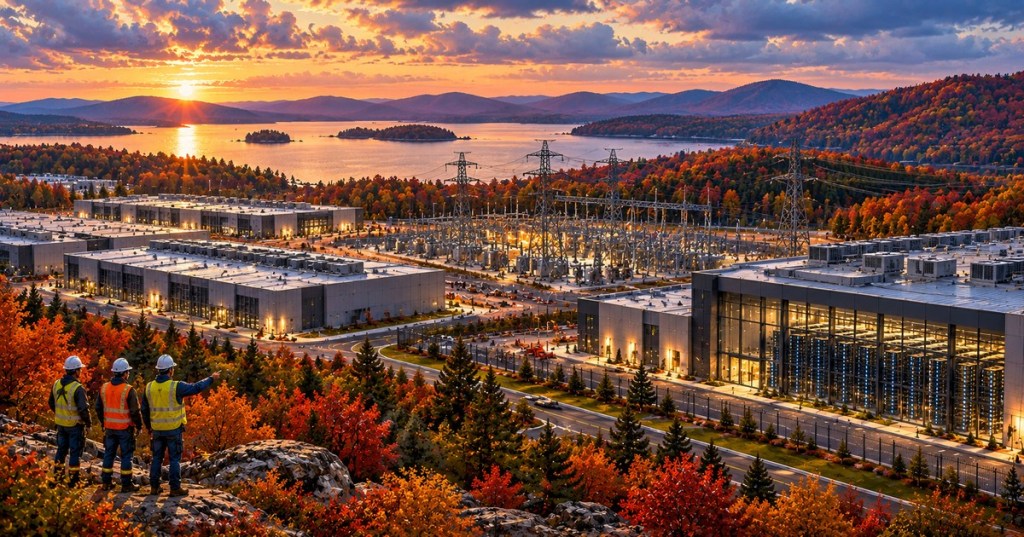
New York’s largest advancing data center developments are concentrated around the former industrial corridors of Western and Northern New York. TeraWulf is building new AI halls beside Lake Ontario, a 635-megawatt proposal is moving through local review in Massena, and Blockfusion has signed CoreWeave to a long-term lease at a repurposed Niagara Falls power plant. Each would bring computing investment to an established industrial site, but none is exempt from questions about electrical supply, construction permits and costs to nearby communities.
The three projects stand out for having identifiable sites, publicly documented power figures and substantive operating, construction or customer-development activity. TeraWulf’s Lake Mariner campus has up to 750 MW of potential gross power; North Country Colocation Services proposes a 635 MW electrical load at the former Reynolds site; and Blockfusion’s Niagara Falls site has a 500 MW large-load request alongside a more developed 300 MW critical-IT campus plan. These figures do not measure the same thing and are not all contracted or online. Larger, less developed queue requests are discussed separately below.
3. Blockfusion Niagara Falls — 500 MW Grid Request, 300 MW AI Campus Plan
In Niagara Falls, Blockfusion USA is converting its former power-plant campus at 5380 Frontier Avenue for liquid-cooled AI computing. Unlike projects supported only by land purchases or grid filings, Blockfusion has a signed anchor customer: on September 16 it announced a 15-year lease with CoreWeave, accompanied by an expansion agreement.
The developer’s September SEC-filed investor presentation describes 50 MW already energized and operating at the existing facility and an eventual 300 MW critical-IT campus, contingent on financing, additional land and power infrastructure. The presentation discusses an 85 MW commercial package, comprising 35 MW in the executed lease and 50 MW governed by an expansion agreement subject to additional conditions. CoreWeave’s right to expand to 300 MW is not a guarantee all 300 MW will be delivered.
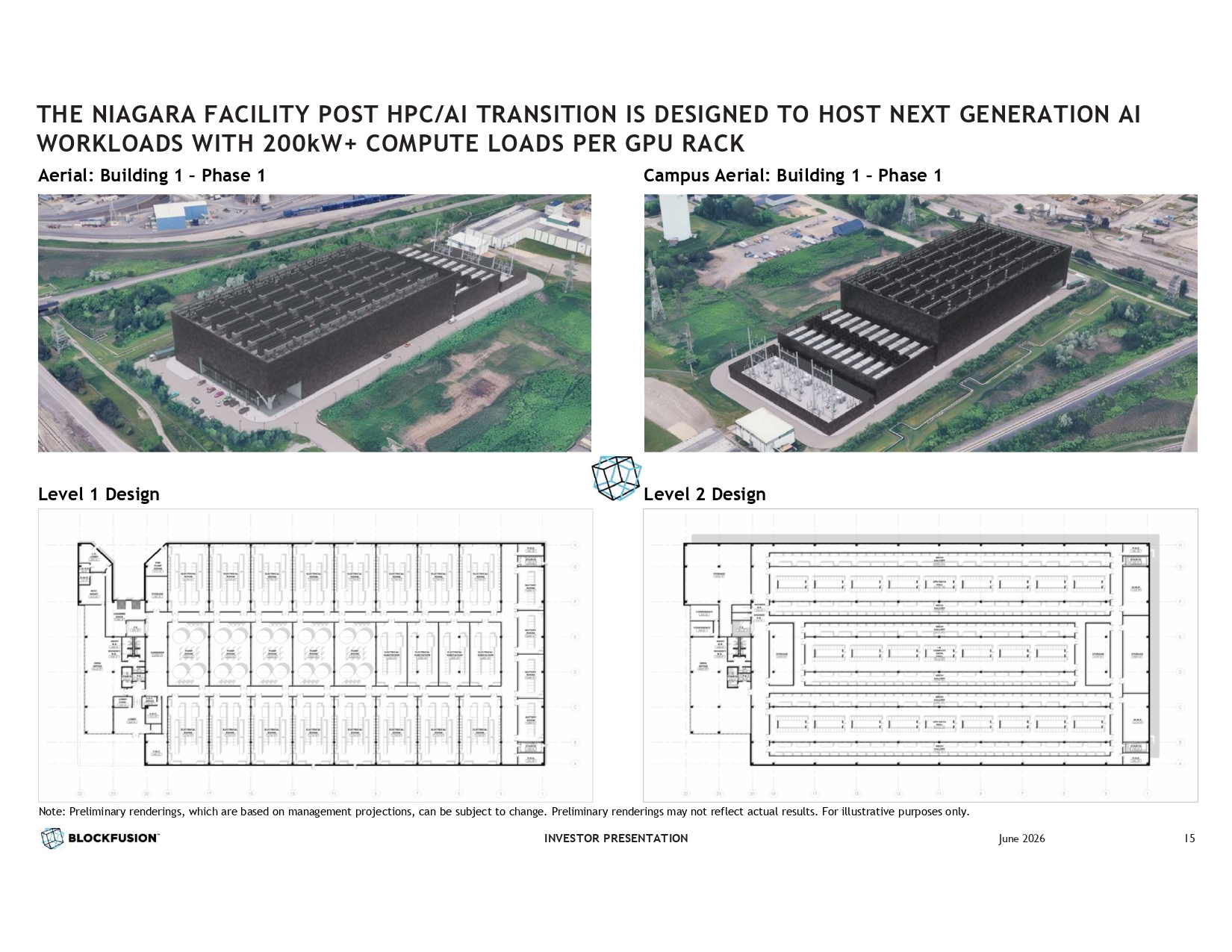
Public large-load records also include a 500 MW North East Data/Blockfusion request for Niagara Falls, the largest associated grid figure for this project family. That request is a future power-service consideration, not 500 MW of available IT power. It is therefore the figure used to compare project ambitions, while the developer’s smaller 300 MW IT design and 50 MW existing site rating are the stronger guides to what is actually planned or present today.
The City of Niagara Falls’ earlier settlement documents show the site was formerly a coal-fired plant and had already undergone industrial conversion. The reuse of an existing site with transmission and fiber access could attract new investment without opening untouched land. Yet fresh AI construction, financing and interconnection approvals remain separate questions. The next material evidence will be the final delivery schedule and the first commissioned CoreWeave capacity.
2. NYDIG / North Country Colocation Services, Massena — 635 MW Proposed
North Country Colocation Services (NCCS), an affiliate associated with NYDIG, wants to develop a roughly 1.5 million-square-foot, 635 MW data center across three buildings at the former Reynolds/Alcoa East industrial site near the St. Lawrence River. The proposal reached Massena’s Planning Board in May, with public meetings continuing through the summer and autumn. The total is a proposed future electrical demand, not proof that 635 MW of data halls are energized.
North Country Public Radio reported on October 7 that NYDIG had been working to acquire the site, while local officials were still considering the proposal’s approvals. Developers have described an estimated 2,000 construction jobs and 200 permanent jobs, as well as financial support for public services. Those are project expectations rather than measured employment or completed community payments.
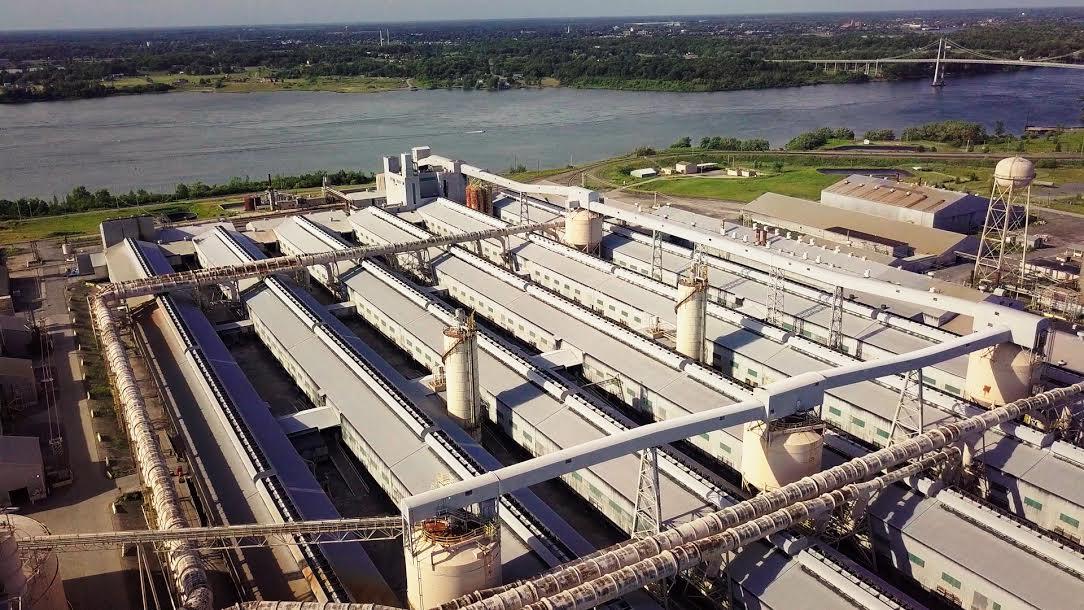
The proposed energy requirement has prompted questions about the regional hydroelectric supply, electricity rates, air emissions and water. NCCS says the planned cooling system would use a sealed loop to limit routine local water demand. That claim still needs to be examined against the final engineering and permitting documents. The area has experience hosting cryptocurrency mining, but an existing industrial or mining operation is not equivalent to an approved 635 MW new data center.
On September 16, Massena’s Town Board rejected a proposed local six-month moratorium by a 3–2 vote, according to NCPR’s coverage of the meeting. The vote was not site-plan approval. The project also raises unresolved questions under New York’s statewide pause on certain new state permits. Officials told NCPR that an exemption might apply depending on earlier approvals, but state authorities had not confirmed that status as of October 7. The appropriate next milestone is a documented decision on local land use and required state authorizations.
1. TeraWulf Lake Mariner, Barker — Up to 750 MW Gross Expansion Potential
TeraWulf’s Lake Mariner Data Campus in Barker, Niagara County, is the most advanced large AI data center build in this comparison. Located on a former coal-plant property near Lake Ontario, it combines operating AI hosting capacity with construction of new high-density data halls. The company reported 102 MW of revenue-generating critical IT capacity after its CB-3 delivery in July and another 336 MW under construction in CB-4 and CB-5 as of its August 5 second-quarter update.
These figures establish a clearer near-term development picture than a speculative interconnection request. TeraWulf has contracted customers and phased delivery plans, including space leased to Fluidstack with credit support associated with Google. Its June 2026 SEC filing describes approximately 500 MW of near-term gross campus capacity and potential expansion to 750 MW gross, subject to additional approval from the New York Independent System Operator. A separate investor presentation outlines a 600 MW future critical-IT ambition that includes 438 MW under contract and 162 MW in the pipeline. Neither the 600 MW IT target nor the 750 MW gross envelope was fully operational in July.
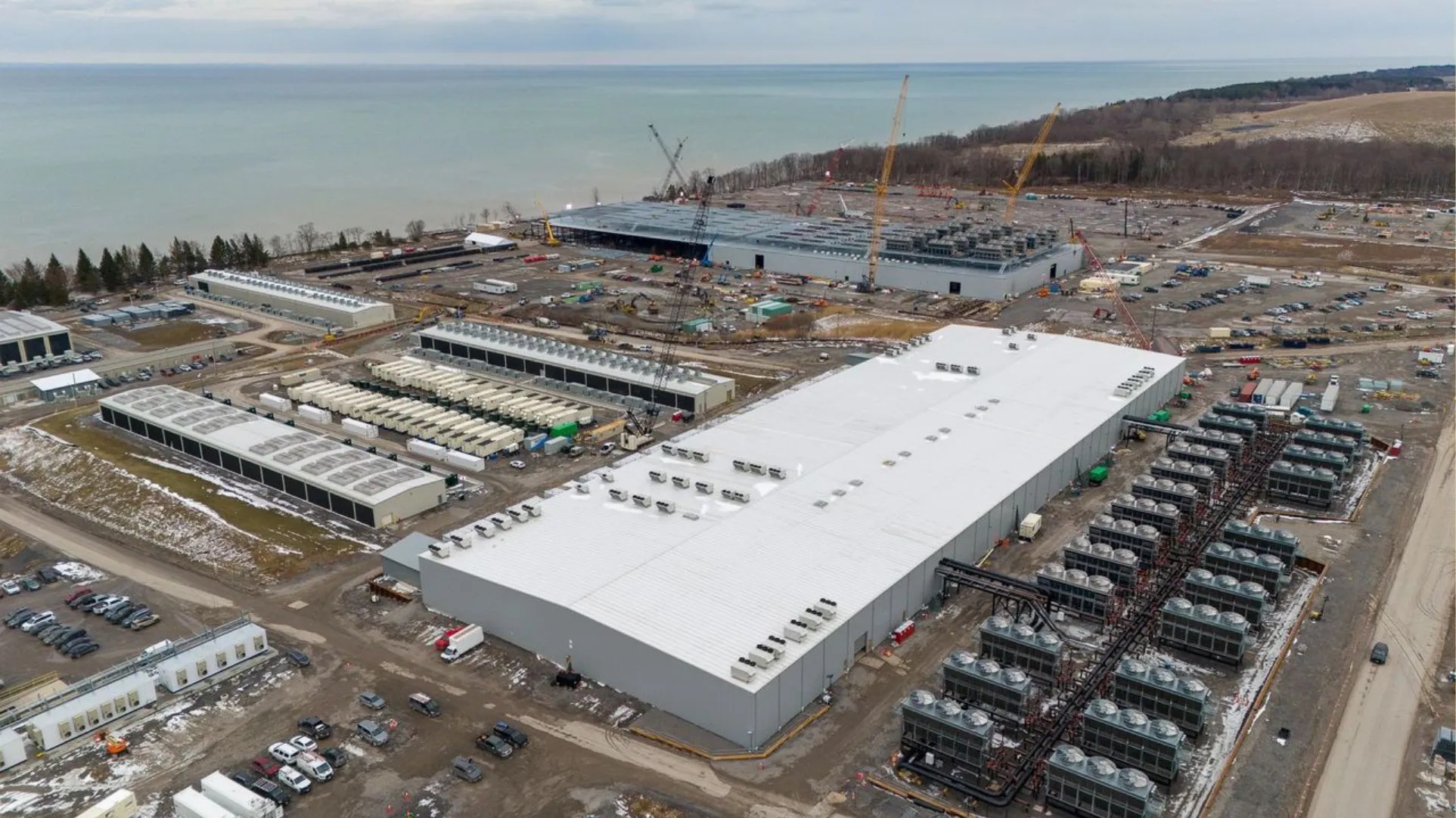
The redevelopment draws attention because it uses substantial pre-existing industrial infrastructure in a region with hydroelectric and nuclear generation. In firsthand reporting from the spring construction tour, journalists described overlapping construction, cooling-system installation and large crews working to meet customer deadlines. The transformation also has costs: major electrical equipment, new substations, construction traffic and a workforce that must be sustained after the temporary building boom.
TeraWulf’s engineering progress gives this campus a different evidentiary standing from projects that have only entered a grid queue. But its future scale still depends on scheduled commissioning, customer demand, interconnection approvals and cost control. The decisive numbers are how many critical IT megawatts pass acceptance tests and generate revenue—not the maximum value printed on a site map.
Why Larger New York Grid Requests Are Not in the Ranking
New York’s interconnection queue contains larger figures than some of these campus plans. They should be reported, but a queue entry alone is not enough to make a project an advancing construction site. The NYISO large-load tracker includes St. Lawrence Infrastructure requests of 1,935 MW and 860 MW, along with the 1,000 MW East Fishkill request and other preliminary plans. The St. Lawrence requests have not been substantiated by comparable public site approvals, financing or customer commitments that would justify placing them above an actual build as a deliverable campus.
East Fishkill presents an even clearer restriction: local records and reporting show a 1,000 MW grid request but no formal town data-center application, followed by a local restriction on new facilities exceeding 20 MW through 2029. The request is real; the implication that a gigawatt data center is approved and proceeding is not.
A Rockefeller Institute dashboard lists Globe Digital Holdings’ Niagara Falls project at 600 MW, above Blockfusion’s current 500 MW queue entry. Globe is not included because the materials reviewed do not establish construction, a binding named customer or site approvals comparable to the three ranked developments. The 933 MW Arsenal Data Site likewise appears in large-load records without sufficiently documented local project commitments. These should be reconsidered if developers publish firm plans and approvals.
New York’s Data Center Permit Pause Changes the Timeline
New York’s policy environment matters as much as its grid. Governor Kathy Hochul issued Executive Order 62 on July 14, 2026, directing a pause on certain discretionary state permits for new data centers meeting the order’s 50 MW threshold while agencies assess broader environmental and grid impacts. It is not a statewide order to shut existing data centers, and applicability to facilities with earlier or complete approvals differs from project to project.
The New York Public Service Commission began a Generic Environmental Impact Statement review to examine air and water impacts, local community effects and how large customers pay for electrical upgrades. Developers argue that clear rules and reuse of industrial sites can make the region competitive. Residents and ratepayer advocates want binding protection against higher bills and unanticipated noise, water and emissions impacts. Those positions can be evaluated through published contracts, permits and measured operations rather than promises alone.
This is the central test for the state’s largest data center projects: secure power, build usable critical IT space, demonstrate environmental compliance and show that the public receives the expected economic benefits. For comparisons elsewhere, see BitcoinVersus.Tech’s New Mexico, New Jersey, Nevada rankings and its data center capacity-planning lesson.
BitcoinVersus.Tech
BitcoinVersus.Tech Editor’s Note: We volunteer daily to ensure the credibility of the information on this platform is Verifiably True. If you would like to support our work and help further secure the integrity of our research initiatives, please scan the QR code below to donate 5,000 sats. For best results, scan the QR code from a laptop or larger screen.
Bitcoin address: 3C9o19EH5HSiwEPyCTmEKzxhNCbo2X6TTb. Confirm the destination address before sending.

BitcoinVersus.tech is not a financial advisor. This media platform reports on financial subjects purely for informational purposes.


Leave a Reply