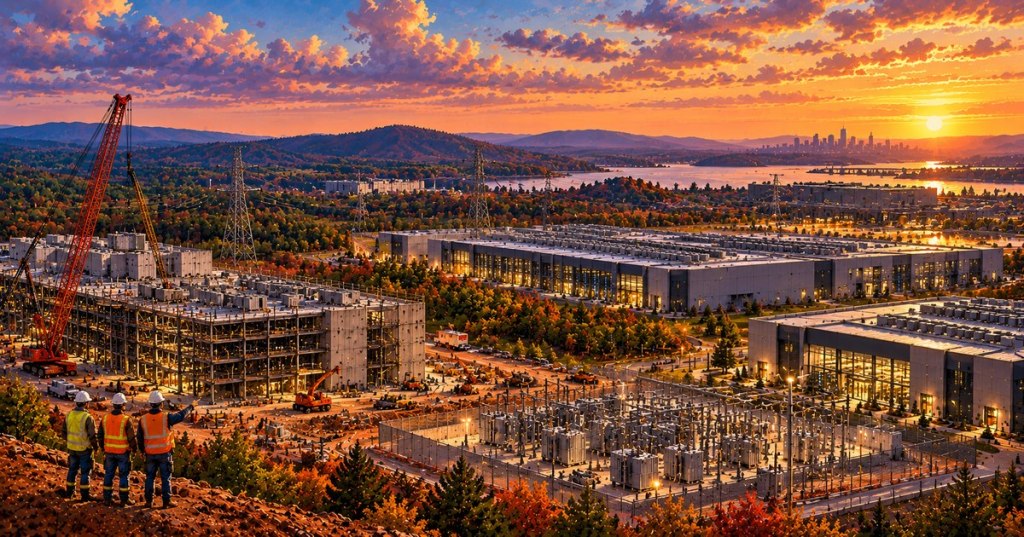
North Dakota is emerging as one of the country’s largest markets for energy-intensive computing, with established Bitcoin mining facilities and new artificial-intelligence campuses competing for industrial land, power connections and construction labor. Near Williston, Atlas Power is operating part of a development once planned for 700 megawatts. In Cass County, Geronimo Power has applied to build a 540 MW data center alongside energy infrastructure. And another Williston proposal, Project Fighting Pike, has a city-approved development plan but remains delayed by a property-title problem.
The ranking covers the three largest separately identifiable North Dakota data center projects with publicly documented site-level power ambitions among the records reviewed as of October 29, 2026: Atlas Power (700 MW planned), Harmony Energy Park (540 MW proposed), and Fighting Pike (455 MW planned). It ranks the stated overall scale—not the amount of electricity actually being used. A completed mining building, a conditional-use application and an unbuilt master plan are very different kinds of evidence.
3. Critical Data House Project Fighting Pike, Williston — 455 MW Planned, Delayed
Critical Data House’s Project Fighting Pike is a proposed seven-building, 455 MW campus on approximately 300 acres near U.S. Highway 2 and 56th Street NW in Williston. The published development plan groups the buildings into three phases and includes utility areas, roads, stormwater ponds and security access. The developer has discussed up to $5 billion for construction and another $5 billion for computing equipment, figures that depend on the project actually proceeding.
Williston commissioners approved important planning steps in March 2025, as KFYR reported at the time. That approval established a route through land-use review; it did not construct data halls, secure a hyperscale tenant or switch on 455 MW of servers. The project has been described as primarily intended for cloud and AI customers rather than a new cryptocurrency mining operation, but no binding end-user contract was verified in the public materials reviewed.
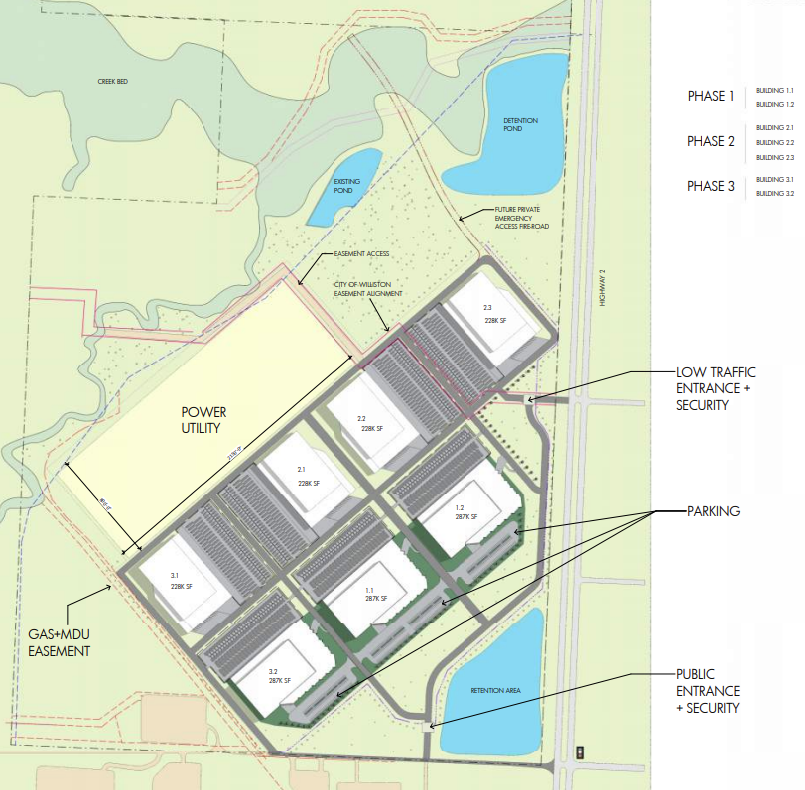
The more consequential development this year is a delay. A project chronology citing Williston Herald reporting from September 17 describes an unresolved land-title issue involving investors in an earlier abandoned development on the property. The issue has prevented the developer from taking clear title and starting the advertised construction program. An opening once discussed for 2027 has shifted toward late 2028 or early 2029 in the more recent account. That is a conditional estimate, not an approved new completion date.
The campus could reuse land already considered for large development and create demand for electrical, construction and data center specialists. But those economic benefits depend first on title resolution, final permits, a usable utility agreement, financing and construction. Until those steps are documented, Fighting Pike is an identifiable planned development, not an operating 455 MW cloud campus. Noise-control requirements and the effects on neighboring properties remain meaningful subjects for review.
2. Geronimo Power Harmony Energy Park, Cass County — 540 MW Proposed
Geronimo Power submitted a conditional-use permit application on September 15, 2026, for a data center on a 640-acre section of Harmony Township northeast of Casselton and north of Mapleton. Its proposal includes two main data center buildings, roads and related infrastructure. The developer says the initial utility service could reach 540 MW and that roughly 160 acres would contain buildings and improved surfaces, with more than three-quarters of the section remaining open land.
As of October 29, the data center had not received its local conditional-use approval. Harmony Township had considered a possible 24-month moratorium affecting large energy and computing projects, but a scheduled October 22 vote was canceled. The developer has sought discussion with residents and offered to pause consideration of its application for six months. Neither a suspended hearing nor a conditional-use filing establishes a completed service agreement, a named hyperscale tenant or physical data center construction.
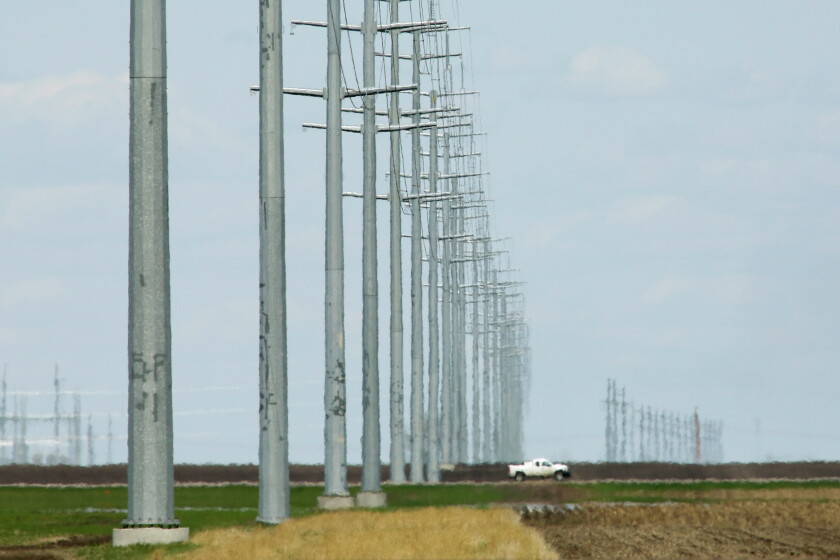
The company proposes to serve the project with new generation, potentially combining solar, storage and natural gas. A 200 MW Harmony Solar project is under construction nearby, and a separate 200 MW battery storage proposal went before state regulators on October 23. Those are energy-generation and storage assets, not additional data center IT load. North Dakota Monitor reported that Otter Tail Power’s proposed large-load tariff was under state review, with the intended purpose of assigning project-caused power costs to the new industrial customer rather than ordinary ratepayers.
Water and land use are the central local disputes. Geronimo says closed-loop cooling would require approximately 15,000 gallons per day on average and as much as 20,000 gallons on a peak day. Residents have questioned whether prime Red River Valley farmland is an appropriate location for two enormous buildings and whether projected water, noise and grid costs will prove accurate. Supporters cite construction jobs, property-tax revenue and industrial diversification. Both positions require project-specific evidence: independent engineering, binding utility terms, a water plan and enforceable setbacks.
1. Atlas Power Data Center, Williston Area — 700 MW Phased Development Plan
Atlas Power’s existing computing complex west of Williston is the largest phased power ambition in this comparison. In a January 26, 2022 announcement, North Dakota’s governor described a $1.9 billion development on roughly 77 acres built by FX Solutions and served by Mountrail-Williams Electric Cooperative. The original schedule called for 240 MW in the first phase, a rise to 500 MW in the second, and an eventual 700 MW in the third. The project was designed chiefly for Bitcoin mining and other high-performance computing workloads.
Atlas has operated at the Williston-area site since 2023. A 2026 statewide data center roundup described the facility as operating at 700 MW, but an independently verified utility-meter record proving 700 MW currently energized was not available in the sources reviewed. This article therefore treats 700 MW as the announced ultimate buildout, not established real-time draw. The site has physical operations and infrastructure, but its confirmed current load must be reported separately from the planning figure.
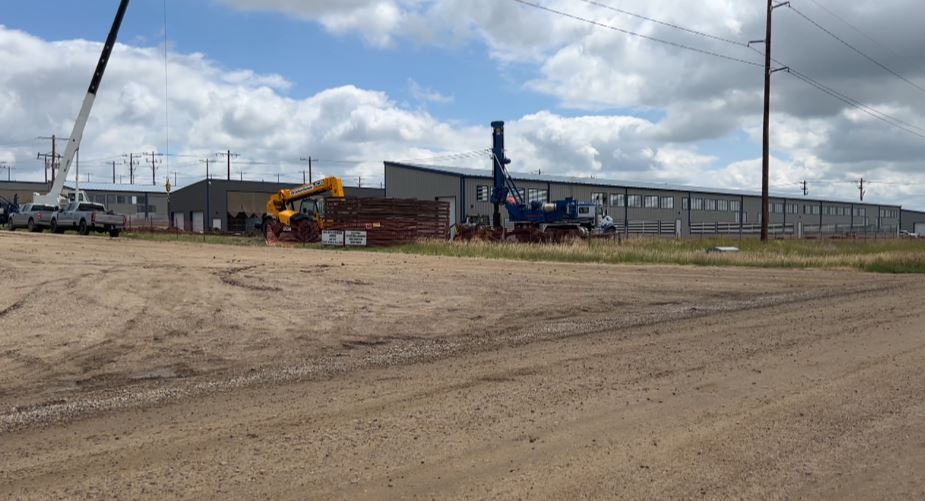
The campus also demonstrates why approvals and community impacts matter after equipment is operating. Williams County officials cited building-code and occupancy issues in 2023, and neighboring residents filed a civil lawsuit alleging persistent noise and other harms. The county eventually allowed continued operation following corrective work and payments for violations. KFYR reported a settlement in June 2025; its terms were not publicly detailed in that account. The original controversy led to sound-barrier construction and tighter scrutiny of mining facilities.
The site’s power purchases and local construction spending create measurable opportunities for cooperative revenue and industrial activity. But a large projected megawatt number is not proof of a permanent workforce at the same scale, nor evidence that every phase is fully built. Continued monitoring of operating load, maintenance, noise levels, and the cost of transmission service is needed to distinguish lasting benefits from the promotional claims of a multiyear expansion.
Why Applied Digital’s Polaris Forge Campuses Matter
A ranking by advertised maximum power can leave out the state’s most significant recently commissioned AI infrastructure. Applied Digital confirmed on October 2 that its Polaris Forge 1 campus in Ellendale had reached 250 MW of critical IT load ready for service and was fully leased to CoreWeave for 400 MW at full buildout. Those are explicitly computing-equipment figures, and 250 MW is a far stronger operational claim than unbuilt campus plans.
The same company has Polaris Forge 3 under construction near Center, Oliver County. Its May 2026 announcement specifies 300 MW of critical IT load supported by approximately 430 MW of anticipated grid power. The distinction matters: the 430 MW is facility-side electrical supply, not a separate 430 MW server hall, and the related state utility agreement still faced regulatory review. Polaris Forge 2 near Harwood is another contracted and building-stage campus, also distinct from the projects above.
There is no need to add Applied Digital’s different campuses together and call the sum a single site, or to count the separately proposed 1,200 MW Base Electron natural-gas plant as an additional server campus. Applied Digital’s October 7 results keep its operating capacity, future leases and power-generation commitments in separate categories. Readers following that development can consult BitcoinVersus.Tech’s Polaris Forge 1 coverage, North Dakota power agreement report and earnings analysis.
The North Dakota Opportunity Depends on Delivered Power
North Dakota offers a cool climate, extensive energy infrastructure and industrial sites where developers can build at a scale difficult to fit into major cities. Those conditions are attracting capital and creating opportunities for electricians, civil contractors, fiber technicians, cooling engineers, and data center operators. Communities also face substantial choices about farmland conversion, water, emissions, transmission upgrades and how much of the added electrical expense falls on customers who do not use the facilities.
The next meaningful milestones are actual energized megawatts at Atlas, Harmony Township’s permit decision and enforceable large-load tariff, and resolution of Fighting Pike’s land-title problem. The same evidence standard applies to the other states in this series: compare North Dakota’s developments with BitcoinVersus.Tech’s North Carolina, New York and New Mexico rankings. Announcements, permits and working infrastructure are related milestones—not interchangeable measures of completed computing capacity.
BitcoinVersus.Tech
BitcoinVersus.Tech Editor’s Note: We volunteer daily to ensure the credibility of the information on this platform is Verifiably True. If you would like to support our work and help further secure the integrity of our research initiatives, please scan the QR code below to donate 5,000 sats. For best results, scan the QR code from a laptop or larger screen.
Bitcoin address: 3C9o19EH5HSiwEPyCTmEKzxhNCbo2X6TTb. Confirm the destination address before sending.

BitcoinVersus.tech is not a financial advisor. This media platform reports on financial subjects purely for informational purposes.


Leave a Reply