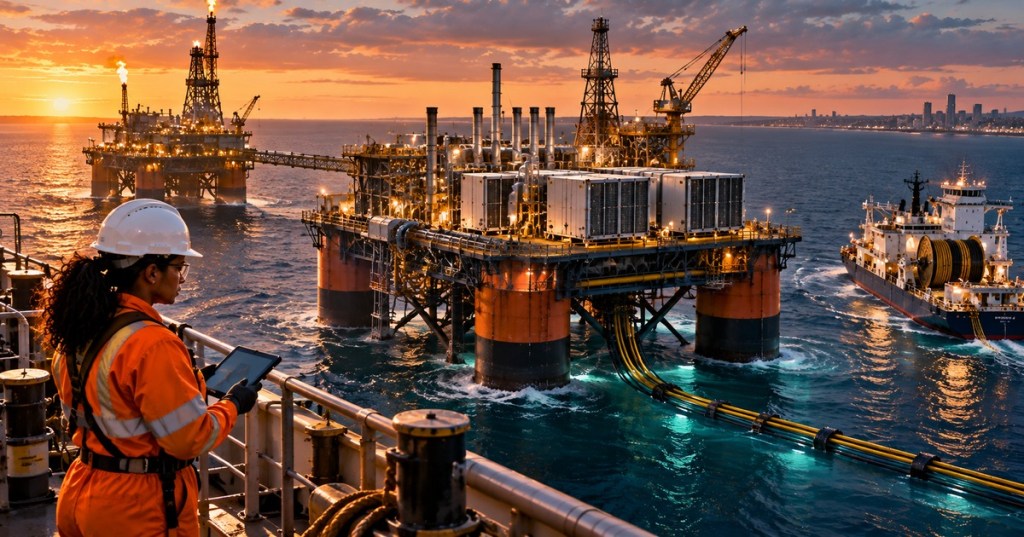
Kalypso Offshore Energy and Offshore Data Center announced an October 20 collaboration to investigate AI computing facilities powered by stranded or underused natural gas at sea, potentially reusing aging offshore platforms instead of constructing entirely new sites on land.
The proposal would put electricity generation and computing equipment near offshore gas resources, avoiding the need to transport all the gas to a shore-based power plant. The firms plan to examine both new construction and suitable existing platforms for smaller edge-computing and AI-inference workloads.
The companies have not disclosed an offshore project location, committed investment, generating capacity, prospective tenant, regulatory approvals or construction timetable. The announcement describes a development concept, not a working gas-powered data center.
The subsea connection is the critical link
Kalypso’s role would be engineering, installing, connecting and servicing subsea fiber-optic, electrical and umbilical cables. Such links are needed to carry data to and from land, and potentially connect facilities with the electrical grid. A remote computing platform would also need maintenance, cybersecurity and operational continuity despite offshore weather.
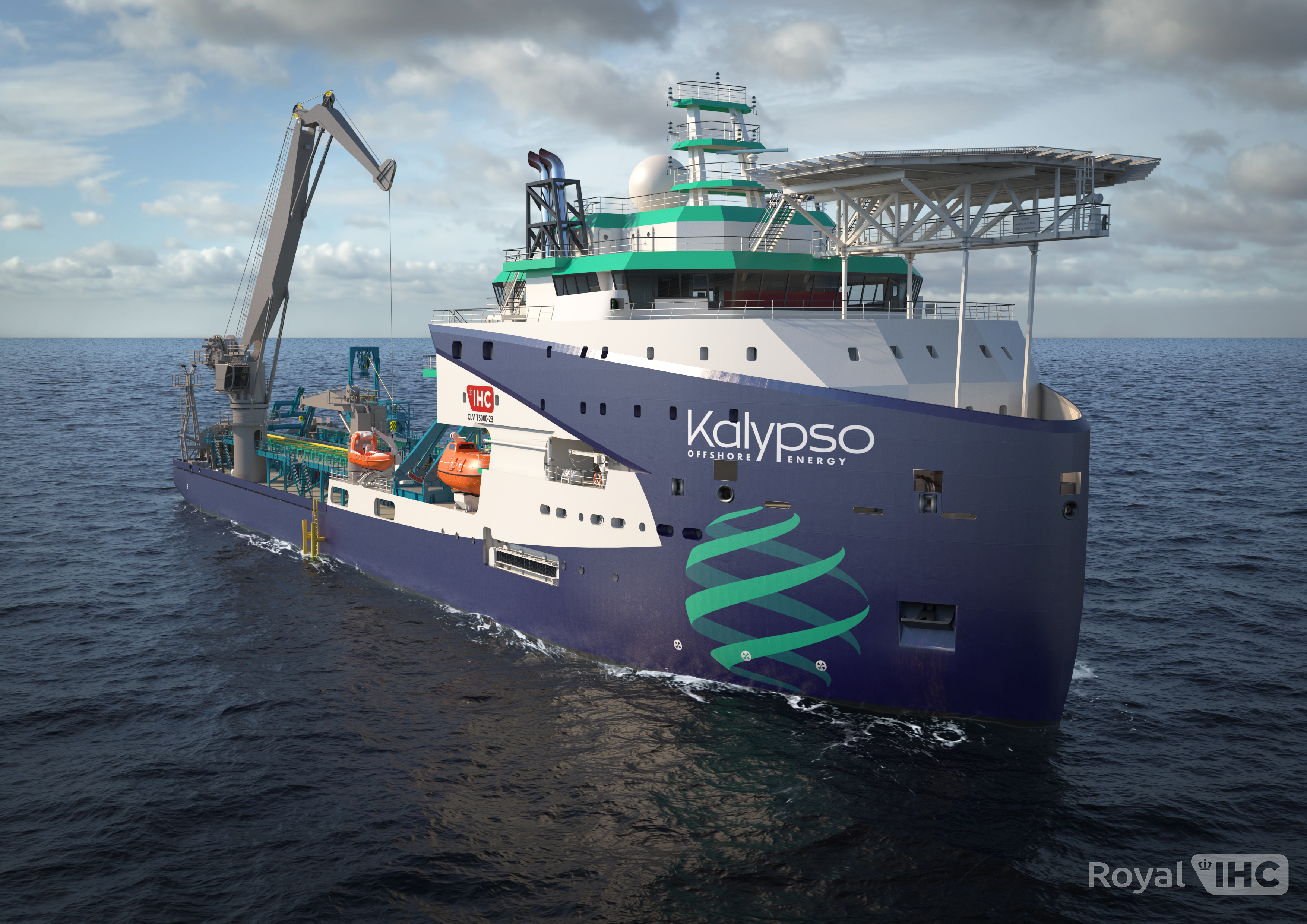
A Royal IHC vessel design illustrates the kind of cable-installation technology Kalypso has been developing. The pictured vessel is a proposal for offshore infrastructure, not proof that a data-center cable installation is underway.
Stranded gas is not automatically clean energy
Offshore Data Center also has a separate relationship with Riverway Group involving semi-submersible structures. The partners claim a patented hull design could weigh up to 50% less than conventional alternatives, but no tested weight or cost comparison specific to a completed AI platform was published. Proposed closed-loop cooling would use seawater as a heat sink without placing server electronics directly in seawater.
The project revives a question familiar to Bitcoin miners that follow stranded energy: can computation create value where fuel is costly to transport? Bitcoin mining can often operate with relatively intermittent power and modest network bandwidth. AI inference usually imposes stricter requirements for dependable connectivity, service availability and hardware maintenance.
Burning previously unusable gas for useful electricity does not automatically eliminate emissions. The environmental outcome depends on whether the gas otherwise would have been flared, vented, reinjected or left undeveloped, along with combustion efficiency and upstream methane leakage. The companies have not published a project-specific emissions assessment.
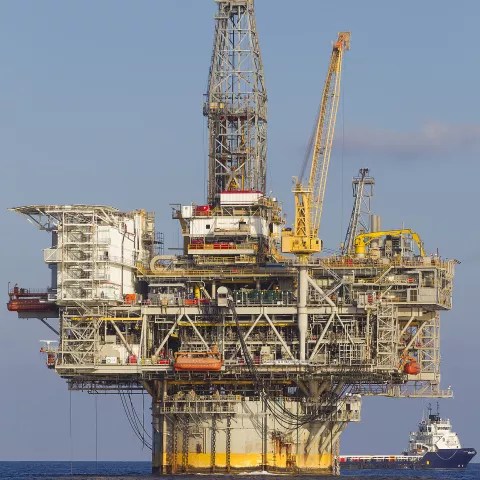
An offshore production-platform photograph from the U.S. Bureau of Safety and Environmental Enforcement shows the type of existing marine industrial infrastructure that would require engineering evaluation before any reuse. It is not a facility selected for the Kalypso collaboration.
The next test is commercial rather than conceptual: a named site, a gas-resource agreement, an engineering design with verified power and cooling requirements, cable-route approvals and a paying customer. Until those are disclosed, the plan remains an early-stage attempt to turn offshore energy into AI computing capacity rather than an operating addition to the data-center market.
BitcoinVersus.Tech — Independent reporting on Bitcoin mining, energy, data centers and computing.
Editor’s Note: We volunteer daily to ensure the credibility of the information on this platform is Verifiably True. If you value our independent reporting, scan the original QR code below to donate 5,000 sats (best results on a laptop or larger screen).

On mobile, save or screenshot the QR image and use your Bitcoin wallet’s scan-from-photo feature if available. Otherwise, display it on another device and scan the QR with your phone.
BitcoinVersus.tech is not a financial advisor. This media platform reports on financial subjects purely for informational purposes.


Leave a Reply