
In September 1575, King Philip II of Spain suspended payments on financial contracts with his Genoese merchant-bankers. The halt, often described as one of the Habsburg Crown’s great “bankruptcies,” exposed the dependence of European trade on royal borrowing and merchant credit. Archival research links the ensuing 1575–1577 credit freeze to interrupted commercial fairs, failed banks and damaged trade. The crisis ended after negotiations among the Crown, its lenders and Castile’s representative assembly, the Cortes, in December 1577.
This installment continues the course’s chronological study of financial failures after the 1494 Medici Bank collapse. The Medici case concerned a private banking partnership. The Spanish crisis demonstrates how a sovereign borrower could transmit distress through networks of private merchants, bankers and trade fairs. It is therefore a lesson in credit contagion and state finance, not merely a story about an empty treasury.
Historical setting: an empire financed through credit
Philip II ruled an unusually dispersed monarchy, with obligations in Castile, the Low Countries, Italy and overseas territories. Military campaigns demanded cash in the right city, at the right time, and often in the right currency. Money collected as taxes in Castile could not automatically be made available to soldiers elsewhere. The monarchy relied on financiers with the connections to deliver funds across Europe. Their business was shaped by the existing networks of bills of exchange and merchant credit.
The central players included Genoese merchant-banking houses and the Castilian cities that, through the Cortes, negotiated tax commitments. Financial agreements were not uniform loans with a single interest rate. Contracts known as asientos bundled lending, payment schedules, collateral and transfers between locations. The king also issued juros, generally longer-term claims backed by revenue streams. Understanding those two instruments is essential to explaining why a suspension could freeze commerce without erasing the monarchy’s revenue or all of its debts.
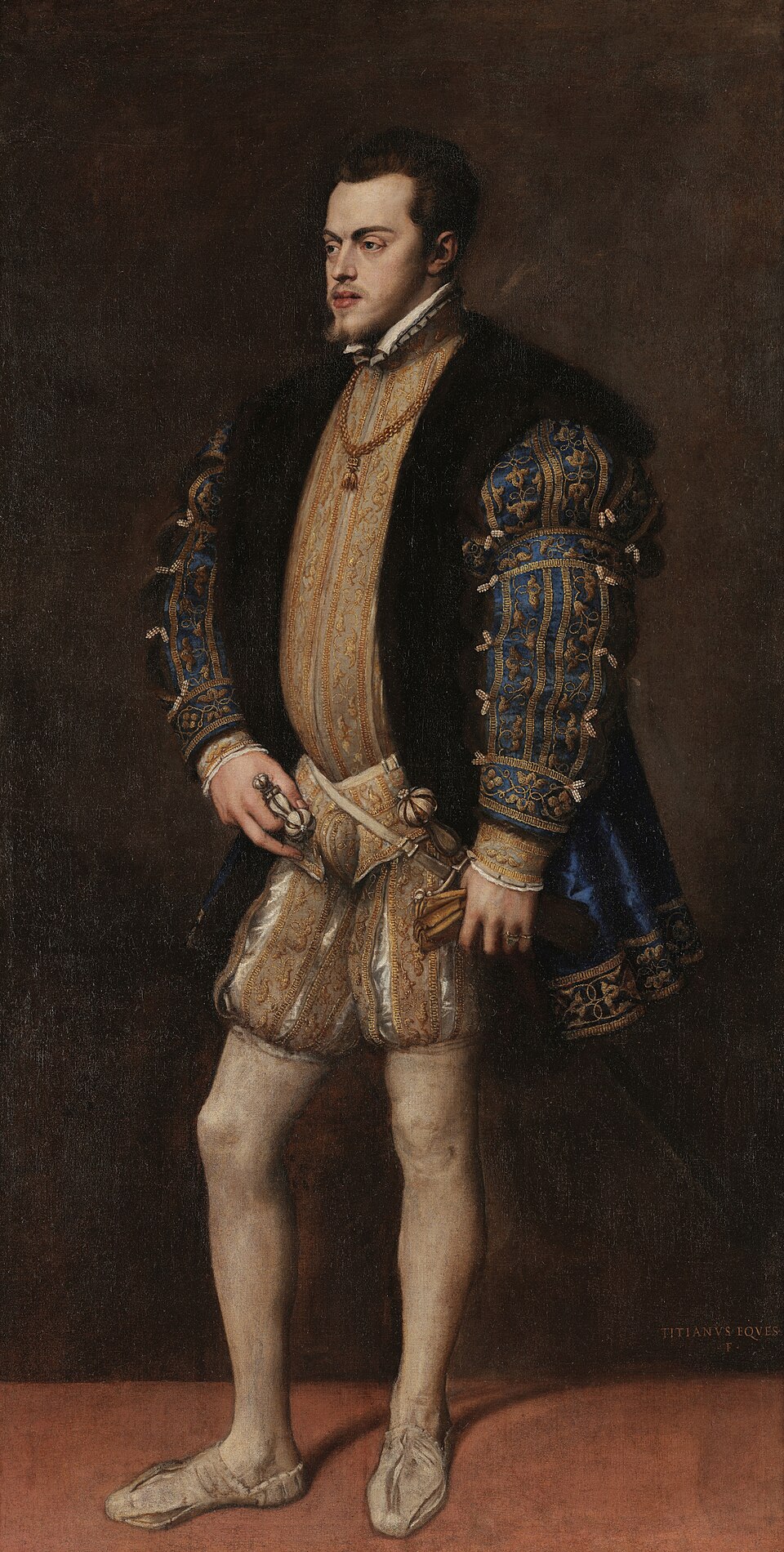
The 1557 restructuring and the later 1575 breakdown
The chronology contains a genuine scholarly disagreement. Popular histories often list 1557, 1560, 1575 and 1596 as “bankruptcies” under Philip II. Yet economic historians Carlos Álvarez-Nogal and Christophe Chamley, in a Cambridge University Press study published online in 2026, argue that the 1557 action was a planned conversion of inherited liabilities into funded debt, not a conventional default. Other scholars retain the bankruptcy label for the period. The distinction matters because an accounting restructuring and a marketwide credit freeze are not identical events.
The September 1575 payment suspension is better documented as the center of a severe banking and commercial crisis. Researchers identify not only unpaid royal contracts but also the resulting breakdown in domestic credit intermediation. The Crown’s decree of 1575 specifically targeted payments under agreements with its bankers; it was not a declaration that every outstanding government obligation ceased to exist.
How the credit freeze spread beyond the palace
The crisis moved outward through connected balance sheets. Genoese financiers provided the Crown with money, but they also relied on borrowing, settlement services and trade relationships of their own. When a major royal payment was suspended, counterparties lost confidence or ready cash, and commercial credit tightened. Archival research published in the Revista de Historia Económica documents the resulting failure of some banks, cessation of commercial fairs, and injury to trade in Castile.
The effects were not identical in every city or trading house. The sovereign payments halt was centered on the Crown’s contractual network and its links to Castilian credit. Genoese bankers were important intermediaries, yet the monarchy also provided legal protection to the financiers while pressuring the Cortes. This means the crisis cannot be reduced to a narrative in which Philip simply wanted to destroy bankers. Political bargaining over taxation and funded debt was central.
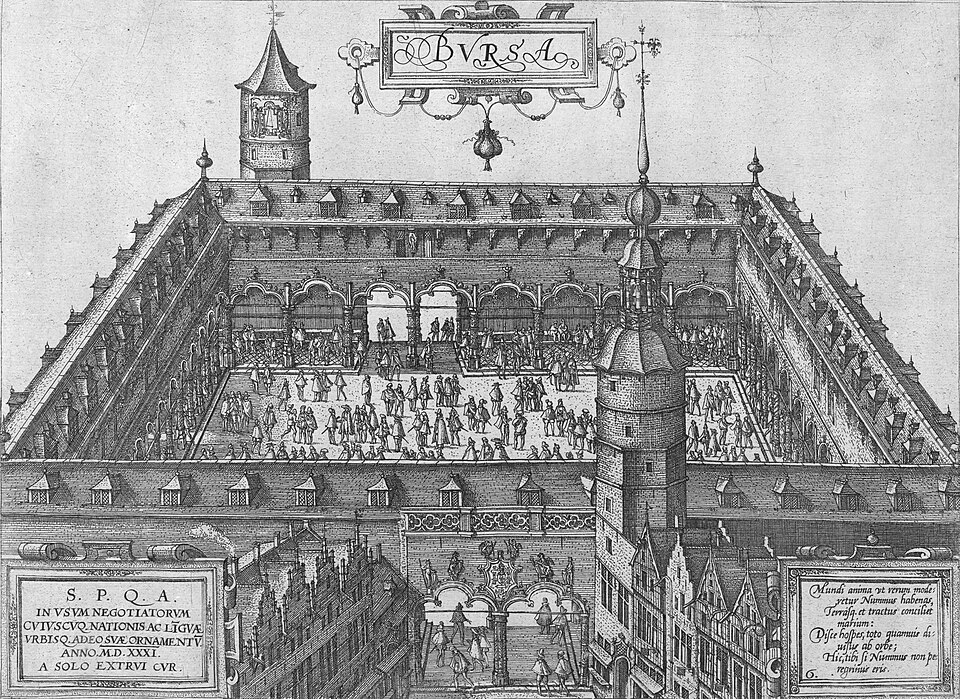
Antwerp was a major sixteenth-century center for international lending, while Castilian markets and fairs helped link trade and royal finances. The two places should not be conflated: the documented banking failures and halted fairs in the scholarly study concern Castile’s domestic credit network. The broader European setting explains why exchange bills, distance and trust were so consequential to the monarchy’s daily financing.
Video study: Antwerp’s early-modern merchant network
Professor Guido Marnef of the University of Antwerp explains the role of the Antwerp Bourse, merchant firms and Sir Thomas Gresham’s Crown financing in a recorded Gresham College lecture. His subject is the mid-sixteenth-century trading infrastructure rather than the 1575 decree itself. Use the lecture to understand how the king’s lenders could move funds internationally and why a break in a major payment relationship could have consequences beyond a single contract.
Gresham College — “Gresham and Antwerp,” Professor Guido Marnef (June 19, 2008). An academic lecture on sixteenth-century Antwerp’s merchant and credit networks; this is context for, not eyewitness footage of, the 1575 crisis.
Asientos, juros and the difference between debt and liquidity
A solvent borrower may have enough future income to pay debts over time but insufficient cash on a particular due date. An insolvent borrower cannot repay on plausible terms even over the longer horizon. That distinction complicates descriptions of Philip II as a king whose empire was inevitably bankrupt simply because overseas silver was not always available when a payment fell due. Money was dispersed over jurisdictions, obligations had different due dates, and military supply needed rapid transfers.
| Instrument | What it financed | Relevant risk in the crisis |
|---|---|---|
| Asiento | A contract arranging near-term cash and transfers to a particular place or date | Royal payment suspension disrupted the contract and the merchant-banker’s credit network |
| Juro | Longer-term public debt, generally charged against specific Castilian revenues | Tax backing and debt limits became part of the struggle with the Cortes |
| Juro de resguardo | A public-debt instrument placed as collateral or a guarantee for an asiento | Disputes over pledged or resold collateral complicated negotiations |
| Bill of exchange | Settlement and currency transfer between merchants and European markets | Credit and clearing relationships became vulnerable when sovereign payments froze |
Recent scholarship on asientos and juros explains that bankers sometimes held juros as security for short-term Crown transactions. This collateral could itself be negotiated or sold, complicating the identity of the real creditor. The 1575–1577 negotiations dealt in part with this juros de resguardo system, not merely with rolling a single unpaid principal balance forward.
A study by Mauricio Drelichman and Hans-Joachim Voth reconstructing Spanish state finance concludes that several of Philip II’s historical payment crises reflected short-term liquidity problems rather than inevitable long-term insolvency. In contrast, Álvarez-Nogal and Chamley’s credit-market study emphasizes the deliberately strategic nature of the 1575 freeze and its severe spillovers. Both approaches reject the simplistic idea that an empire receiving silver could never face a credit crisis.
Video study: why silver did not eliminate borrowing
A separate historical documentary reviews the common explanation that Spanish imperial silver wealth nevertheless coexisted with repeated debt crises. The production is a popular history overview, not a primary source for the 1575 decree, and some broad claims in it should be compared against archival economic history. Its useful teaching point is that the possession of valuable assets does not necessarily equal the ability to pay every bill at the moment and place it is due.
Geschichte des Geldes — “How Spain Drove the World’s Richest Empire Into Bankruptcy” (October 28, 2025). Broad secondary overview; consult the Cambridge research for the contested interpretation of 1557 and the precise 1575–1577 credit mechanism.
The political bargain and the December 1577 settlement
The payment freeze placed pressure on the Cortes to authorize higher tax commitments that could support long-term government debt. The Crown’s relationship with Genoese bankers was not simply severed; a settlement required creditors and taxpayers to accept a new balance of claims and guarantees. According to the 2026 Cambridge research on the negotiations, the Crown’s eventual payment obligation to the bankers was not fundamentally disputed. Negotiations focused significantly on guarantees and revenues.
The December 1577 agreement followed the cities’ acceptance of a larger fiscal commitment. The freeze ended and formal relations with financiers resumed, while credit relationships had incurred genuine damage. This is why the event was both a government-debt dispute and a banking crisis: policy and private balance sheets were interconnected. It is inappropriate to describe it as a total cancellation of all Spanish public debt, or to claim every Genoese bank went out of business.
Why the 1575 crash matters for the history of money
The episode demonstrates an early form of systemic credit risk. Bankers linked borrowers to lenders, taxes to future claims, merchants to commercial fairs, and multiple currencies to long-distance payments. Suspending one central set of government obligations could interrupt many apparently unrelated transactions. The arrangement depended on confidence, collateral, liquidity and predictable enforcement—features familiar in later bank runs and modern financial crises.
Connections to later history are instructive, but not identical. Modern bank runs and clearinghouse crises often involve deposit redemption and liquidity support from financial authorities; Philip’s Crown and merchant houses operated under different fiscal and legal institutions. The same distinction matters in today’s debates about inflation and money supply. An inflow of precious metals could enlarge a monetary system without guaranteeing that private credit and government obligations remained synchronized.
Knowledge check
- What precisely was suspended in September 1575, and why is this different from cancelling every Crown bond?
- How did an asiento differ from a juro, and how could a banker become exposed through both?
- What evidence connects a royal payments standstill to failed private banks and disrupted trading fairs?
- Why do modern historians dispute the blanket label “bankruptcy” for Philip II’s 1557 restructuring?
- Why did the crisis require negotiation with Castilian cities as well as with merchant-bankers?
Answer guide: The payment stop targeted certain contracts with royal merchant-bankers; it was not the cancellation of every Spanish obligation. An asiento handled nearer-term financing and transfers, whereas a juro was funded public debt often tied to revenues; collateral could link them. Archival economic research documents the banking and fair disruptions. A 2026 Cambridge study treats 1557 as structured refinancing of inherited debt rather than a conventional default. The Cortes mattered because its negotiated tax commitments supported the funded debt used in the settlement.
Sources and further reading
Major research: Álvarez-Nogal and Chamley, “The Decreto of 1575,” Philip II of Spain and the Power of Money (Cambridge University Press, 2026); “Philip II against the Cortes and the Credit Freeze of 1575–1577” (2016); “The 1557 Debt Restructuring and the War” (2026); Drelichman and Voth, “The Sustainable Debts of Philip II” (2010); and Professor Guido Marnef, “Gresham and Antwerp” (2008).
Editor’s Note: We volunteer daily to ensure the credibility of the information on this platform is Verifiably True. If you would like to support our work and help further secure the integrity of our research initiatives, please scan the QR code below to donate 5,000 sats.

For mobile scanning, open this lesson on a laptop or larger screen and scan the original QR image with a compatible Bitcoin wallet. Verify the receiving address before sending: 3C9o19EH5HSiwEPyCTmEKzxhNCbo2X6TTb.
BitcoinVersus.tech is not a financial advisor. This media platform reports on financial subjects purely for informational purposes.


Leave a Reply