
South Korea’s Seoul Viosys and parent company Seoul Semiconductor announced on October 28, 2026, that they had begun manufacturing WICOP 3, a white-emitting micro-LED intended to eliminate the rare-earth phosphor layer and conventional package used in many white light-emitting diodes. Initial production devices measure 25 × 10 micrometers, making the approach relevant to miniature displays, embedded illumination and potentially future optical links.
The companies’ primary announcement says the chip produces white light from gallium nitride (GaN) without a separate rare-earth-containing phosphor conversion layer. The exact emission mechanism was not independently characterized in the release, so its device-level performance claims still need third-party testing.
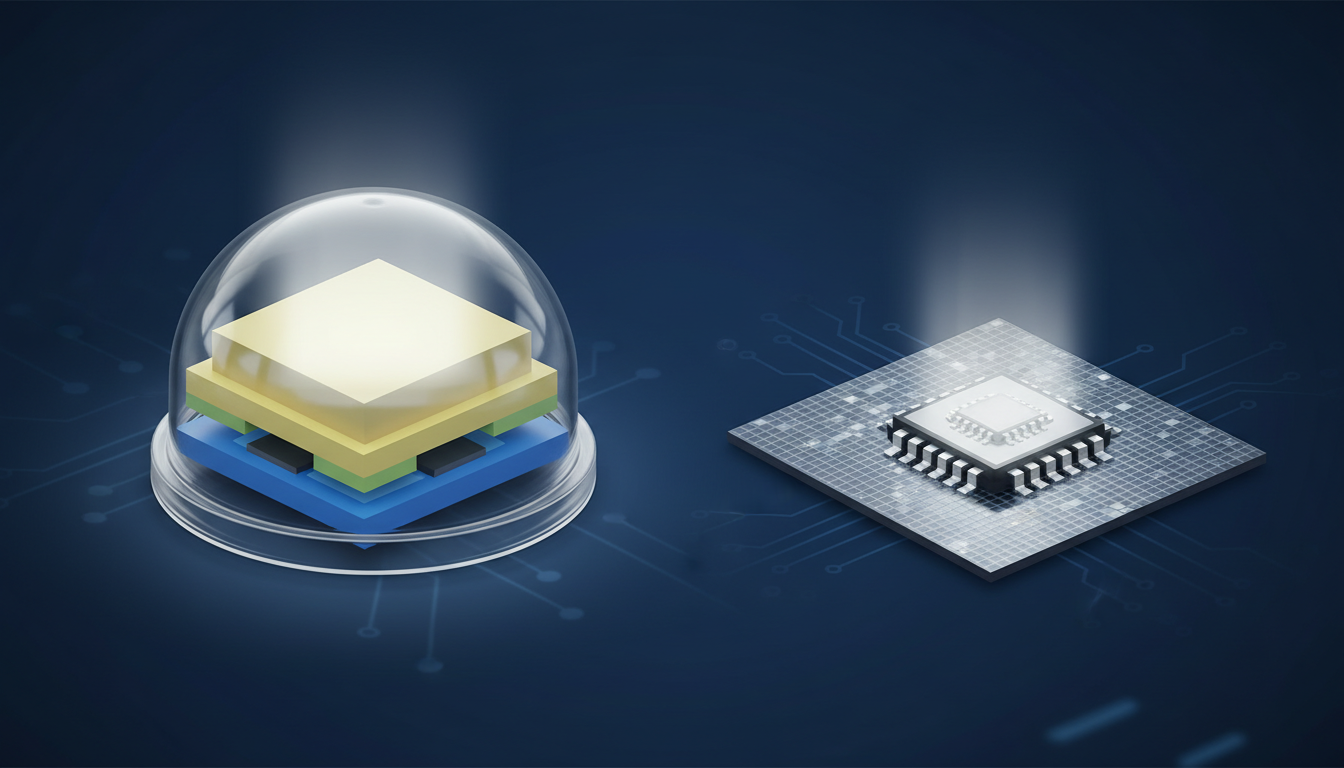
Smaller white light, different trade-offs
Conventional white LEDs frequently combine a blue semiconductor emitter with a phosphor that converts part of the light into longer wavelengths. WICOP 3 instead extends Seoul’s package-free WICOP design into white output. This is distinct from GaN micro-LEDs for AI optical interconnects, where transmitting data and emitting useful white illumination are different performance requirements.
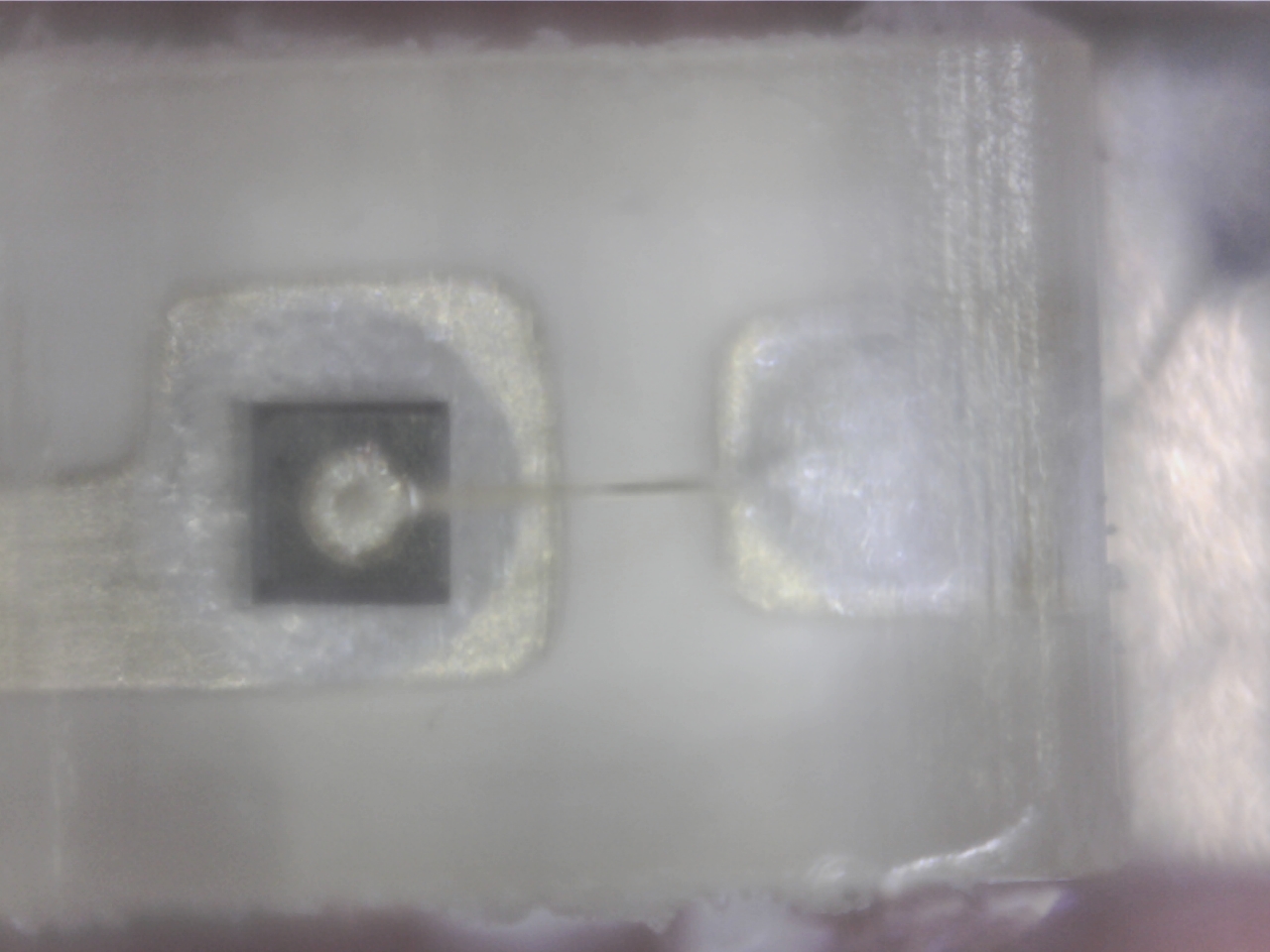
A historical photomicrograph of a conventional LED die helps explain why packaging and interconnects matter. It does not show the newly announced WICOP 3 structure.
Seoul reports 0.015 lumens from its first 25 × 10 µm chip and luminous efficacy approaching 100 lumens per watt. Its ambition is 200 lm/W within two years, not an achieved measurement. Comparing the two requires matching operating conditions; a single tiny chip’s light output also cannot be equated directly with the total output of a conventional lamp.
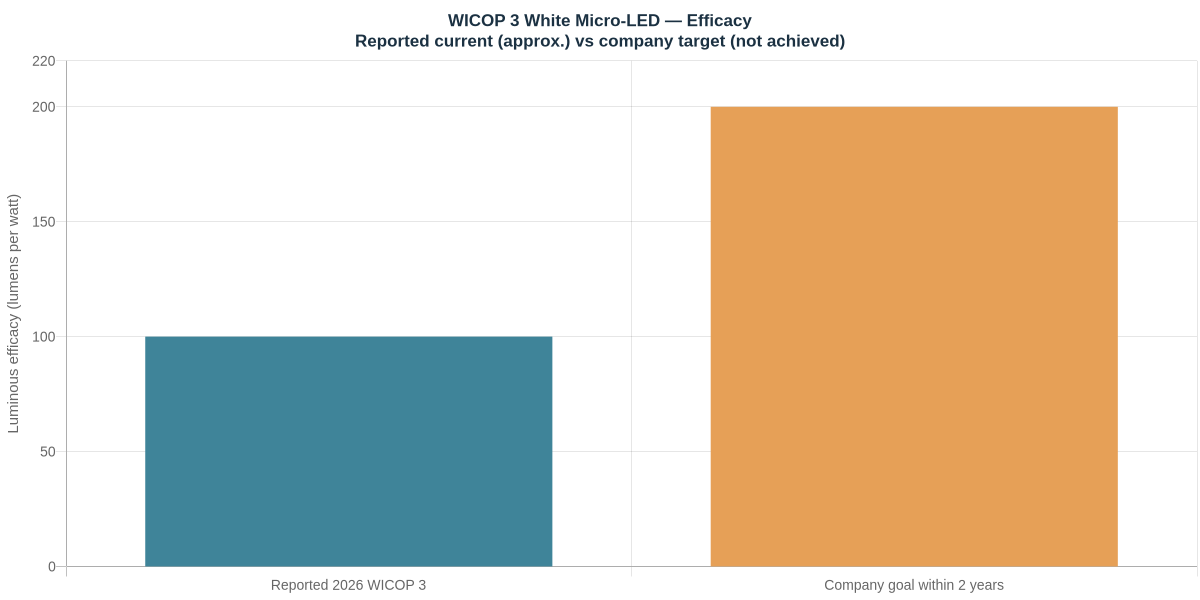
Commercial questions remain
Removing conversion materials and package components could simplify some manufacturing and improve material sourcing. The company claims production cost could be about half that of a conventional white LED, but provided no independently audited cost breakdown, shipment volume or customer design-win list.
Possible applications include AR eyewear, thin lighting surfaces and optical communications. The last application should be evaluated against proven optical transceiver requirements such as signal quality, power and distance, rather than broad data-rate promises.
Seoul says customer supply is planned for the fourth quarter of 2026. The decisive next evidence will be qualified volumes, measured efficiency and reliability, commercial prices, and actual customer deployments—not the much larger future-market projections in the announcement.
Editor’s Note: We volunteer daily to ensure the credibility of the information on this platform is Verifiably True. If you would like to support our work and help further secure the integrity of our research initiatives, please scan the QR code below to donate 5,000 sats.

For mobile scanning, open this article on a laptop or larger display and scan the original QR image with a compatible Bitcoin wallet. Confirm the address before sending: 3C9o19EH5HSiwEPyCTmEKzxhNCbo2X6TTb.
BitcoinVersus.tech is not a financial advisor. This media platform reports on financial subjects purely for informational purposes.


Leave a Reply