
Google’s developer team spotlighted logistics software company Move Cars in an October 29, 2026, YouTube demonstration about using its Antigravity AI coding platform. The team says it can deliver tested production features within a day while managing software for moving millions of vehicles. That is a company testimonial, not a controlled study proving every developer will ship faster.
Google for Developers’ October 29, 2026 Move Cars case-study video on shipping software with Antigravity; it presents the customer’s claims, not an independent time-and-motion audit.
What the agent actually does
The practical difference from code autocomplete is task ownership. An AI agent can inspect a repository, plan changes, modify files, run tests and report the result; an engineer then reviews the behavior and decides what reaches production. In Google’s October 29 product announcement, Antigravity introduced a Plugin Marketplace that packages skills, MCP connections, rules, hooks and specialized agents into reusable extensions.
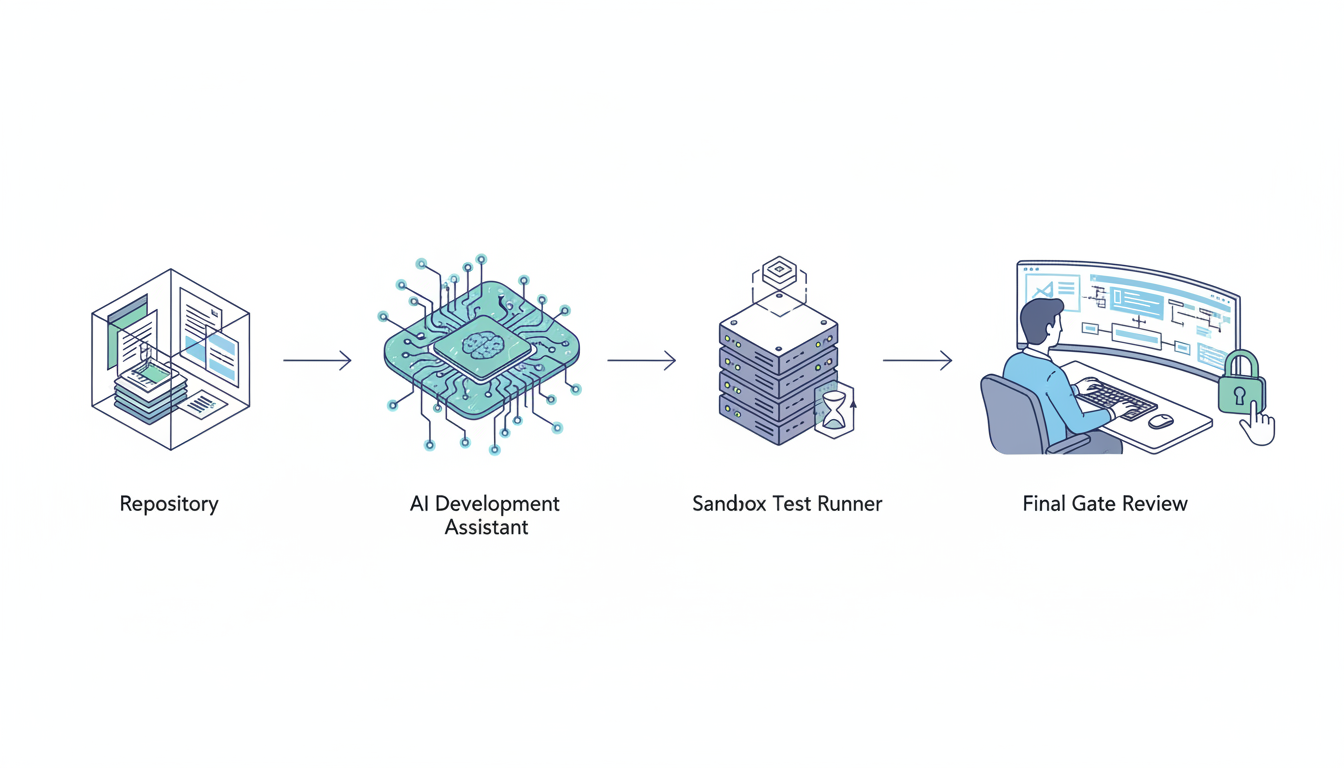
Those components let an agent consult tickets, design assets or monitoring tools without hand-configuring every connection. They also create permission risks: access to a production service is not authorization to change it. Google’s product documentation describes configurable tools and plugin permissions, while our reporting on official developer documentation for AI agents explains why reliable sources matter.
A separate Google test shows why review matters
There is a measurable companion example, but it comes from another Google project. In an October 13 engineering report, Gemini 4 Argon reviewed a roughly 205,000-line Python Agent Development Kit repository through an eleven-hour run. Its agent proposed six optimizations. Engineers accepted and shipped two, rejecting four after code review. This is the population shown in our chart, not Move Cars feature-delivery data.
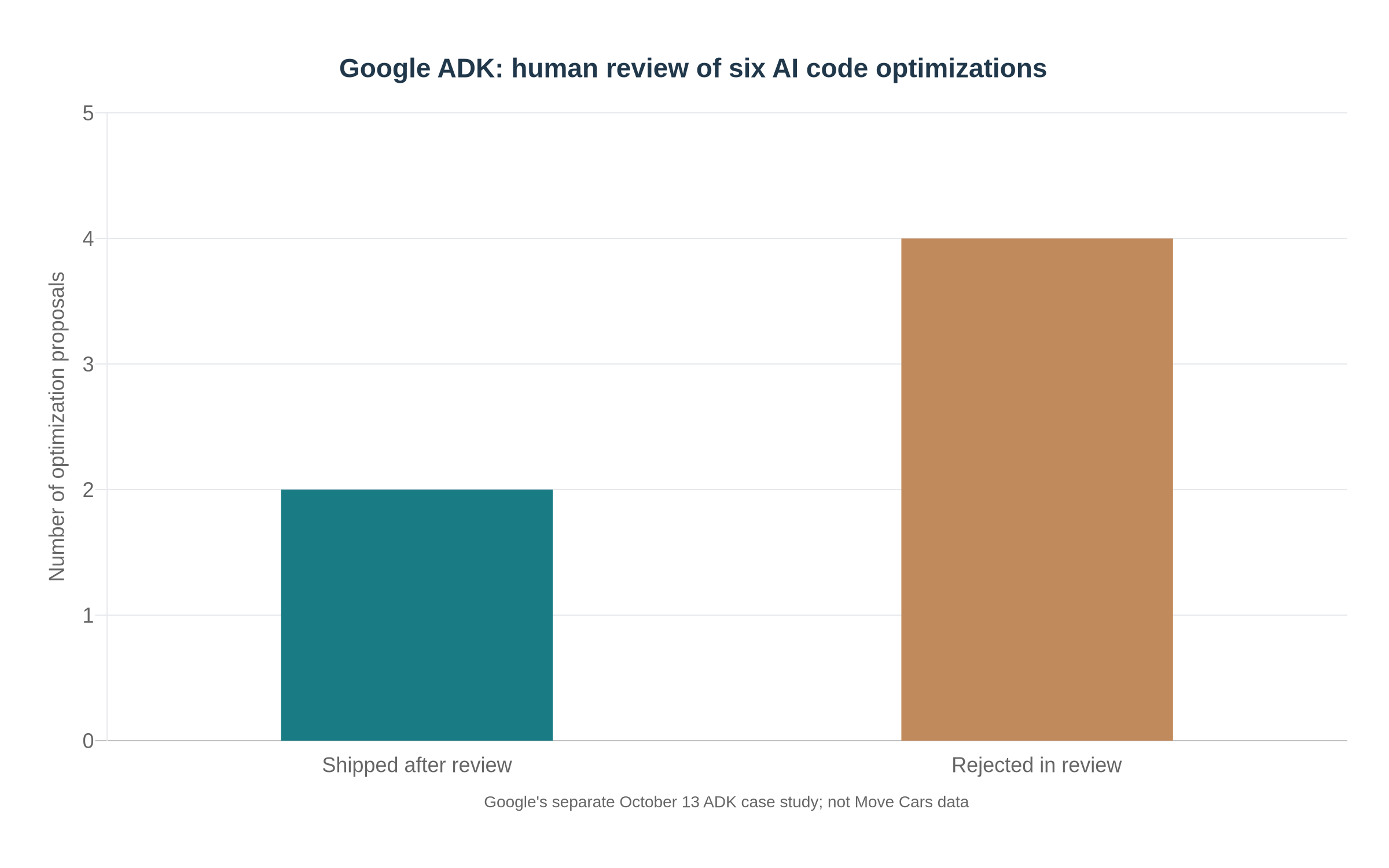
The accepted work reduced in-memory session preparation overhead by about 40% in long sessions and made a package import 21% faster. But Google noted the latter did not improve time from process start to first model request. More importantly, some rejected proposals risked stale memory, undocumented library behavior or benchmark-only gains. Human review caught problems the automated test run could miss.
Google I/O 2026 official Antigravity 2.0 demonstration from May 22; an earlier platform walkthrough, not additional Move Cars footage.
The real production question
Google’s GitHub automation coverage, AI code-review reporting and developer productivity analysis document related approaches. The unresolved questions are independent delivery benchmarks, secure tool access, software maintainability and the real cost of human verification.
Antigravity’s latest showcase points toward software teams orchestrating agents rather than typing every change. Its impact will depend on published failure rates and reproducible outcomes—not promotional delivery-speed claims alone.
BitcoinVersus.Tech
BitcoinVersus.Tech Editor’s Note: We volunteer daily to ensure the credibility of the information on this platform is Verifiably True. If you would like to support our work and help further secure the integrity of our research initiatives, please scan the QR code below to donate 5,000 sats. For best results, scan the QR code from a laptop or larger screen.

Bitcoin address: 3C9o19EH5HSiwEPyCTmEKzxhNCbo2X6TTb. On a phone, open the QR image on another screen or copy and verify the address in your wallet before sending.
BitcoinVersus.tech is not a financial advisor. This media platform reports on financial subjects purely for informational purposes.


Leave a Reply