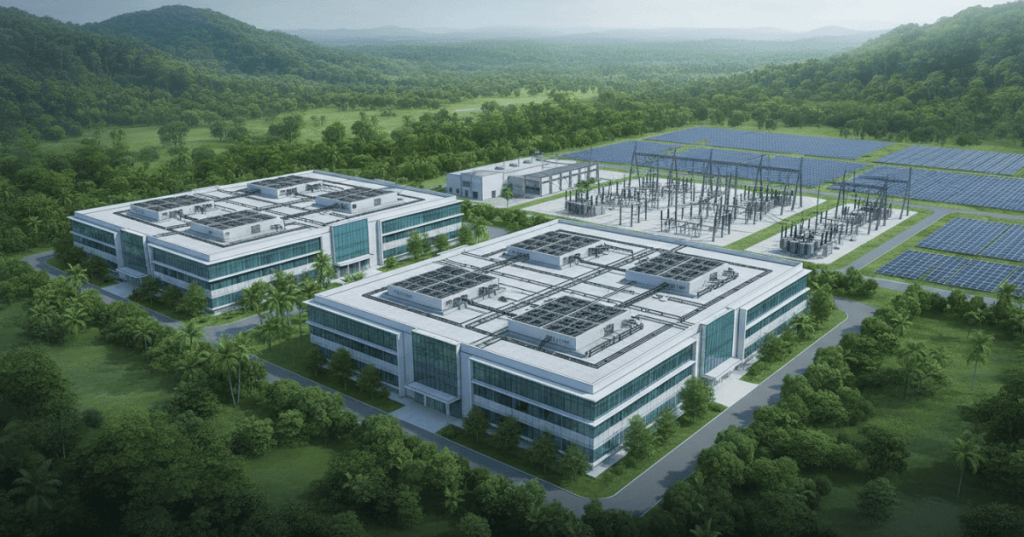
Google announced plans on November 4, 2026, to invest US$15 billion in Malaysia during 2027 and 2028, expanding its data-center network while funding clean-energy development, water infrastructure and technical training. The company plans additional campuses in Selangor and Negeri Sembilan, building on its first Malaysian facility at Elmina Business Park, now operating. The two-year investment is a commitment for future spending, not completed construction or revenue. Reuters reported the plan from Google’s Kuala Lumpur announcement.
New facilities are planned at Eco Business Park in Puncak Alam and the UMW High Value Manufacturing Park in Serendah, both in Selangor, along with Springhill Industrial Park in Port Dickson, Negeri Sembilan, according to local technology reporting. Their final operational dates and individual electrical loads have not been publicly established.
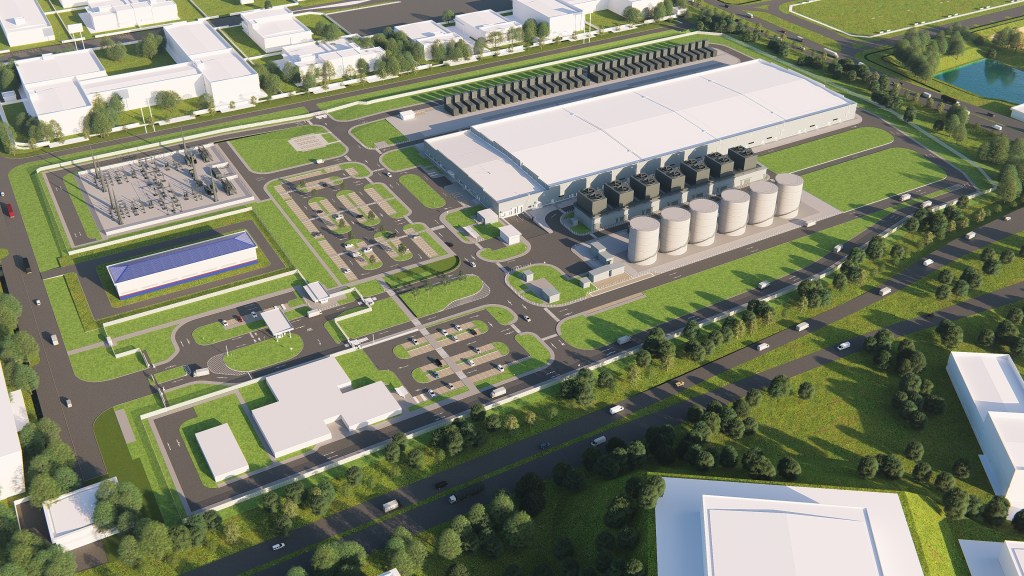
A wider footprint beyond the first campus
Google first pledged US$2 billion for its Malaysian data center and Cloud region in 2024. Its new program is wider in scope, covering multiple facilities and supporting infrastructure. The new US$15 billion figure should not be interpreted as a data-center construction-only budget because Google did not publish a detailed allocation across campuses, power, water and training.
The expansion arrives amid heavy regional demand for AI and cloud capacity. BitcoinVersus.Tech previously covered Bitdeer’s Malaysian 60 MW AI site and its separate A901 Malaysia infrastructure plans. Operator announcements measure different things: an investment budget, a signed power agreement and an energized IT load are not equivalent milestones.
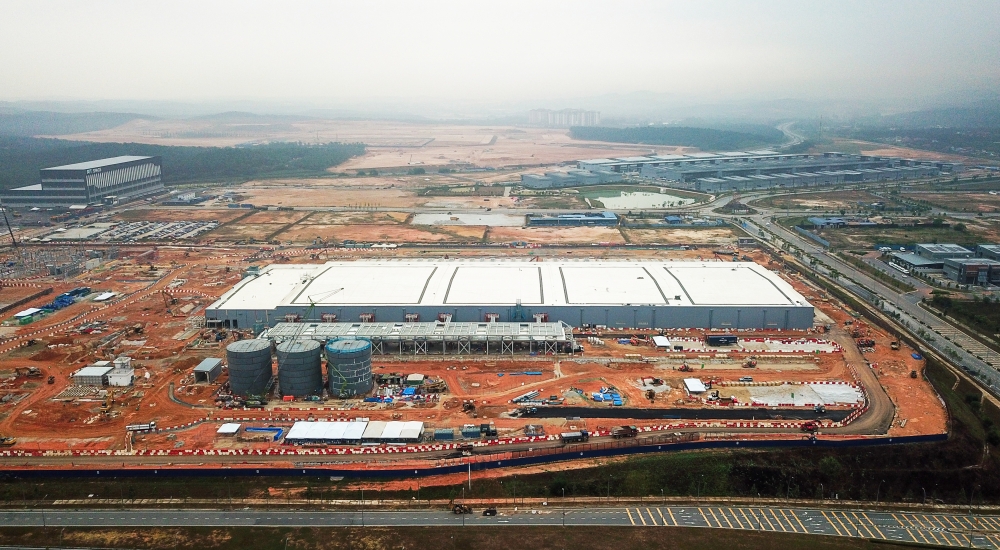
Power demand and water protection
Google says it intends to add more than 1 gigawatt of clean-energy generating capacity to Malaysia’s grid and pay for the electricity its campuses consume, together with direct grid-connection costs. One gigawatt measures power capacity, not uninterrupted production or the data centers’ electricity load. Actual generation will depend on plant technologies, weather, dispatch and commissioning. Comparable questions arise in Google-linked Indiana solar and battery projects and Arkansas grid-storage filings.
On November 2, Google separately announced US$160 million for shared water infrastructure in Negeri Sembilan. The planned treatment plant has a stated capacity of 65 million liters of potable water daily for public use and the new campus. Treatment capacity is not the facility’s forecast daily water consumption, and Google has not established the proportion the campus will draw.
What the efficiency target actually means
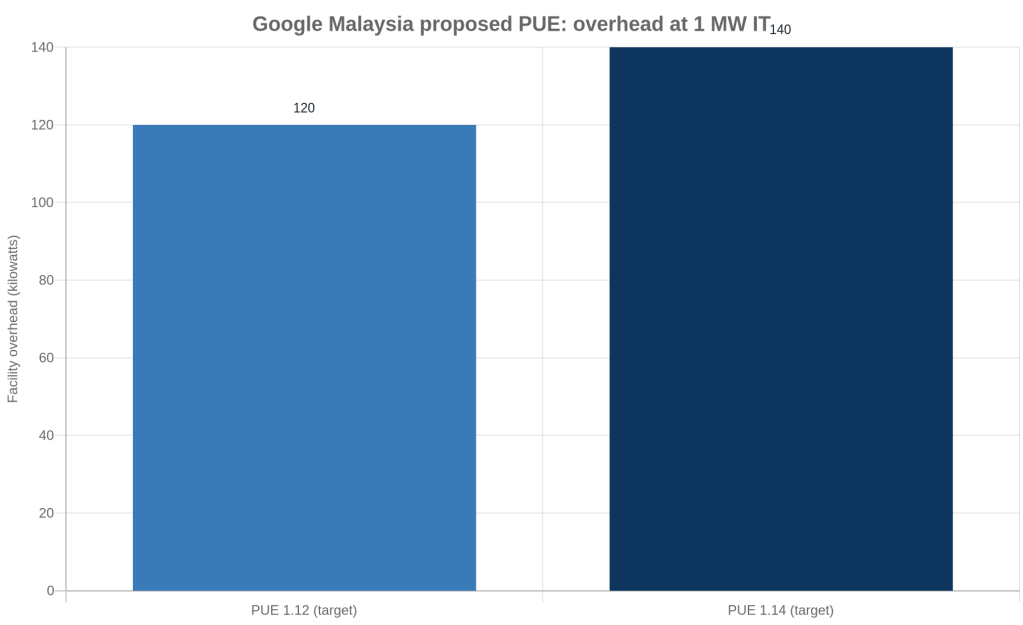
Google projects a power usage effectiveness, or PUE, of 1.12 to 1.14 for its Malaysian campuses. PUE is total facility electricity use divided by IT equipment electricity use; a smaller value indicates less non-IT overhead. As a calculated example, a 1 megawatt IT load at PUE 1.12 requires 1.12 MW at facility level, with 120 kilowatts for cooling, power delivery and other overhead. At PUE 1.14, overhead becomes 140 kW. Neither example measures a completed Malaysian building.
Google estimates construction could support more than 37,000 local jobs per year and add an average US$1.1 billion annually to Malaysian GDP. Once operational, the campuses are projected to sustain more than 9,000 jobs annually. The company also aims to train 800,000 Malaysians within five years, including new data-center training programs. All are forecasts or program goals, not verified hiring totals.
The next meaningful checks are completed construction milestones, energized megawatts, measured PUE and water consumption, new clean-energy generation commissioned, and actual hiring. Those observations will determine how much of the investment pledge becomes operational infrastructure.
Editor’s Note. The US$15 billion commitment and economic estimates were announced November 4, 2026. The in-body campus rendering dates to 2024, the construction photograph to 2025, and the efficiency chart shows an illustrative calculation, not live operating data. The featured cover is an editorial illustration.

Scan the donation code from another device if your phone cannot scan its own screen.
We volunteer daily to improve the credibility of the information on this platform. If you would like to support the research, please donate here: 3C9o19EH5HSiwEPyCTmEKzxhNCbo2X6TTb
BitcoinVersus.tech is not a financial advisor. This media platform reports on technical and financial subjects purely for informational purposes.


Leave a Reply