Paraguay’s central bank placed Ueno Bank into resolution on November 2, 2026, disrupting digital payments and access to deposits for customers of a lender that claims more than three million users. Ueno’s app, cards, transfers and branches stopped functioning as regulators assumed control. The Central Bank of Paraguay said adjustments to the bank’s accounts reduced its solvency ratio to below half the legally required minimum. The intervention is confirmed; permanent loss of every customer’s money is not.
Ueno says its customer base represents roughly 60% to 65% of the country’s adults. The figure measures registered customers, not distinct positive-balance depositors or people with no alternative bank accounts. The sudden shutdown nonetheless disrupted wages, purchases and pension-related payments. Past bank runs and central-bank interventions illustrate how loss of confidence can accelerate a failing institution’s operational crisis.
A dramatic change from September’s financial assurances
In a September 21 public statement, Ueno reported June regulatory capital of 14.5% against a 12% minimum. It cited $4.2 billion in assets, $2.8 billion in deposits and $401 million in equity. Regulators later found problems with loans involving related entities and asset accounting. The published June figures and November finding concern different dates and accounting adjustments. The contradiction needs examination, but no single ratio proves a particular director committed fraud.
Ueno evolved from a finance company into a broad digital bank, offering cash-back rewards, app-based accounts and branches. Similar rapid financial technology growth raises questions about the relationship between deposits, loans and liquid assets, as explored in a separate analysis of Revolut’s loan-to-deposit ratio. Reuters and AP reported roughly $800 million to $850 million in Ueno public-sector deposits, including state pension and health funds. Those are institutional balances at risk, not evidence that every pension has permanently vanished.

ABC TV Paraguay’s original November 3 report documents the prosecutors’ detention orders; the native social embed was omitted because it failed to render.
Eight detentions and a political crisis
Prosecutors issued orders covering eight executives, including Ueno founder Miguel Vázquez and bank president Juan Manuel Gustale. Local reporting and Associated Press confirmed their detention. Investigators are examining potential financial crimes; the charges remain allegations unless established in court. Carlos Carvallo, head of Paraguay’s central bank and a former Ueno executive, resigned as the controversy widened.
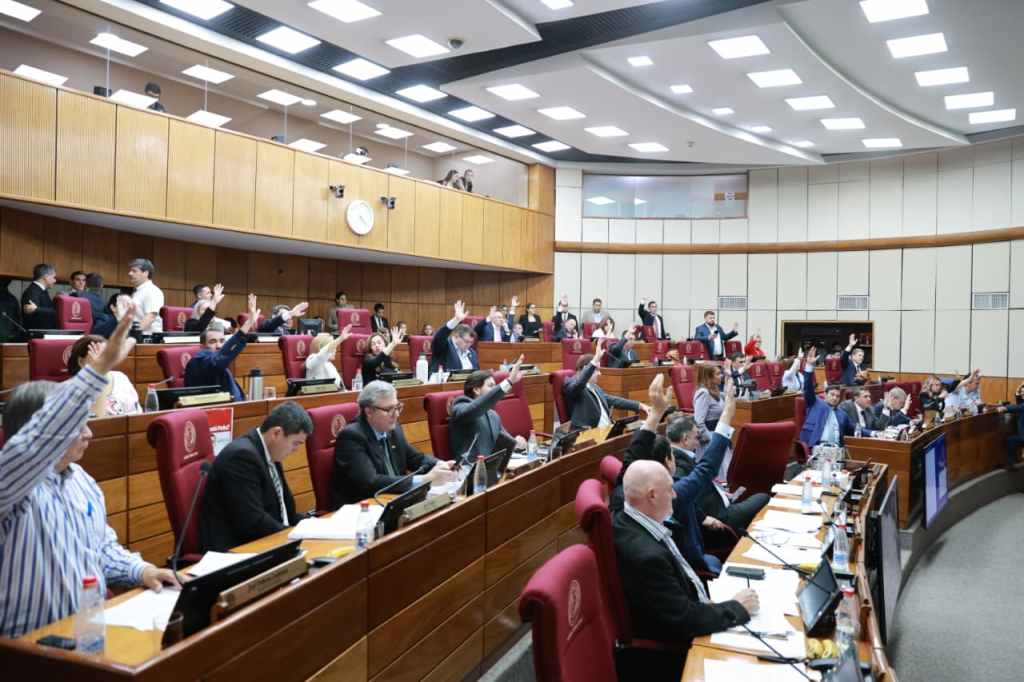
President Santiago Peña tendered his resignation amid parliamentary impeachment proceedings. Reports differed over whether lawmakers accepted the offer or would continue the impeachment process. Peña says he sold his previous interest in the bank’s associated holding group in March 2025 and denies wrongdoing. Former corporate ownership alone does not establish criminal responsibility or explain every supervisory decision.
Deposits are frozen, but legal guarantees apply
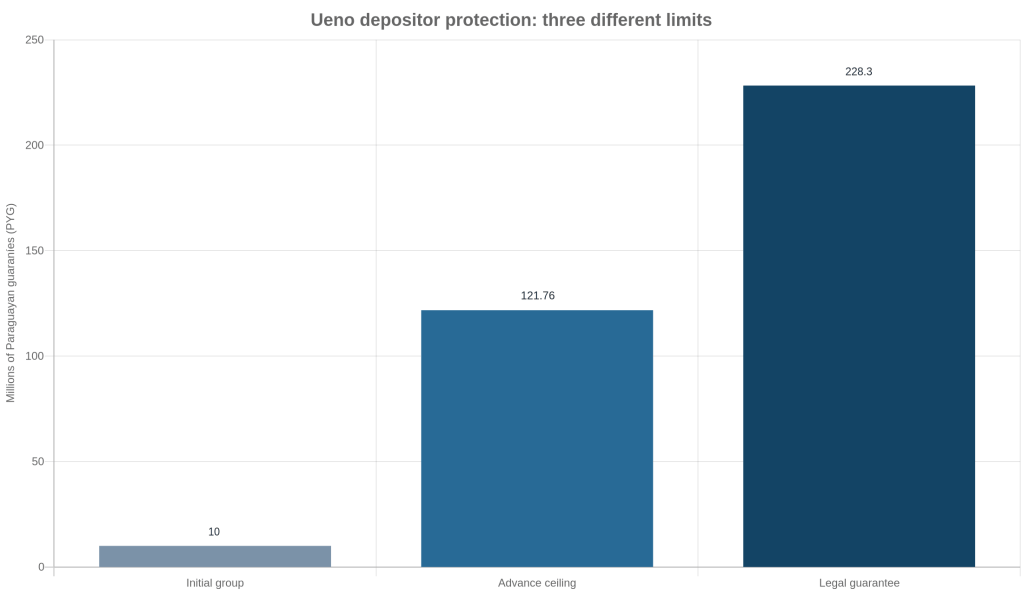
The central bank guarantees deposits up to ₲228.3 million per depositor and institution, equivalent to 75 minimum wages. Parliament also adopted an accelerated advance of up to 40 minimum wages, approximately ₲121.76 million, with overdue debts deducted where applicable. The initial BCP payment group covers qualifying customers whose total balances do not exceed ₲10 million and who already hold another eligible bank account. The figures are separate thresholds, not additive payments. Deposit insurance is jurisdiction-specific and must not be confused with U.S. banking protections, reviewed elsewhere in our FDIC and regulated banking coverage.
The regulator’s official repayment portal provides instructions for account transfers, insured limits and balances above coverage. Depositors should not share passwords or one-time codes with anyone promising faster release. A bank-app balance represents a bank liability recorded on a ledger, rather than an individual physical cash vault, as explained in our guide to deposits and ledger money.
Reimbursement depends on verification, offsets and the resolution process. The next milestones are actual payments to affected customers, recovery of public funds and court-tested evidence about Ueno’s governance.
Editor’s Note. Reporting is current through November 5, 2026. Ueno’s customer count is self-reported, not a proven number of permanent deposit losses. The central-bank resolution and executive detentions are documented; individual criminal allegations remain unproven. Reports differed on the legal effect of Peña’s resignation offer. The ABC TV social post and Senate photo document separate proceedings, and the featured cover is an editorial illustration. Always use official BCP payment instructions.

Scan the donation code from another device if your phone cannot scan its own screen.
We volunteer daily to improve the credibility of the information on this platform. If you would like to support the research, please donate here: 3C9o19EH5HSiwEPyCTmEKzxhNCbo2X6TTb
BitcoinVersus.tech is not a financial advisor. This media platform reports on technical and financial subjects purely for informational purposes.


Leave a Reply