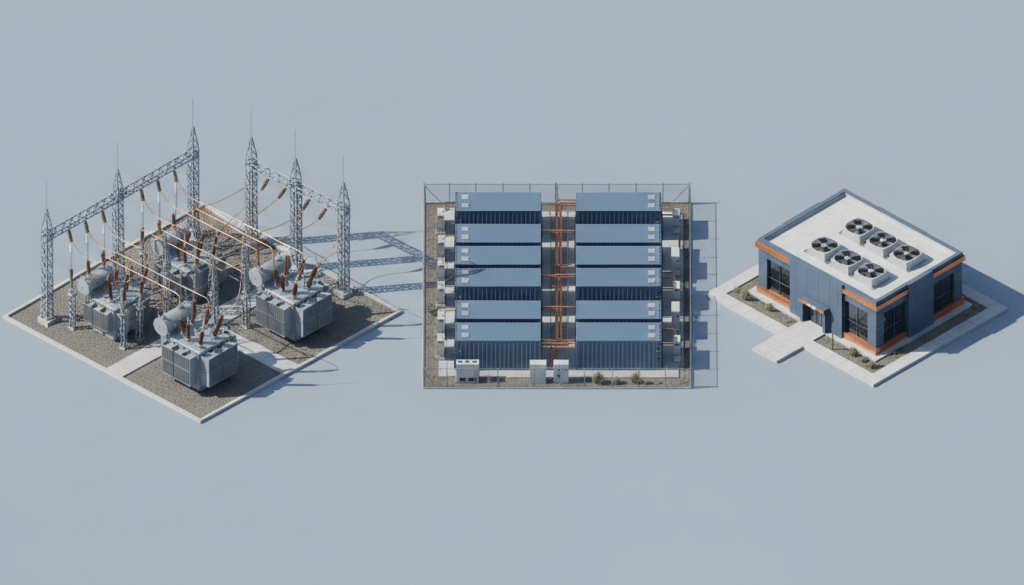
Willdan Group said on November 5, 2026, that it had received limited notices to proceed covering engineering and procurement for five U.S. electrical-infrastructure projects associated with 643 megawatts (MW) of capacity. The assignments span California, Texas and Illinois. They are early work authorizations, not evidence that the corresponding facilities are built, energized or generating electricity.
According to the company’s official announcement, a California substation would serve a 100 MW data center. Texas work comprises a 75 MW battery energy storage system and a substation for 300 MW of renewable generation. Two Illinois substations would support renewable projects rated at 88 MW and 80 MW. The five reported figures sum to 643 MW.
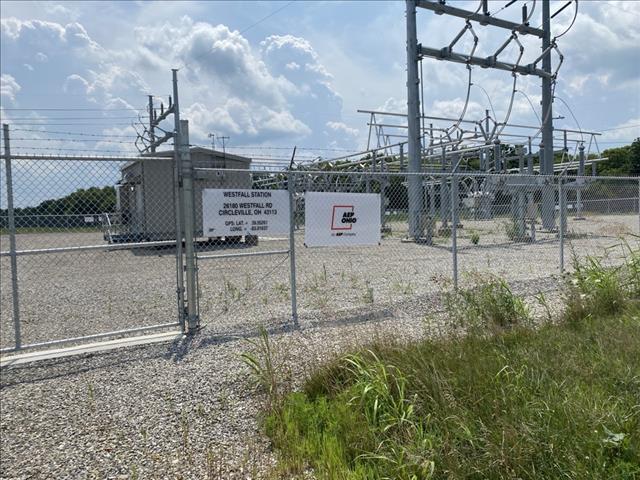
Substations move electricity; they do not manufacture it
Four substation assignments account for 568 MW of the total, while the Texas storage project accounts for 75 MW. Among the substation projects, 468 MW relates to renewable-generation interconnections and 100 MW to anticipated data center demand. Treating all 643 MW as newly produced electricity would therefore be incorrect: the total combines different types of electrical service and storage capability.
Substations use transformers to change voltage, protective relays and circuit breakers to isolate faults, and buswork to distribute power between circuits. Their engineering determines how safely generation and large loads connect to transmission and distribution networks. Earlier BitcoinVersus.Tech coverage described the mismatch between fast solar construction and lengthy grid interconnection work. Planning substations can be as important as procuring generating equipment.
Utility investment is also reshaping the supply chain. AEP’s multistate transmission engineering program demonstrates the scale of the required design work, while a separate federal transformer-equipment initiative reflects concern about manufacturing and refurbishment bottlenecks. Neither program is part of Willdan’s newly announced five-project package.
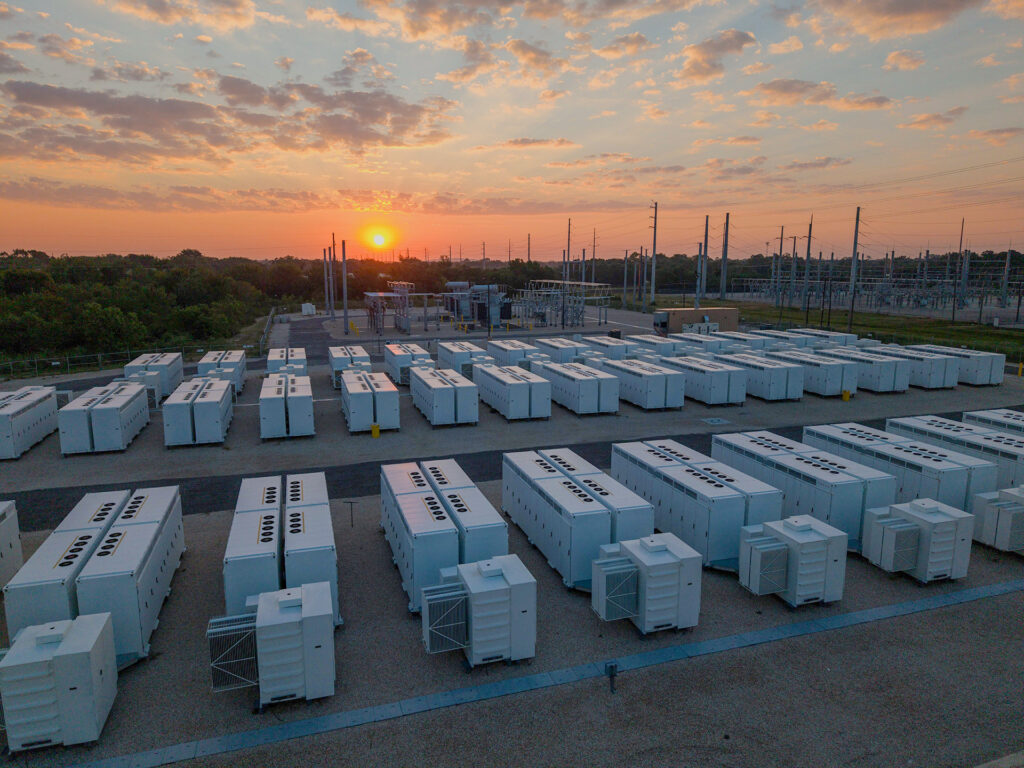
Battery power ratings leave a crucial question unanswered
The announced 75 MW battery rating describes power, not stored energy. Battery duration depends on usable energy capacity, normally expressed in megawatt-hours (MWh). A hypothetical 75 MW installation capable of discharging at its rated power for two hours would require approximately 150 MWh of usable energy before accounting for operating limits. Willdan disclosed no MWh rating, battery chemistry or discharge duration for the Texas project, so an actual energy capacity cannot be calculated.
The U.S. Energy Information Administration reported nearly 52 GW of operating utility-scale battery power capacity by June 2026, citing preliminary generator records. The expansion provides market context, not evidence that Willdan’s Texas battery has entered service. Earlier BitcoinVersus.Tech reporting tracked solar farms pairing generation with batteries and the separate expansion of Nightpeak’s Texas storage project. Both developments illustrate why MW and MWh must remain distinct.
Willdan’s announcement did not name the project owners, provide contract values, state substation voltages or specify completion dates. An industry reporting check similarly identifies the awards as limited engineering and procurement work, rather than completed construction. Future milestones include final work authorizations, equipment deliveries, commissioning and confirmed grid connections. Until those occur, the verified story concerns engineering assignments associated with 643 MW—not 643 MW of electricity newly delivered.
Editor’s Note: Primary evidence is Willdan’s November 5, 2026 announcement, with background on U.S. battery deployments from the Energy Information Administration. Individual capacities total 100 + 75 + 300 + 88 + 80 = 643 MW. Substation-related projects represent 568 MW; renewable interconnections represent 468 MW. The two accompanying company photographs show separate, older facilities, not the five Willdan project sites. The featured image is conceptual editorial artwork. No video was embedded because a relevant official public video with verified embedding and playback permissions was not found. Project owners, costs, voltage ratings and completion dates remain undisclosed.

To donate 5,000 sats, open the article on a second screen and scan the original QR code with a compatible Bitcoin wallet. Mobile readers whose wallets support importing QR images may save the image to scan. Verify the destination before sending: 3C9o19EH5HSiwEPyCTmEKzxhNCbo2X6TTb.
We volunteer daily to ensure the information on this platform is Verifiably True. If you would like to support the research, please scan QR code.
BitcoinVersus.tech is not a financial advisor. Coverage of energy markets and grid infrastructure is informational, not investment advice.


Leave a Reply