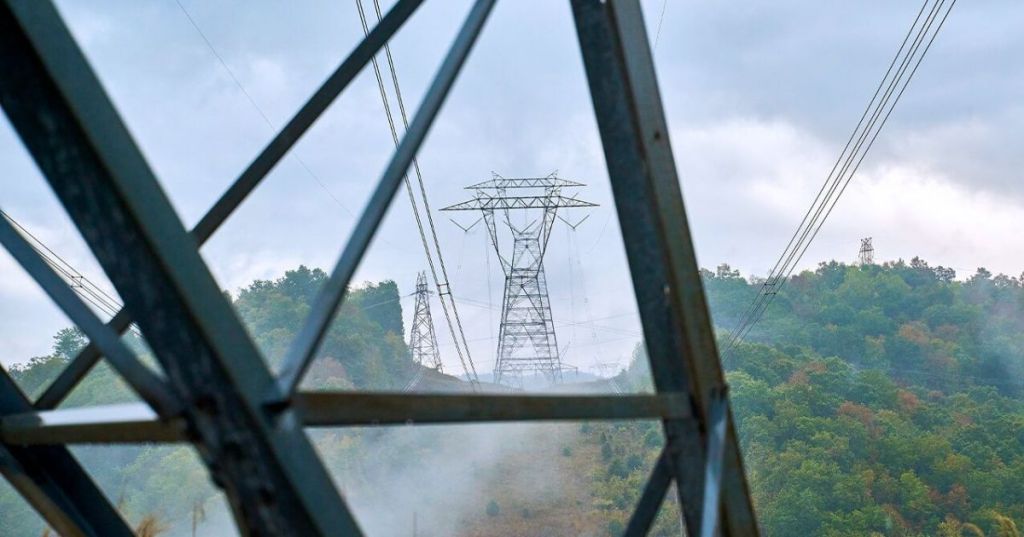
American Electric Power has selected Jacobs and WSP USA to support a planned $37 billion transmission investment across 11 states, according to the engineering firms’ October 29, 2026 announcements. Jacobs will coordinate delivery in seven eastern states, while WSP covers four western states. The program is part of AEP’s larger five-year capital plan through 2031 and responds to rising electrical demand, including data centers and industrial facilities. The $37 billion is AEP’s proposed network spending, not the contractors’ undisclosed fees or money already spent.
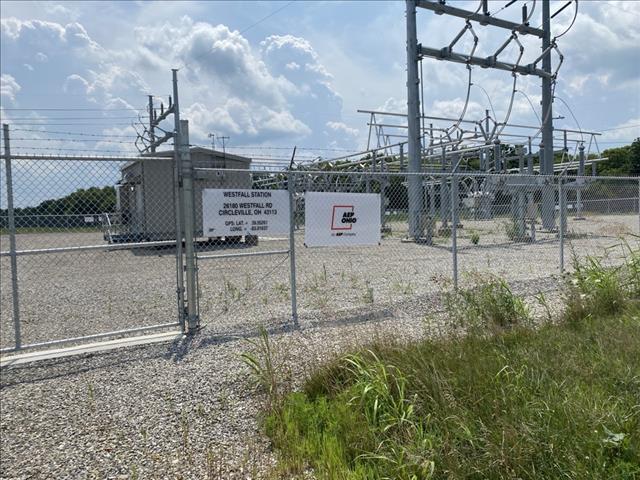
What is extra-high-voltage transmission? Large transmission lines move bulk electricity from generating stations to regional substations, where transformers reduce voltage before power enters local distribution systems. At a given transfer power, increasing voltage generally lowers current, reducing resistive heating losses in comparable conductors. AEP has used 765-kilovolt transmission since 1969 and operates one of the nation’s largest networks at that voltage. Building additional lines also requires substations, protection relays, insulation coordination, telecommunications and extensive safety clearances.
Jacobs’ official announcement identifies Indiana, Michigan, Ohio, Kentucky, Tennessee, West Virginia and Virginia as its eastern delivery region. It will organize engineering, environmental services, project controls, rights-of-way and community outreach, working with ORC, GFT and RC Commonwealth. The contractor describes delivery as underway and expected to increase, but provides no count of completed lines attributable to the new agreement.
WSP will support the western system in Texas, Oklahoma, Arkansas and Louisiana. Its October 29 release emphasizes grid planning, environmental permitting, design and program management. The arrangement divides management responsibilities by AEP service region rather than assigning each engineering firm half of the $37 billion budget.
AEP’s third-quarter results place the spending inside a broader $100 billion capital plan. During its investor call, the utility divided planned transmission investment into roughly $17 billion for regional grid-operator projects, $11 billion for reliability and modernization, and $9 billion for individual customer connections. Those three categories total $37 billion. AEP reported 15 gigawatts of new large-load commitments during the quarter and projects 84 GW of incremental contracted demand by 2031; contract commitments are not equivalent to facilities already consuming electricity.
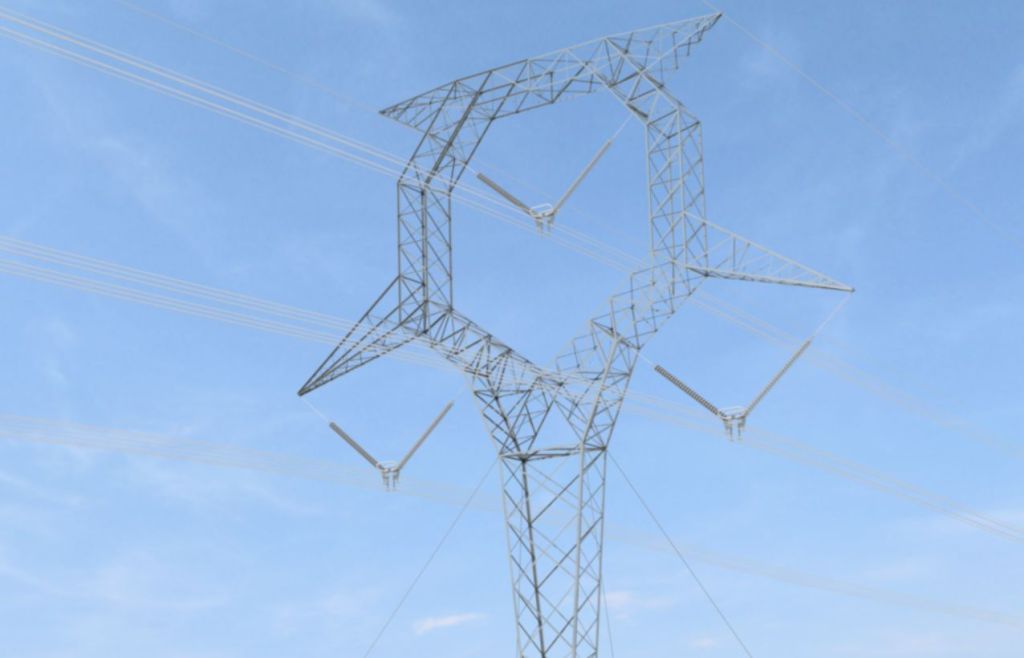
The physical engineering is significant. AEP plans to expand 765-kV infrastructure, a strategy also appearing in BitcoinVersus.Tech’s coverage of a 765-kV MISO transmission project. Higher-voltage designs can carry more power with fewer corridors than multiple lower-voltage circuits, but real benefits depend on network configuration, conductor sizes, losses and substation costs. AEP’s February design work introduced a new Delta tower prototype; it is not evidence that every future project will use that structure.
The program comes as grid construction competes with new generation projects and demand from AI campuses. BitcoinVersus.Tech previously examined why transmission approvals can outlast solar construction and how AI demand is increasing the need for power lines. AEP is also involved in early-stage generation discussions, including a proposed Indiana nuclear project. Those future electricity sources and transmission contracts represent different stages of grid development.
AEP says customer agreements can help offset some fixed costs for existing customers, but regulatory approvals, equipment availability, construction inflation and rights-of-way remain major variables. Substation and line upgrades must also meet protection and reliability standards, alongside new monitoring systems of the kind discussed in BitcoinVersus.Tech’s grid-sensor modernization coverage.
The next milestones are detailed route approvals, final engineering packages, procured transformers and switchgear, construction starts and verified in-service dates. The new agreements establish who will help execute AEP’s modernization portfolio; they do not establish that $37 billion in infrastructure has already been constructed, energized or transferred to customers.
BitcoinVersus.Tech Editor’s Note: We volunteer daily to ensure the credibility of the information on this platform is Verifiably True. If you would like to support to help further secure the integrity of our research initiatives, please donate using the QR code provided

For best QR-code scanning results, please scan this donation code from a desktop or larger screen. Mobile screens may prevent camera recognition. Verify the receiving address 3C9o19EH5HSiwEPyCTmEKzxhNCbo2X6TTb before sending.
Disclaimer: BitcoinVersus.Tech is not a financial advisor. This media platform reports on financial subjects purely for informational purposes.


Leave a Reply