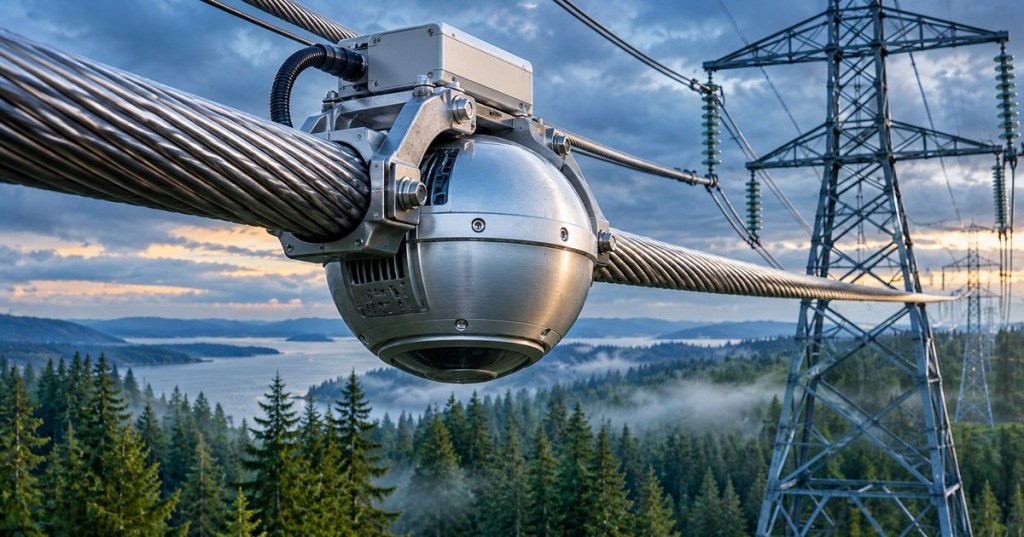
Washington utility Puget Sound Energy said October 6, 2026, that it had been selected for approximately $40.2 million in federal support for Project PULSE, an $80.4 million proposal to upgrade existing transmission lines across western Washington. The U.S. Department of Energy announced its SPARK selections September 24; PSE would match the federal amount.
The award agreement is not yet final, and construction is proposed for 2027–2031. The plan promises better use of existing wires, not a newly operating power plant or confirmed increase in electric generation.
Two different upgrades
PSE proposes reconductoring four existing 115-kilovolt line segments totaling approximately 23 miles in King and Kitsap counties. Reconductoring replaces an existing line’s electrical conductor to increase permissible current, subject to supporting equipment and engineering limits. Kitsap work includes South Bremerton–Long Lake #1 and Kitsap–South Bremerton #1.
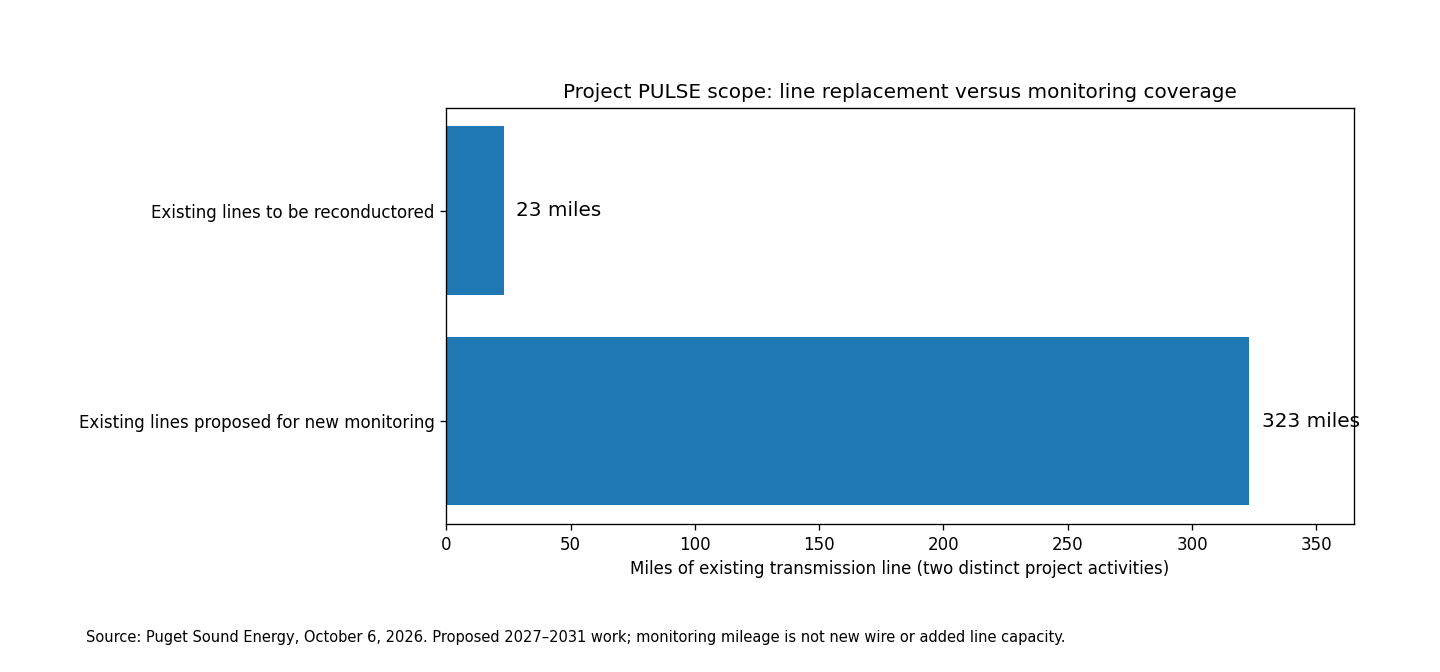
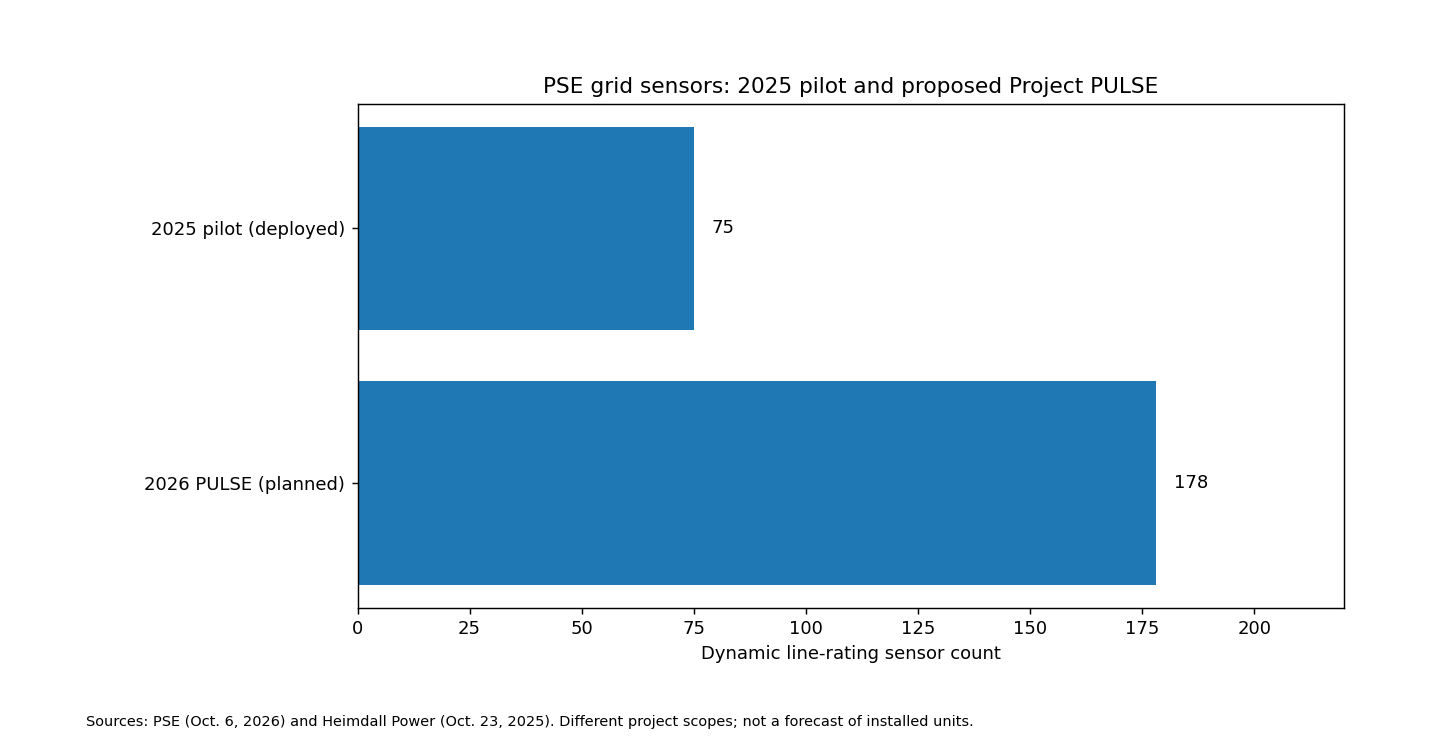
Separately, Project PULSE would deploy 178 dynamic line-rating sensors across 323 miles of existing transmission lines in six counties. Those sensor locations monitor capacity rather than creating 323 miles of new transmission. The combined proposal targets service improvements for more than 153,000 customers, including major regional infrastructure.
What line sensors actually measure
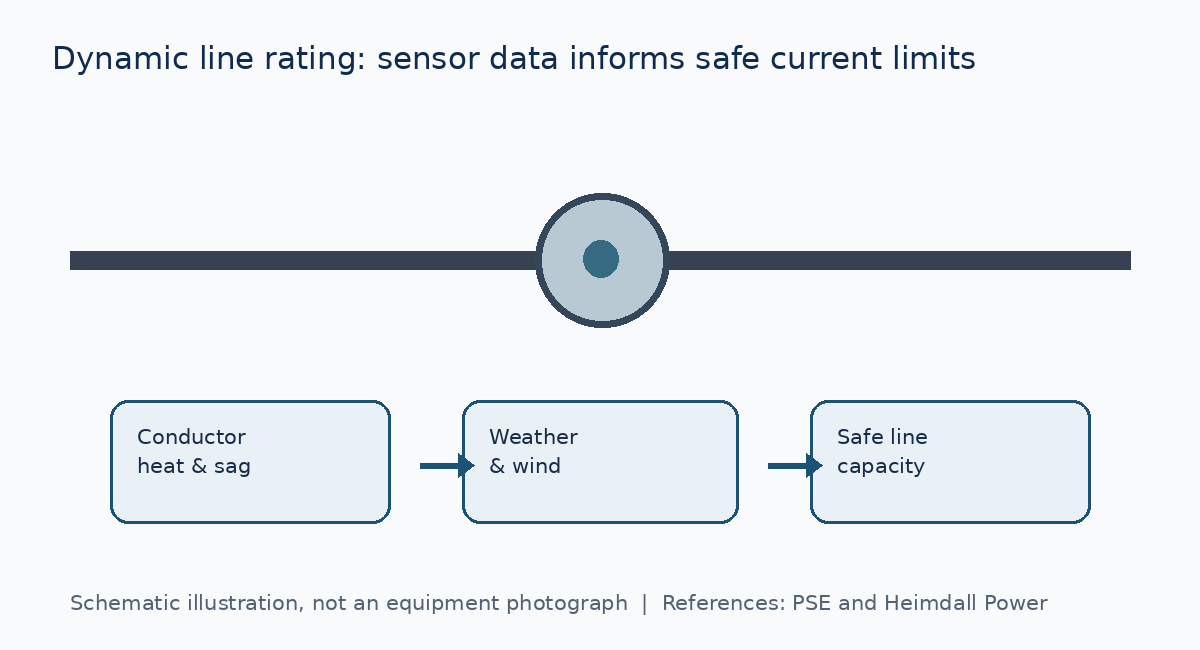
Dynamic line rating uses current and environmental conditions—such as conductor temperature, wind cooling and sag—to estimate how much electricity a line can safely carry at a given moment. Unlike a conservative fixed rating, its limit changes with conditions. That technology complements larger high-voltage transmission engineering and grid-equipment investment.
PSE already completed an earlier monitoring pilot: 75 devices on 100 miles in 2025, in partnership with Heimdall Power. The 178-sensor PULSE figure is a new proposed scope, not evidence of that many installed devices or a measured capacity gain.
Why this matters and what comes next
The project addresses the transmission bottlenecks relevant to rising Washington data-center demand and grid reliability. It sits alongside broader efforts to strengthen critical infrastructure, including high-voltage transformer resilience research. PSE estimates over $21 million of the proposal would fund scoped work in Kitsap County; that is part of, not additional to, $80.4 million.
The next milestones are a finalized federal agreement, engineering and permitting, followed by verified construction and sensor deployment. No project-specific added megawatts, outage reductions or bill savings have yet been demonstrated.
BitcoinVersus.Tech
BitcoinVersus.Tech Editor’s Note: We volunteer daily to ensure the credibility of the information on this platform is Verifiably True. If you would like to support our work and help further secure the integrity of our research initiatives, please scan the QR code below to donate 5,000 sats. For best results, scan the QR code from a laptop or larger screen.

Bitcoin address: 3C9o19EH5HSiwEPyCTmEKzxhNCbo2X6TTb. On a phone, open the QR image on another screen or copy and verify the address in your wallet before sending.
BitcoinVersus.tech is not a financial advisor. This media platform reports on financial subjects purely for informational purposes.


Leave a Reply