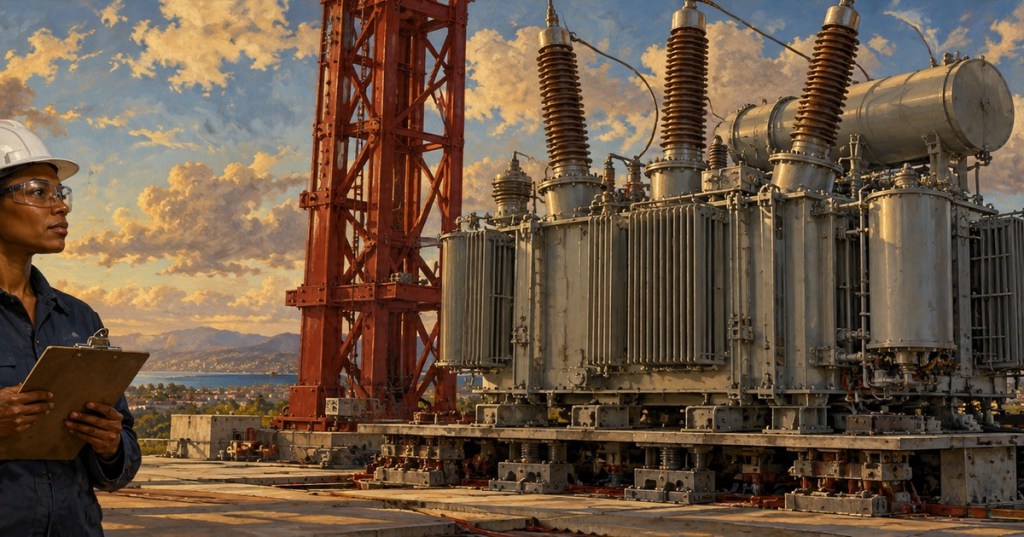
Researchers at Idaho National Laboratory have put a full-scale 230-kilovolt, three-phase power transformer through simulated earthquake conditions at the University of California San Diego, testing ways to prevent damage to equipment that can take years to replace. The laboratory announced the completed experiment on October 14, with the findings intended to inform future electric-grid protection standards.
The test used UC San Diego’s Large High-Performance Outdoor Shake Table, capable of motion in six degrees of freedom. Unlike tests of individual components, researchers studied a transformer with its oil, electrical bushings, radiators and conductors installed. A October 30 industry report identified the Siemens Energy unit as rated at 224 megavolt-amperes, with 230/69-kV windings.
Why High-Voltage Bushings Matter
Bushings carry energized connections through the grounded transformer tank. During an earthquake, movement of the tank and its tall insulators can reinforce one another through mechanical resonance, creating stresses that can break the insulating structures. A failed bushing can disable an otherwise serviceable transformer and threaten downstream electricity service.
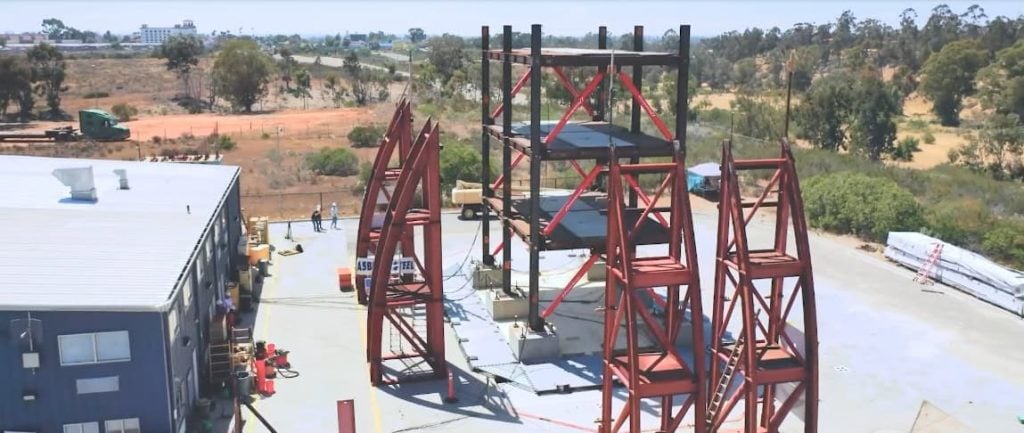
The experiment examined whether a retrofit decoupler could reduce motion transferred to the bushings. It also tested base isolation, in which the transformer is supported in a way intended to limit the earthquake forces transmitted into the assembly. These are engineering approaches under evaluation, not commercially proven fixes from this test.
The Results Still Need Independent Evaluation
The U.S. Department of Energy says replacement of severely damaged large transformers can take five years or longer in some cases. The point is particularly important for substations serving hospitals, water systems and other critical infrastructure following a regional earthquake.
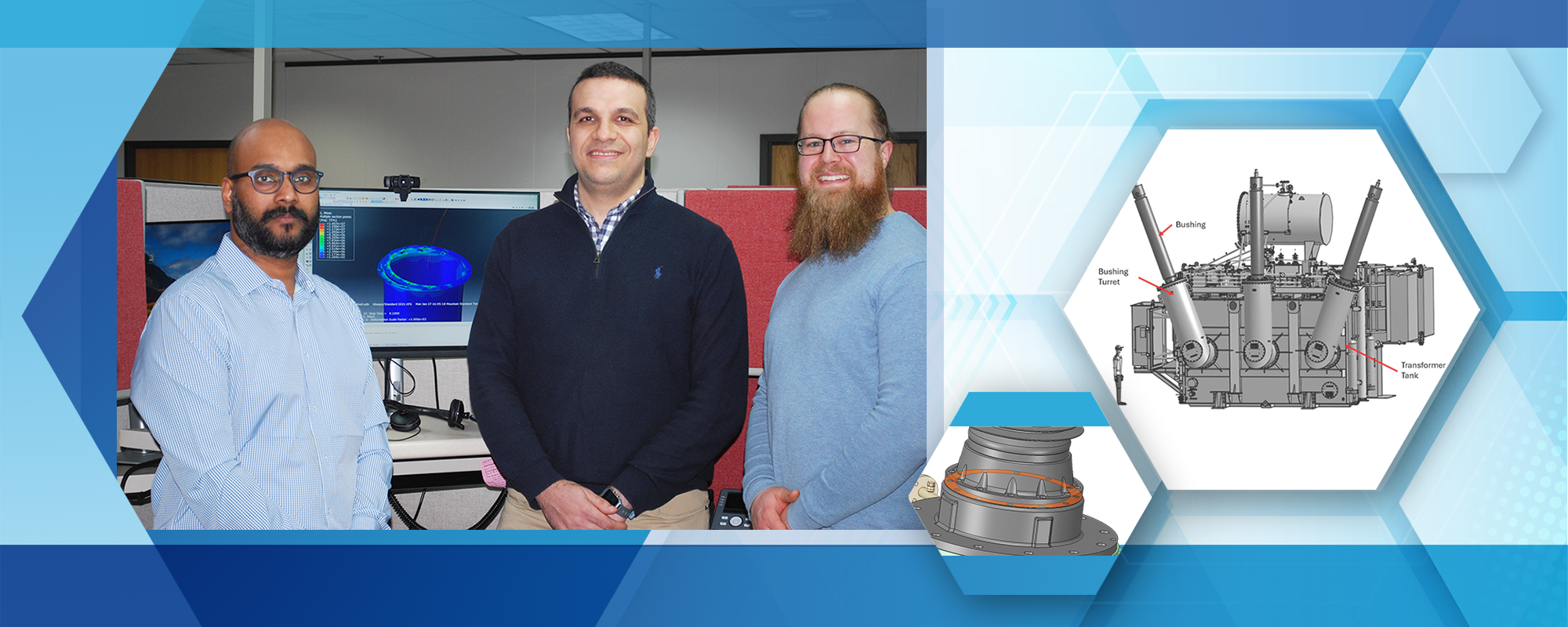
Idaho National Laboratory says detailed experimental results are planned for public release through federal research repositories and peer-reviewed journals. Those measurements, rather than the test’s completion alone, will determine how much protection the proposed devices provide and under which earthquake conditions.
The investigation comes as utilities invest in high-voltage grid equipment and domestic transformer manufacturing. Meanwhile, newer solid-state power-conversion designs address different challenges. Seismic resilience remains a distinct problem: keeping the physical equipment intact when the ground moves.
Support BitcoinVersus.Tech
We volunteer daily to ensure the credibility of the information on this platform is Verifiably True. If you would like to support our work and help further secure the integrity of our research initiatives, please scan the QR code below to donate 5,000 sats (best results on a laptop or larger screen).

On a phone, display the QR on a second screen and scan it with a Bitcoin wallet, or use a wallet’s saved-image QR scanner if available. Bitcoin donation address: 3C9o19EH5HSiwEPyCTmEKzxhNCbo2X6TTb.
BitcoinVersus.tech is not a financial advisor. This media platform reports on financial subjects purely for informational purposes.


Leave a Reply