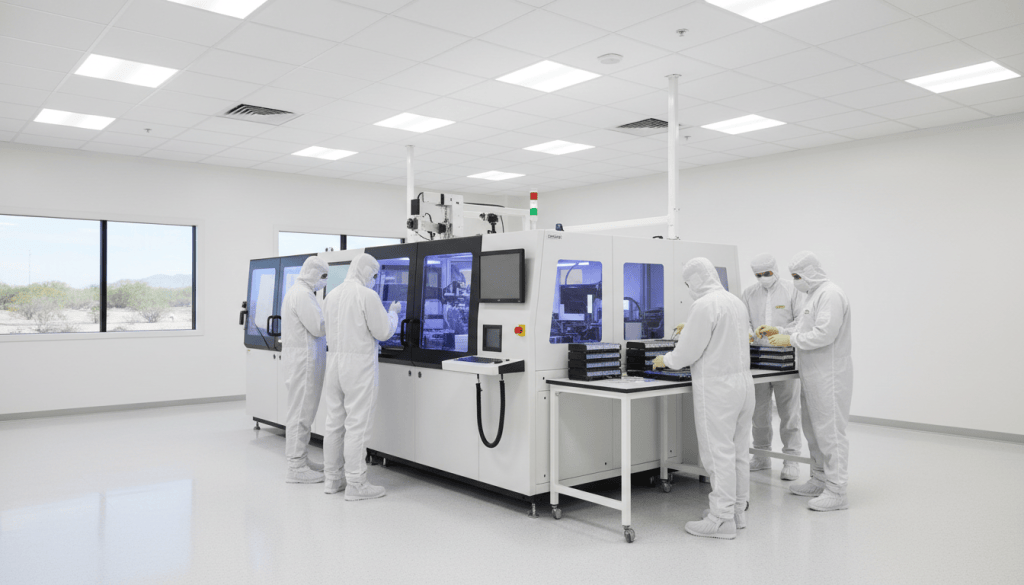
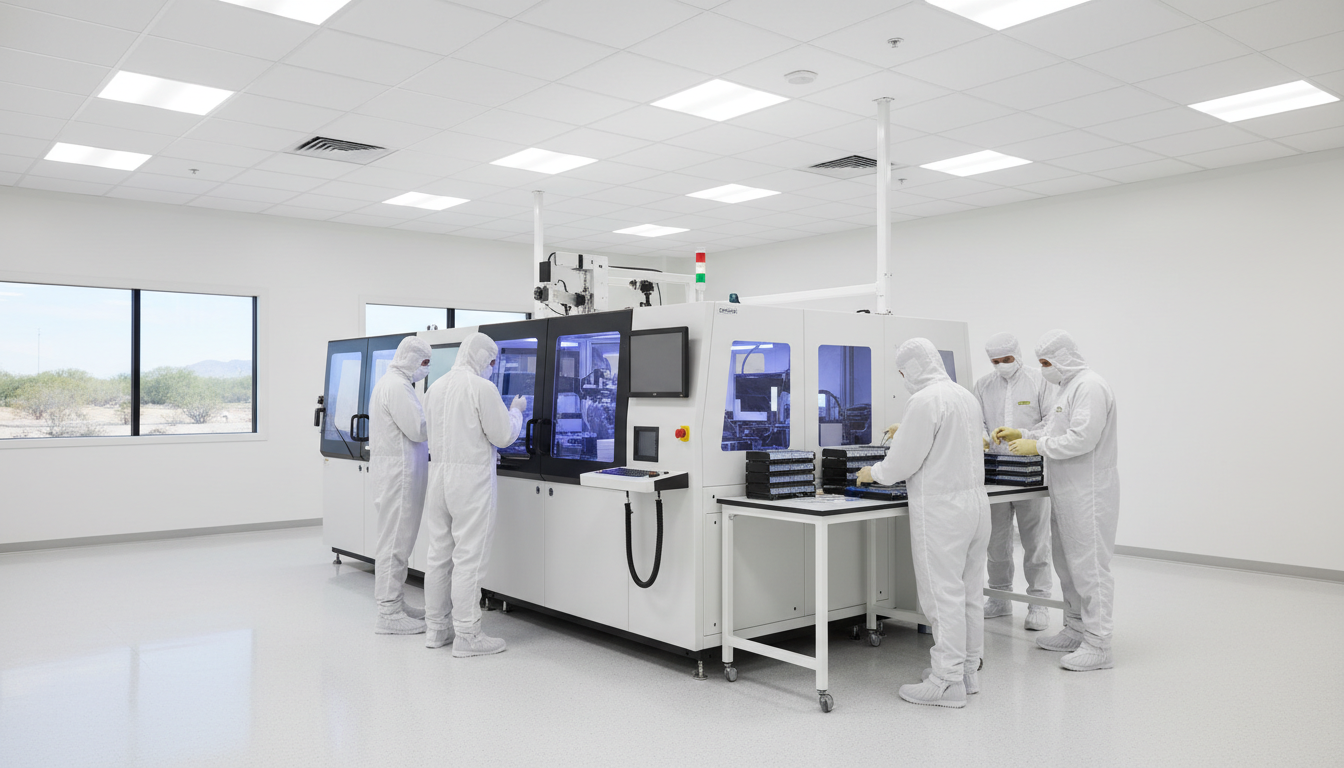
U.S. semiconductor manufacturers are investing in new fabrication plants, but staffing those facilities is becoming a parallel engineering challenge. Community colleges are expanding short, hands-on technician programs as chipmakers seek workers who can operate, maintain and troubleshoot highly automated production equipment. A November 5 Associated Press report describes growing cooperation among schools, manufacturers and public agencies to prepare students for cleanroom jobs.
A workforce gap behind the fab construction boom
An industry workforce projection cited by the AP warns that as many as 157,000 semiconductor-related positions could be difficult to fill by 2030. The figure is a forecast of potential hiring and skills gaps, not a count of currently vacant jobs. Actual demand will depend on fabrication schedules, automation, immigration policy, education capacity and chip-market conditions.
The challenge extends beyond advanced chip design. Semiconductor equipment technicians maintain vacuum chambers, process-gas delivery, metrology tools, wafer-handling robots and electrical distribution systems. Their work depends on precise contamination controls and documented procedures. BitcoinVersus.Tech has examined related engineering in its plasma-etch equipment guide and particle-contamination lesson.
Short programs offer a faster entry point
In Arizona, Rio Salado College offers a free 12-week training route combining virtual instruction with cleanroom practice and employer interviews, according to AP reporting. Roughly three-quarters of graduates from the program’s training have obtained semiconductor-related jobs, the report says. That placement result describes the cited program and should not be generalized to every school or cohort.

More than 200 colleges and universities are coordinating with the semiconductor industry on workforce preparation, the AP reports. Manufacturers including TSMC, Intel, Samsung and SK Hynix are involved in broader training and hiring efforts. Shorter certificate programs can lower the time and tuition required for entry-level roles, while advanced engineering, process integration and equipment development still require deeper specialization and experience.
Hiring success depends on practical competence
Fab technicians must distinguish a machine alarm from its underlying cause, recognize drift in pressure or gas flow, document maintenance and protect wafer yield. The importance of those skills appears in BitcoinVersus.Tech’s coverage of mass-flow controller diagnostics and statistical process control. Classroom completion alone does not demonstrate proficiency across all toolsets.
The industry’s expansion creates opportunities for workers without traditional four-year engineering degrees, but a rapid training pipeline also faces constraints. Cleanroom instruction requires expensive equipment, qualified instructors and employer participation. Relocation, shift schedules and regional housing costs can affect whether qualified graduates accept jobs. Bringing experienced technicians and engineers from established Asian manufacturing centers can help start new facilities, although long-term staffing depends on local skills development.
The next measurable indicators are completed training cohorts, independently reported job placements, retention rates, and actual fab hiring rather than announced construction totals. Semiconductor workforce capacity will ultimately be tested when new plants move from installation and commissioning to sustained commercial production.
BitcoinVersus.Tech Editor’s Note: We volunteer daily to ensure the credibility of the information on this platform is Verifiably True. If you would like to support to help further secure the integrity of our research initiatives, please donate using the QR code provided

For best QR-code scanning results, please scan this donation code from a desktop or larger screen. Mobile screens may prevent camera recognition. Verify the receiving address 3C9o19EH5HSiwEPyCTmEKzxhNCbo2X6TTb before sending.
Disclaimer: BitcoinVersus.Tech is not a financial advisor. This media platform reports on financial subjects purely for informational purposes.


Leave a Reply