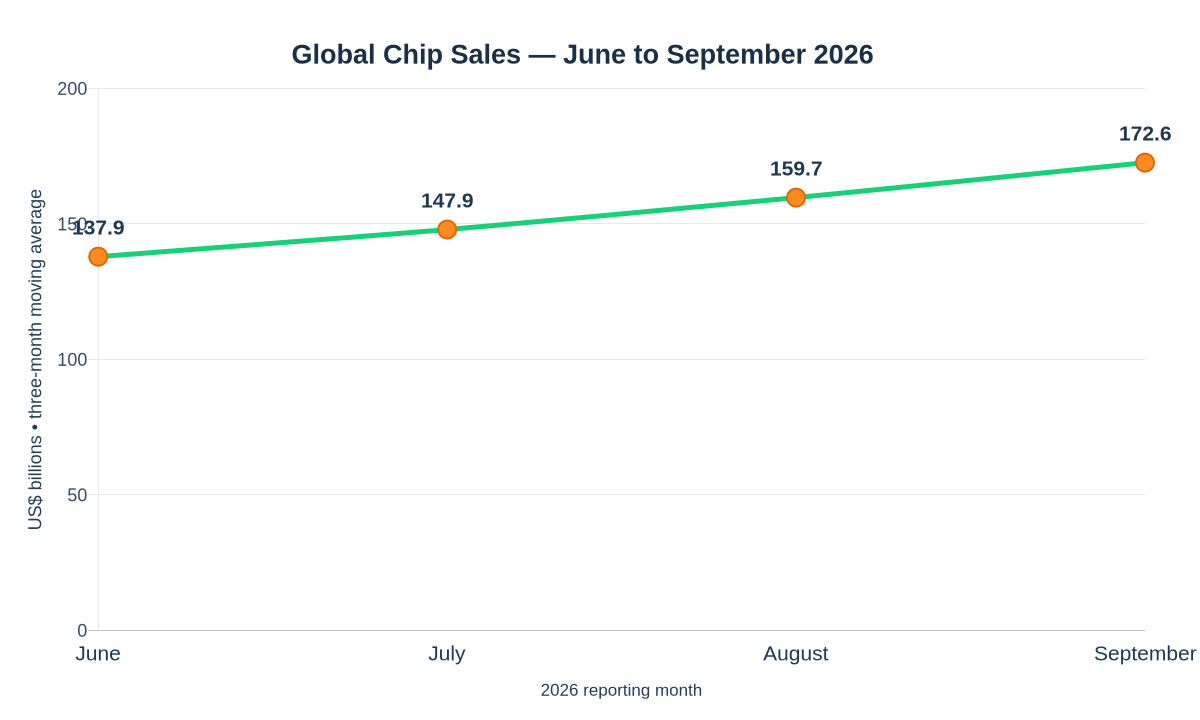
Global semiconductor sales reached $172.6 billion in September 2026, up 146.8% from September 2025 and 7.9% from August, according to figures released November 3 by the Semiconductor Industry Association (SIA). Demand rose across all five major geographic markets tracked by the group. The headline figure is a World Semiconductor Trade Statistics (WSTS) three-month moving average, not an unsmoothed count of September transactions.
Semiconductor products include processors, memory chips, power-management devices, sensors and communications circuits. AI accelerators and data-center systems rely on many of those technologies together. Chip sales measured in dollars reflect a combination of shipment volumes, product mix and selling prices; revenue growth alone cannot demonstrate an equivalent increase in the number of chips produced.
A four-month climb in worldwide sales
The revised monthly comparators reported across SIA releases show a rise from $137.9 billion in June to $147.9 billion in July, $159.7 billion in August and $172.6 billion in September. The June-to-September increase was approximately 25.2% using those reported rolling-average values. SIA’s earlier June and July announcements contained lower preliminary comparators, making revision dates important when constructing a consistent chart.
SIA also reported $517.7 billion in third-quarter global semiconductor sales, up 24.1% from the revised previous-quarter comparison. A quarterly total and a three-month trailing average are related but distinct presentations of sales. Year-to-date figures and annual projections likewise require separate treatment; a forecast is not booked revenue.
The Americas post the fastest annual growth
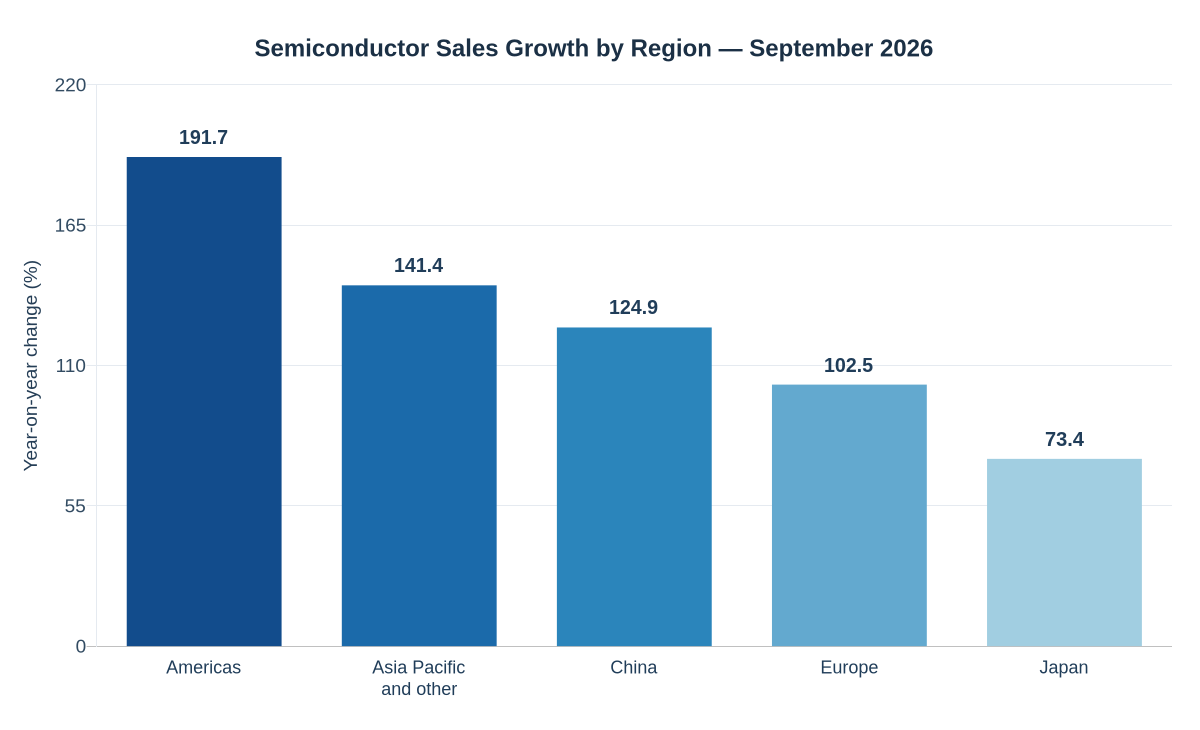
September year-over-year sales increases reached 191.7% in the Americas, 141.4% in Asia Pacific and other markets, 124.9% in China, 102.5% in Europe and 73.4% in Japan. All five regions also posted month-over-month growth. The figures describe percentage changes in each market’s sales, not each region’s share of worldwide semiconductor revenue.
The broad acceleration provides context for individual suppliers. BitcoinVersus.Tech recently covered TSMC’s quarterly earnings, Astera Labs’ AI networking growth and Lattice Semiconductor’s FPGA sales expansion. Company reports provide narrower product and customer detail but cannot substitute for WSTS’s worldwide industry aggregates.
Growth leaves manufacturing constraints unresolved
Stronger demand can improve foundry utilization and supplier investment, yet capacity cannot expand instantly. New fabrication plants must qualify equipment, control defect density and secure process chemicals, electricity, water and specialist personnel. Earlier reporting examined semiconductor technician workforce training and the European Union’s new chip-design platform, both relevant to sustaining the supply chain.
SIA’s accompanying industry reports identify AI hardware as an important demand source, but the monthly release does not allocate the entire 146.8% annual sales increase to AI. Memory pricing, high-value computing products and other electronics markets may also influence revenue. The next WSTS release will show whether the current pace persists or begins to moderate.
Sources: SIA November 3, 2026 global sales report; SIA October 5 August sales report; SIA September 4 July sales report; and SIA June 2 technical webinar.
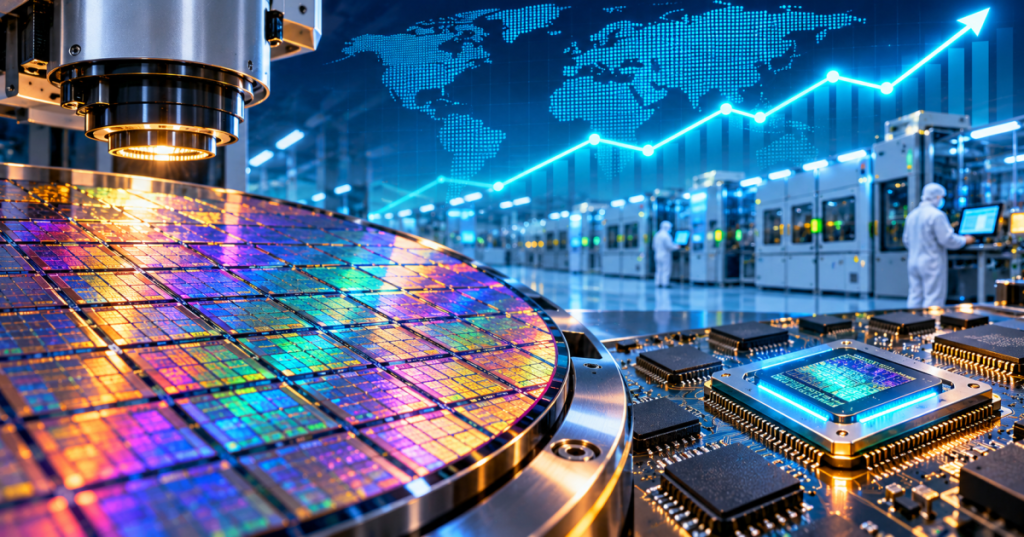
Editor’s Note: Sales, market regions and quoted growth rates follow SIA/WSTS reporting. Charted monthly points are three-month moving averages, and revised historical comparators are identified. The featured image is original illustrative artwork, not a photograph of a particular factory. The YouTube presentation predates the monthly sales announcement and provides technical background rather than verification of September figures. BitcoinVersus.Tech reports market information for educational purposes and is not a financial advisor.
Support BitcoinVersus.Tech
To contribute 5,000 satoshis to research, scan the original BitcoinVersus.Tech QR image below with a compatible Bitcoin wallet. Mobile users can open the article on a second screen to scan. Verify the wallet destination and amount before sending.
We volunteer daily to ensure the information on this platform is Verifiably True. If you would like to support the research, please scan QR code.


Leave a Reply