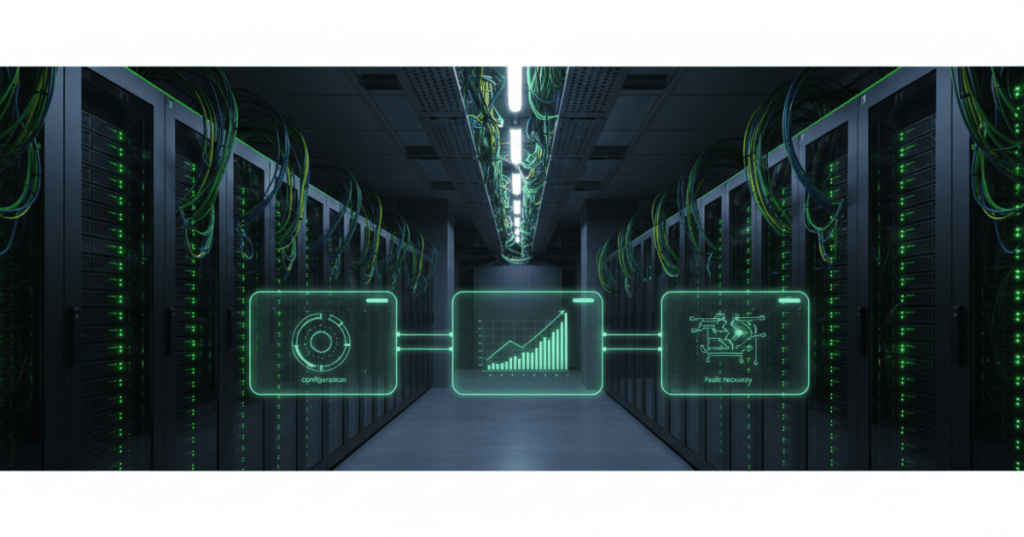
NVIDIA has published a new technical walkthrough connecting GPU-cluster configuration, performance certification and fault recovery through DSX OS, its modular software layer for AI data centers. The November 5, 2026 guide explains how three existing open-source projects work together to keep Kubernetes clusters ready for expensive training and inference jobs. The new publication describes an integrated operations workflow, not the first release of the broader DSX platform. Earlier BitcoinVersus.Tech reporting examined NVIDIA’s separate DSX POD deployment design.
Kubernetes schedules containerized workloads across servers. In a distributed AI job, a single underperforming graphics processor or congested network path can hold back an entire group of machines. NVIDIA argues that ordinary node-health checks may overlook problems that appear only when GPUs exchange data under real workloads.
Three tools cover a GPU cluster’s lifecycle
NVIDIA AI Cluster Runtime (AICR) creates reproducible infrastructure recipes defining compatible driver, networking, storage and Kubernetes component versions. Teams can render those recipes for Helm, Argo CD or Flux, then compare a deployed cluster against its intended configuration. AICR generates configuration artifacts; an operator’s deployment tooling must still apply and reconcile them. Earlier BitcoinVersus.Tech coverage of Kubernetes node density explains why operational settings can materially affect server capacity.
NVIDIA Cluster Readiness Engine (NVCRE) runs tests resembling actual AI jobs, including NVIDIA Collective Communications Library (NCCL) exchanges and training workloads. Its certification reports can identify failing nodes and measured bandwidth. Critically, performance thresholds are not configured by default. Without an explicit floor, a slow but functioning node may pass. Engineers must select thresholds appropriate to their fabric, model and service-level goals.
NVSentinel supplies the monitoring and remediation layer. It observes GPU diagnostic events, networking faults and maintenance signals, then publishes node conditions. Its default posture is monitoring only: automatic cordoning, workload draining and repairs must be enabled deliberately. With lifecycle validation configured, the software can isolate a node, request NVCRE testing after repair and keep the node unavailable until checks pass.
Recovery needs guardrails
NVIDIA’s guide also identifies boundaries that matter in production. New nodes and repaired nodes can trigger automatic validation when the lifecycle controller is configured. Driver upgrades and network-fabric changes do not automatically initiate those tests; operators must arrange a separate gate or pipeline. Multiple controllers attempting to cordon the same server can also complicate restoration.
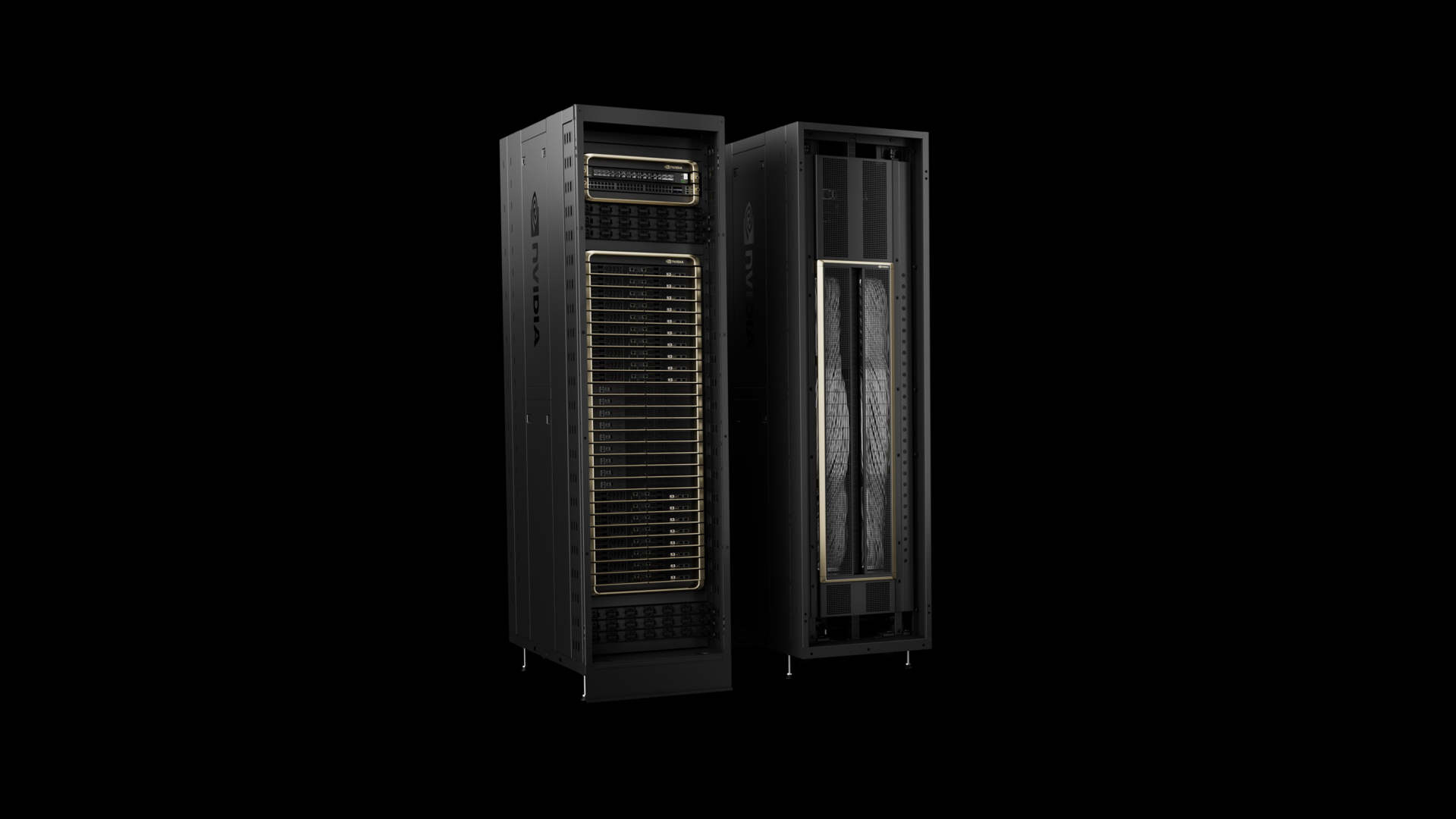
The operational stakes extend beyond GPUs. High-bandwidth AI networking racks must move data reliably between accelerators, while storage-focused cloud servers must feed training pipelines and checkpoints. The same capacity-planning challenge appears in new-generation Vera Rubin accelerator deployments. Cluster reliability depends on measuring useful completed work, not merely counting installed processors.
Open source, not hands-free operations
NVIDIA distributes AICR, NVCRE and NVSentinel as Apache 2.0 open-source projects. The repositories make their configuration and issue histories inspectable, but deployment still requires compatible Kubernetes components, installed controllers, suitable test workloads and carefully selected remediation permissions. Automatic node repairs could be disruptive if rules are enabled without rehearsal.
For operators, the November guidance offers an actionable sequence: pin a known software baseline, certify hardware using workload-relevant thresholds, monitor faults continuously and requalify repaired capacity before scheduling production jobs. NVIDIA has not established through the guide an independently audited improvement in uptime, GPU utilization or training cost. Those outcomes remain site-specific measurements.
Primary sources: NVIDIA’s November 5, 2026 technical walkthrough; AI Cluster Runtime repository; NVIDIA Cluster Readiness Engine repository; NVSentinel repository; DSX documentation.
Editor’s Note: The described software functions and defaults come from NVIDIA documentation and public project repositories, not independent BitcoinVersus.Tech cluster testing. The 2023 NVIDIA Developer video is background on Kubernetes GPU operations. NVIDIA’s official images illustrate the software topic and related hardware. The featured artwork is AI-generated conceptual imagery, cropped to 1200 × 630 pixels. Live playback must be checked independently.
Support BitcoinVersus.Tech
To support independent technology reporting, scan the original donation QR below for an optional 5,000-satoshi contribution. On a phone, show the code on another screen and scan with a compatible Bitcoin wallet, or import the saved QR image if supported. Check the destination and amount before confirming any payment.

We volunteer daily to ensure the information on this platform is Verifiably True. If you would like to support the research, please scan QR code.


Leave a Reply