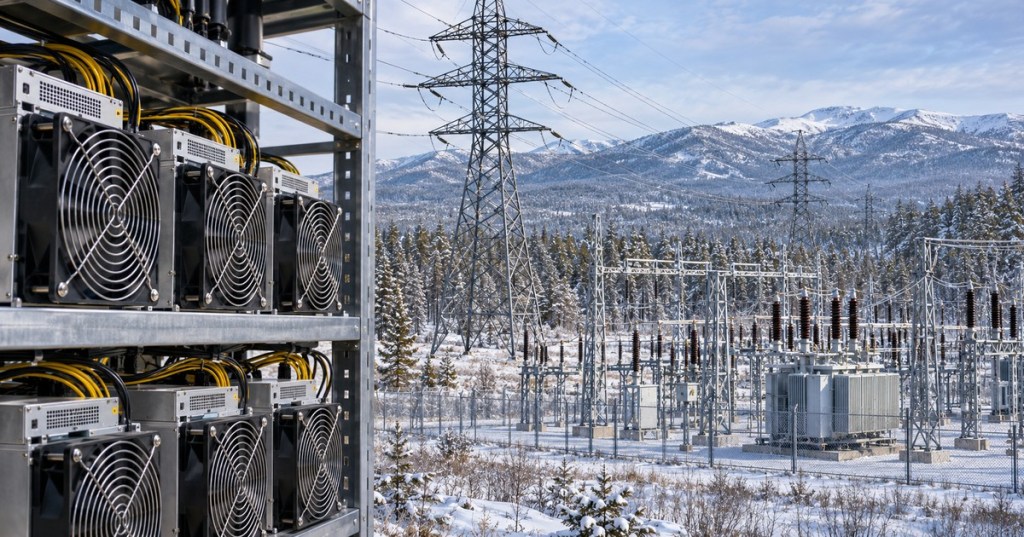
Russia’s expected November 15 winter cutoff for Bitcoin mining is not a new shutdown in the affected parts of Buryatia and Zabaykalsky Krai. The Russian government replaced the former seasonal timetable with a continuous ban effective April 1, 2026. With another winter approaching, the difference between the original schedule and the amended law matters to mining operators, energy planners and readers interpreting regional restrictions.
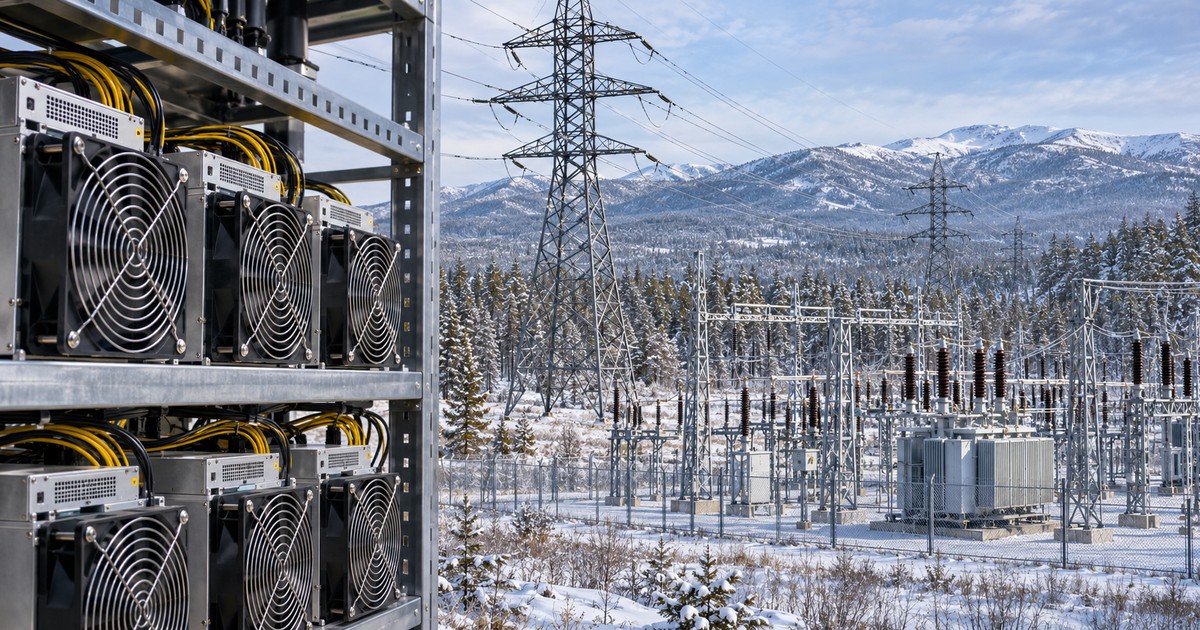
Bitcoin mining uses specialized application-specific integrated circuits (ASICs) that consume electricity while performing SHA-256 hashing. A site’s electrical load can run continuously when power is available. During winter peaks, transmission constraints and competing demand can make large industrial loads particularly contentious, even when the miners themselves remain technically capable of operating.
The winter schedule changed in March
The original December 23, 2024, Resolution No. 1869 set out recurring winter periods, including November 15, 2026, through March 15, 2027, for designated areas. Government Resolution No. 280, signed March 18, 2026, replaced the relevant date provision. The revised restriction applies continuously from April 1, 2026, through March 15, 2031 in the areas described by items 2 and 3 of the original regional list.
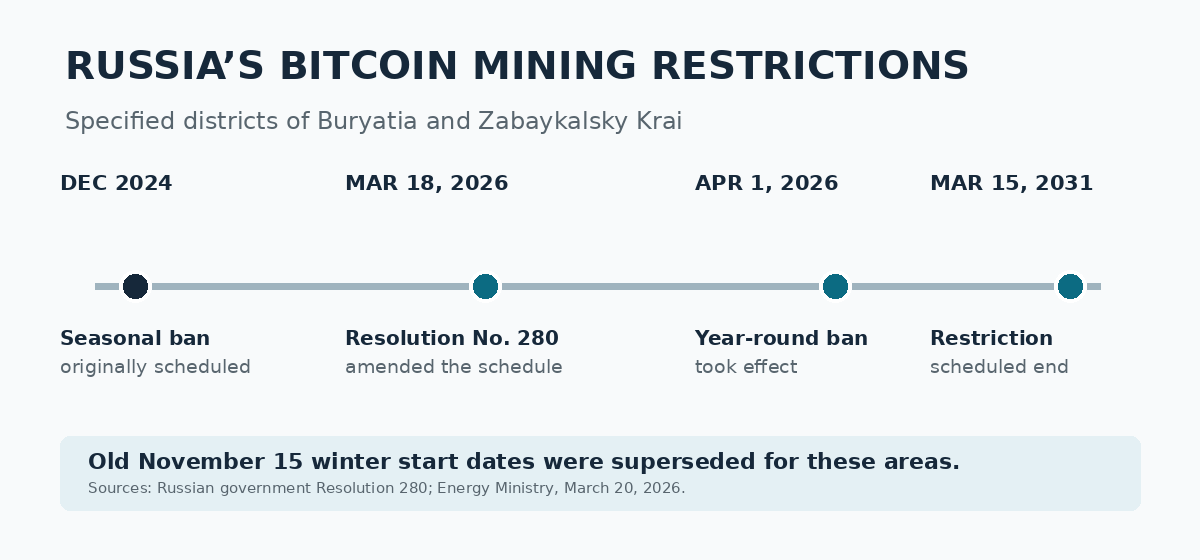
On March 20, Russia’s Energy Ministry confirmed that the change covers 20 listed districts and localities in Buryatia, including Ulan-Ude, and 31 in Zabaykalsky Krai, including Chita. The counts describe named administrative areas, not every square kilometer of either region. The ministry said the earlier rule had limited mining seasonally from November 15 through March 15.
Read the Russian Energy Ministry’s announcement on Telegram. Official ministry social-media statement confirming the March 2026 change. Credit: Ministry of Energy of the Russian Federation.
The legal change therefore does not imply a fresh November 15, 2026, order, a newly announced nationwide ban or permission to restart operations outside the former winter window. Mining facilities must check the exact municipality and applicable rule before deciding whether equipment can lawfully operate. The government’s restrictions also address participation in mining pools, rather than only running ASIC equipment.
Electricity reliability, not a new nationwide order
Authorities describe the restrictions as a measure to protect electricity reliability. The policy reduces potential energy demand from miners within covered areas, but the available official announcement supplies no audited figure for megawatts actually disconnected, machines removed or improvements in outage rates. Assigning a nationwide hashrate loss to the amendment would be speculative.
The distinction also separates a prohibition from a curtailment obligation. BitcoinVersus.Tech previously examined Russia’s power-cut requirements for new mining connections. A facility that may operate subject to demand reductions faces a different legal situation from a mine in a locality where mining is prohibited outright.
Historical regional reporting on a Bitcoin mining site in Buryatia, April 2025; footage predates the March 2026 amendment and is not evidence of its enforcement. Credit: Arig Us / Vostochny Express.
Comparable grid-management debates are taking place elsewhere. Texas grid operators are reviewing emergency curtailment rules for large loads, while Texas peak-demand charges create another incentive for miners to alter energy use. Neither arrangement should be equated with the Russian region-specific prohibition.
Miners evaluating changes in operating hours must distinguish megawatts of available power from megawatt-hours consumed over time. Less scheduled runtime reduces energy demand, but realized network hashrate depends on the machines actually switched off or relocated. BitcoinVersus.Tech’s earlier analysis of mining and grid flexibility explains the benefits and trade-offs of making compute load responsive to power-system needs.
The immediate news is a calendar correction: the superseded November 15 winter start should not be treated as the effective date for the specified Buryatia and Zabaykalsky Krai restrictions. The binding amendment took effect seven months earlier. Any future change requires a newer legal act, not an inference from the obsolete schedule.
Primary documents: Government Resolution No. 280 (official legal-publication record, March 20, 2026); Russian Energy Ministry, March 20 announcement; original Resolution No. 1869, as originally scheduled. The November date is the superseded schedule, not a newly issued 2026 legal measure.
Editor’s Note: The story compares the December 2024 seasonal timetable with the March 18, 2026 amendment and official Energy Ministry confirmation. Geographic coverage is limited to listed municipalities; no independently verified power-capacity or hashrate impact is asserted. Featured artwork is conceptual, and the timeline visualizes legal dates rather than field observations. The historical regional video is contextual footage from 2025, not documentation of the amendment.
Support BitcoinVersus.Tech
To support independent verification and reporting, scan the original approved QR code below for an optional 5,000-satoshi contribution. On a phone, open the article on another screen and scan using a compatible Bitcoin wallet, or use the wallet’s supported image-scanning function. Confirm the recipient and amount before payment.

We volunteer daily to ensure the information on this platform is Verifiably True. If you would like to support the research, please scan QR code.


Leave a Reply