
Researchers linked 21 live N-able N-central management servers to cryptocurrency mining on November 12, 2026, after disclosure of a new exploit chain called 4EverAble2Shell. Huntback reported that 19 of the 21 exposed servers displayed build 2026.4.1.26, N-able’s Hotfix 2 release issued two days earlier. The figures are one research team’s observed cases, not a vendor-confirmed global victim count.
N-able’s official January 29, 2026 product review explains N-central vulnerability management, endpoint operations and security features. Product background, not footage of the November compromise. Credit: N-able / YouTube.
Attackers followed the emergency hotfix
N-able issued Hotfix 2 on November 10 to address several vulnerabilities disclosed November 9. Researchers published additional chains, 4EverAble2Shell and Agent2Shell, on November 12. The first reportedly allows remote code execution followed by root-level access on an exposed server meeting certain configuration conditions.
Huntback recorded a first probe at 08:30 UTC, a full attack attempt at 09:16 UTC, and a mining-pool account showing 21 active rigs at 12:50 UTC. Each associated address responded as an N-central server. Investigators identified XMRig, a legitimate Monero miner used without authorization on compromised infrastructure. Previous gateway-intrusion reporting illustrates how management-plane access can magnify an incident.
The vendor’s Legacy API qualification matters
N-able’s November 13 response says the server exploit depends on the Legacy API, a feature disabled by default. It also says exploiting a separate agent-impersonation issue requires a foothold on an endpoint. Huntress revised its assessment to acknowledge the Legacy API condition. Consequently, Hotfix 2 does not by itself establish safety for exposed legacy configurations, but the reported chain does not apply identically to every N-central installation.
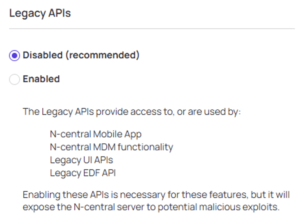
N-able temporarily restricted integrations, including Microsoft Intune in hosted environments, while investigating the disclosures. As of its November 13 statement, further Hotfix 3 hardening was under development. No universal endpoint takeover has been established. Prior reporting on cloud-identity misuse illustrates the hazards of privileges flowing between connected systems.
N-able U’s June 15, 2026 product tutorial demonstrates N-central agents, remote device management, patching and Intune integration. The video predates the exploit disclosures. Credit: N-able U / YouTube.
Defensive checks for IT service operators
Administrators should inventory internet-facing on-premises N-central installations and confirm that the Legacy API is disabled through vendor-approved settings. Apply 2026.4 Hotfix 2 against the earlier issues, maintain supported Agent and Probe updates, and watch N-able’s notices for subsequent fixes. Hosted customers should not restore disabled integrations without vendor guidance.
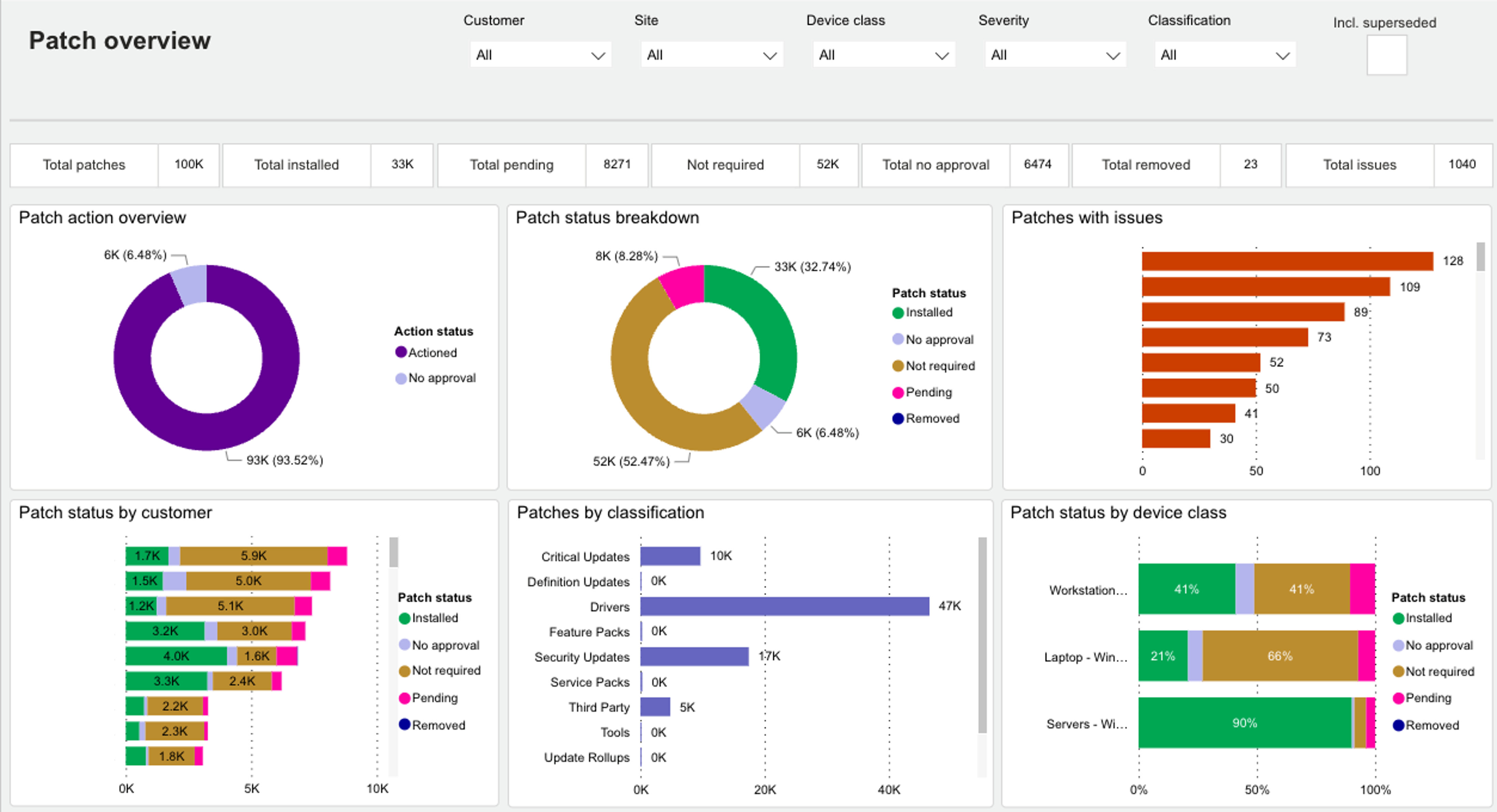
N-able published campaign indicators including traffic associated with 157.20.241[.]16. Teams should check available logs, review unexpected scheduled tasks and miner persistence, preserve incident evidence, and isolate potentially compromised servers before recovery. Removing mining software does not prove administrative access has been revoked. Earlier network-exposure guidance offers broader defensive context.
A related investigation of stolen automation credentials shows why central management and trust relationships need special scrutiny. Huntback’s 21 systems are a dated observation, not a complete census. N-able’s configuration guidance is likewise not proof that every organization applied the mitigation. The confirmed lesson is to verify exposure and inspect host activity rather than treating an installed version label as a complete security assessment.
Sources: Huntback’s November 12 investigation; N-able’s November 13 remediation explanation; N-able operational update and indicators, November 13; Huntress incident timeline; Tenable analysis. No global incident total is claimed.
Editor’s Note: Huntback’s 21-server and 19-hotfix counts are attributed findings, not a confirmed total from N-able. The vendor’s statements about default Legacy API configuration, hosted restrictions, and upcoming remediation are distinguished from third-party attack observations. The original 1200 × 630 fine-art oil-painting cover contains only the required 10-point neon-green Bitcoinversus.tech watermark and depicts a conceptual security operations room. Two authentic N-able product screenshots illustrate controls and features. Both official YouTube videos predate the incident and provide product context, not attack footage. Successful playback and mobile layout require independent browser testing.

BitcoinVersus.Tech is a volunteer-run publication. Optional support of 5,000 satoshis funds technical reporting. Scan the original QR from another screen using a Bitcoin wallet; on the same phone, use a wallet supporting saved-image QR import. Independently verify recipient 3C9o19EH5HSiwEPyCTmEKzxhNCbo2X6TTb and the 5,000-satoshi amount before sending. Bitcoin transactions are generally irreversible.
We volunteer daily to ensure the information on BitcoinVersus.Tech is Verifiably True. Security articles are educational and informational, not individualized incident-response, engineering, financial or investment advice.


Leave a Reply