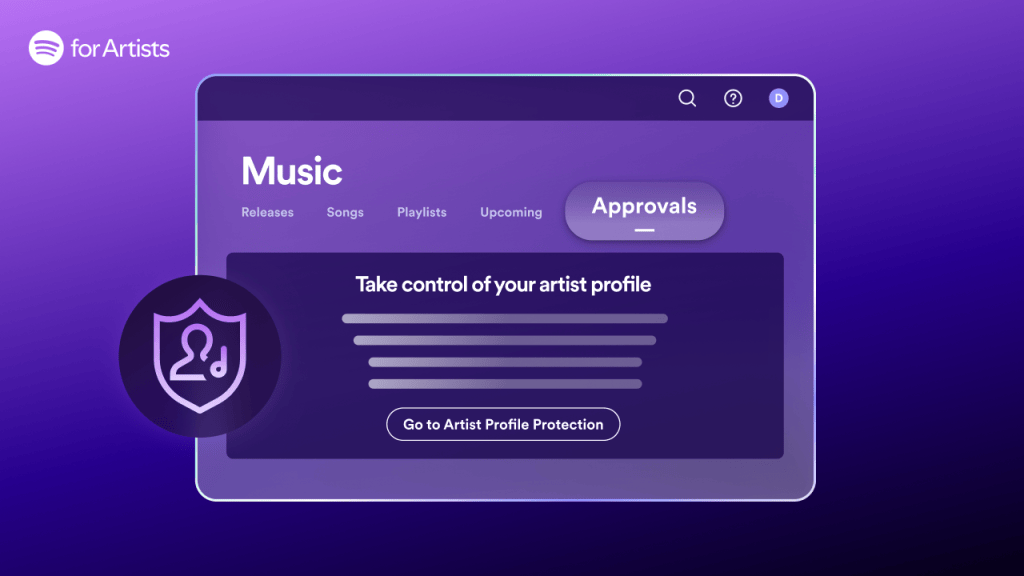
Spotify expanded Artist Profile Protection to all artists on November 17, 2026, giving musicians a direct way to challenge songs delivered under their names. The move addresses mistaken catalog assignments, deliberately misleading uploads and AI-generated recordings attributed to the wrong performer. It arrives after a months-long beta, but an important distinction remains: enabling the standard feature does not automatically stop every new release from appearing.
The stakes reach beyond a profile’s appearance. A false association can contaminate listening statistics, influence automated recommendations and confuse fans about which recordings genuinely belong to an artist. Spotify says artists can reject eligible incorrect releases so those songs do not appear under their profiles or feed their Spotify metrics. Music Business Worldwide confirmed the worldwide expansion on November 17.
Official Spotify for Artists platform overview, June 2026. Background on artist identity and profile management; not a live demonstration of the November rollout. Open video on YouTube.
Review releases and Block releases are different
The default Review releases setting sends an email when new music is delivered with the artist’s name attached. An authorized artist-team admin or editor can review eligible submissions and remove an incorrect attribution. If nobody intervenes, the recording proceeds on schedule. Spotify’s technical support guide allows action for up to 28 days after a release goes live.
The stricter Block releases option withholds authorization to list the protected artist until approval. Spotify’s help page says only some artists currently have access to the advanced control. Processing approvals may require up to 24 hours, so musicians who choose blocking must actively manage their pending releases.
| Control | Review releases | Block releases |
|---|---|---|
| Availability | Artist Profile Protection available to all | Advanced setting has limited access |
| New music | Goes live unless rejected | Requires artist approval |
| Main tradeoff | Unauthorized release may briefly appear | Legitimate release could be delayed |
Why streaming metadata remains a security problem
Digital distributors often submit titles, performer names, collaborators and release identifiers to several platforms at once. Two unrelated musicians can share a stage name; manipulated metadata can also make an unauthorized upload appear connected to an established performer. Rapid AI music generation magnifies the volume of material available for impersonation, although not every catalog mismatch involves AI.
The distinction matters to independent musicians, who may have limited time to check incoming releases. Our reporting on ElevenMusic publishing directly to SoundCloud examined how automated creation and distribution are converging. Separate approaches at Deezer and YouTube Music focus more on identifying or filtering AI-generated material.
Independent musician KARRA examines Artist Profile Protection and music-profile security in March 2026. Archival analysis predates the general release and its updated default settings. Open video on YouTube.
What artists can do now, and what remains unresolved
Spotify for Artists team admins and editors can enable the feature through artist settings on desktop or Music’s Review tab on mobile. For accounts that can use Block releases, the platform provides a private artist key that trusted distributors can supply to preauthorize legitimate deliveries. Spotify warns users never to publish the key openly. Featured performers and remixers may have different approval consequences from main artists.
Profile controls are not identical to content takedown. Removing an incorrect artist association on Spotify does not remove the track from other services, and does not by itself establish that an AI voice clone has been deleted everywhere. Artists may still need separate infringement complaints or distributor corrections. Our coverage of Symphonic’s AI music distribution restrictions shows why upstream checks remain important.
Spotify has not supplied a verified public figure measuring how many false associations the general release has prevented. Effectiveness will depend on detection, artist participation, timely review and coordination with distributors. The significant change is direct control over profile attribution, not a guaranteed end to AI impersonation.
Sources and methods
Primary sources: Spotify for Artists announcement, updated November 17; Spotify support instructions; and Spotify’s August artist-identity initiative. Independent reporting: Music Business Worldwide, November 17, 2026. Archival video illustrates background and does not establish the new rollout date.
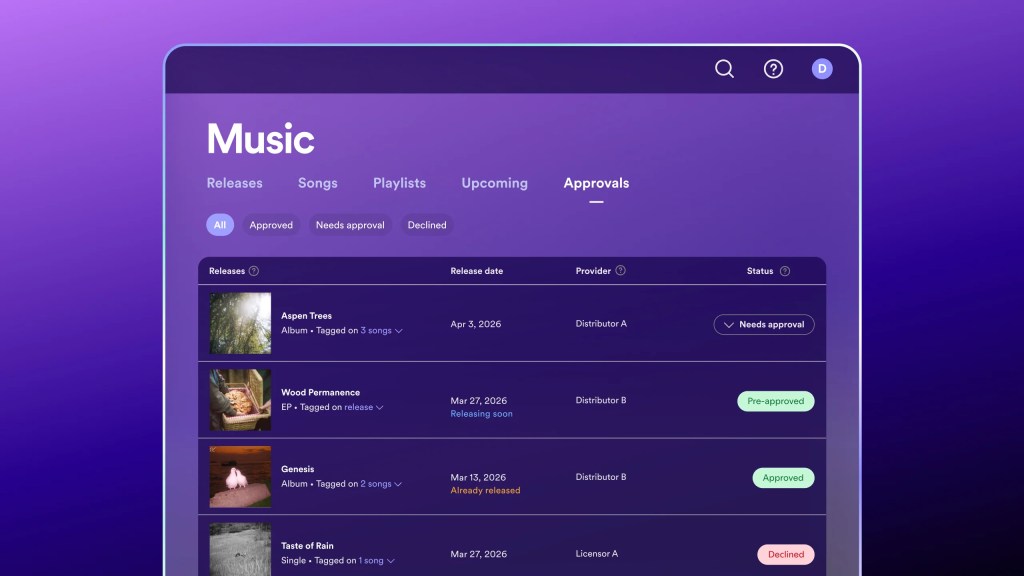
Editor’s Note: The featured image is an attributed Spotify product illustration, used provisionally because the approved original cover reference was unavailable for the planned oil-painting rotation. The screenshot within the story depicts an earlier version of the interface. No claim is made that the videos demonstrate the final interface or that every artist has access to advanced blocking.
Support independent reporting
Help fund original BitcoinVersus.Tech reporting with an optional 5,000-satoshi donation. Mobile readers can save or long-press the QR image and open it with a supported Bitcoin wallet. Always verify the amount and recipient before paying.


Leave a Reply