
MIT scientists have demonstrated an ultrathin superconducting memory cell that also controls the direction of electrical current. Announced in an MIT research report on November 20, 2026, the device stacks a superconducting film between two magnetic insulating layers. Its goal is to reduce the memory and signal-routing bottlenecks facing future low-temperature computers.
The peer-reviewed results appeared in Physical Review Letters on October 5, 2026. Researchers demonstrated selective switching of individual memory cells and a programmable superconducting diode. Neither a mass-produced memory chip nor a full computer with independently measured energy savings has been demonstrated.
MIT Quantum Nanostructures and Nanofabrication Group, May 2025: an academic thesis defense on superconducting nanowire memory. The talk describes separate cryogenic memory technology, not the new magnetic sandwich device.
How three layers remember one bit
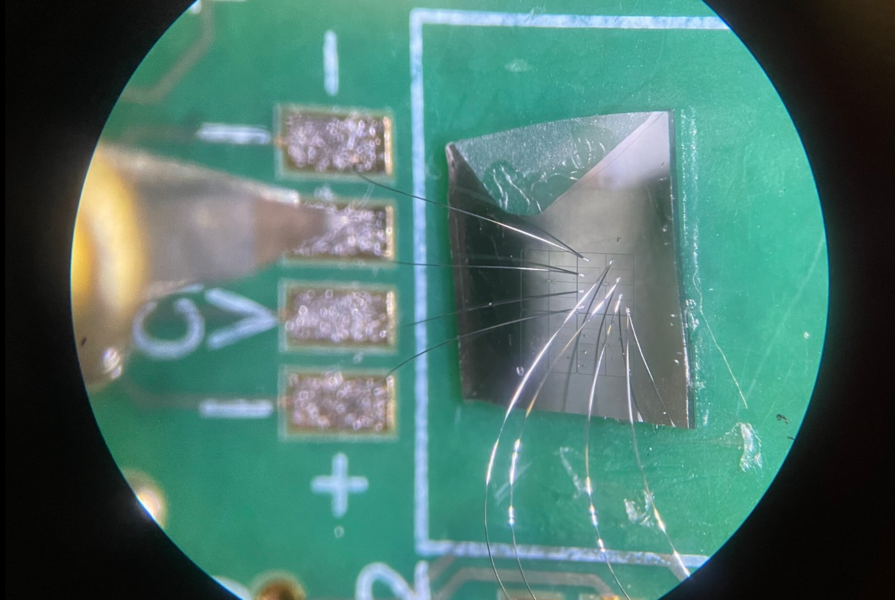
Superconductors carry electrical current without ordinary resistance below a sufficiently low critical temperature. The new memory sandwiches an ultrathin superconducting layer between two ferromagnetic insulators. The relative direction of the two magnetic layers determines whether the middle film remains superconducting or becomes resistive at the operating temperature.
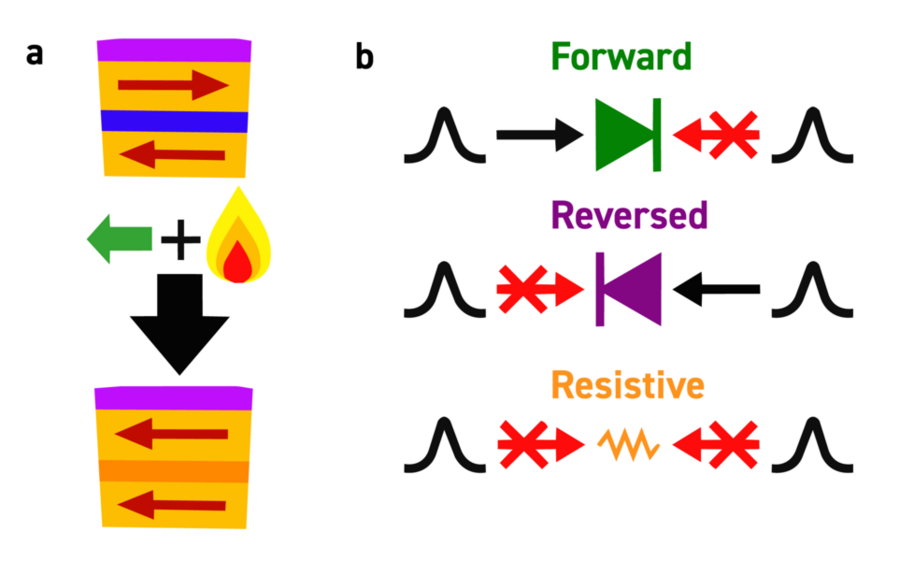
When the magnetizations point in opposite directions, the cell can conduct in its superconducting state. When they align, the superconducting state is suppressed and resistance appears. Those two distinct conditions encode a digital 0 or 1. A small magnetic field and a brief electrical pulse heat a selected cell enough to change its magnetic alignment.
Once written, the magnetic configuration persists without continuous writing power. That makes the memory nonvolatile while maintained under cryogenic operating conditions. Researchers also switched one cell without erasing a neighboring cell, a necessary step toward individually addressable memory arrays.
One device can steer electrical signals too
At a lower operating temperature, the same layered architecture becomes a programmable superconducting diode. It can favor nearly resistance-free current in one direction, switch the favored direction, or block transmission by entering a resistive state. The research paper reports zero-applied-field diode efficiencies exceeding approximately 60% in magnitude.
The percentage is a measure of current-direction asymmetry under the experiment’s conditions. It is not a claim that a completed computer consumes 60% less electricity. By combining memory and current control in one small structure, engineers could eventually reduce the need for separate components inside specialized cryogenic circuits.
MIT Quantum Nanostructures and Nanofabrication Group: 2024 conference presentation on a 16-bit superconducting nanowire memory array. Independent background technology, supplied by the group’s official research newsletter.
Could superconducting memory reduce AI computing energy?
Conventional processors waste energy moving data between logic, memory and storage, while large data centers must remove heat from thousands of chips. Superconducting electronics could reduce resistive losses in particular circuits, but extremely cold equipment also requires refrigeration, wiring and power-hungry supporting hardware. Total system electricity matters more than an isolated device’s impressive properties.
The MIT demonstration stores ordinary bits, not quantum bits. Its potential applications include superconducting processors, signal-control hardware near quantum computers and specialized neuromorphic systems. Scaling the cells into dense, reliable arrays, measuring write energy and including cryogenic overhead remain open engineering problems.
Related BitcoinVersus.Tech reporting examines superconducting power cables versus copper, superconducting photon detectors, fundamental computing energy limits and quantum computing hardware. The finding strengthens the case for researching cryogenic memory, while leaving commercial cost, speed, density and real-world efficiency unproven.
Sources
- MIT News, November 20, 2026: magnetic superconducting memory and diode
- Physical Review Letters, October 5, 2026: “Magnetic Exchange-Coupled Superconducting Devices with Broken Symmetry for Cryogenic Memory”
- MIT DSpace: accepted manuscript and supporting research materials
- MIT Quantum Nanostructures and Nanofabrication Group: earlier 16-bit memory presentation
- MIT News, June 17, 2025: earlier superconducting diode research
Editor’s Note: We volunteer daily to ensure the credibility of the information on this platform is Verifiably True. If you would like to support to help further secure the integrity of our research initiatives, please scan the QR code below

Before making a contribution, verify the receiving address 3C9o19EH5HSiwEPyCTmEKzxhNCbo2X6TTb in your wallet. Mobile readers can open the article on a second screen to scan the QR code.
BitcoinVersus.Tech covers emerging engineering and research for informational purposes. Prototype measurements are not guarantees of product performance, safety or future energy savings.


Leave a Reply